
Why monitoring daily market movements matters for Big Tech watchers
In 2026, the world of Big Tech moves really fast. Every day, there’s a flood of news about new AI tools, big company updates, and changes in rules. For anyone who keeps a close eye on major tech companies, it’s easy to feel lost in all this information.

You need to know which companies are making big moves and which ones are just creating noise. This is where looking at "stock gainers today" becomes super important.
Finding the top "stock gainers today" means you can quickly spot the companies that are catching everyone’s attention. Maybe it’s a big jump for pinterest stock, or a surprise boost for negg stock. These daily changes can tell you a lot about what’s happening in the bigger tech world. But how do you find these key signals without wasting hours?
It’s a challenge to cut through all the headlines, social media chatter like "what stock to buy today reddit" and financial reports. You might hear about stock futures cnbc before the market even opens, giving hints about the day ahead. But without a good way to check what matters most, it’s like trying to find a needle in a haystack.
We understand that you need a simple way to see which tech stocks are performing well each day and why. This guide will give you a practical, evidence-backed plan. It will show you how to quickly spot and understand the "stock gainers today" without getting lost in too much information. This means you can make smarter decisions and stay ahead in the fast-paced tech market. For a deeper dive into the companies making significant leaps, explore the Biggest Movers Today in Big Tech Stocks for 2026. To help with this, you can get clear daily AI updates from The AI Newsletter Worth Reading.

After spotting the biggest movers, the next step is to figure out which of those movements truly matter. Just because a stock goes up a lot doesn’t always mean it’s an important "gainer." Sometimes, a small company with a very low stock price can jump 50%, but it might not have a big impact on the overall market or your tech investments. This is why we need to know what counts as a meaningful "stock gainers today."
A truly meaningful gainer is more than just a big percentage jump. It’s a stock that moves with a reason, showing real interest from many investors. To tell the difference between simple noise and a true signal, we can use a few simple filters. These filters help you prioritize which "stock gainers today" deserve your close attention.

Here are the key filters to use:
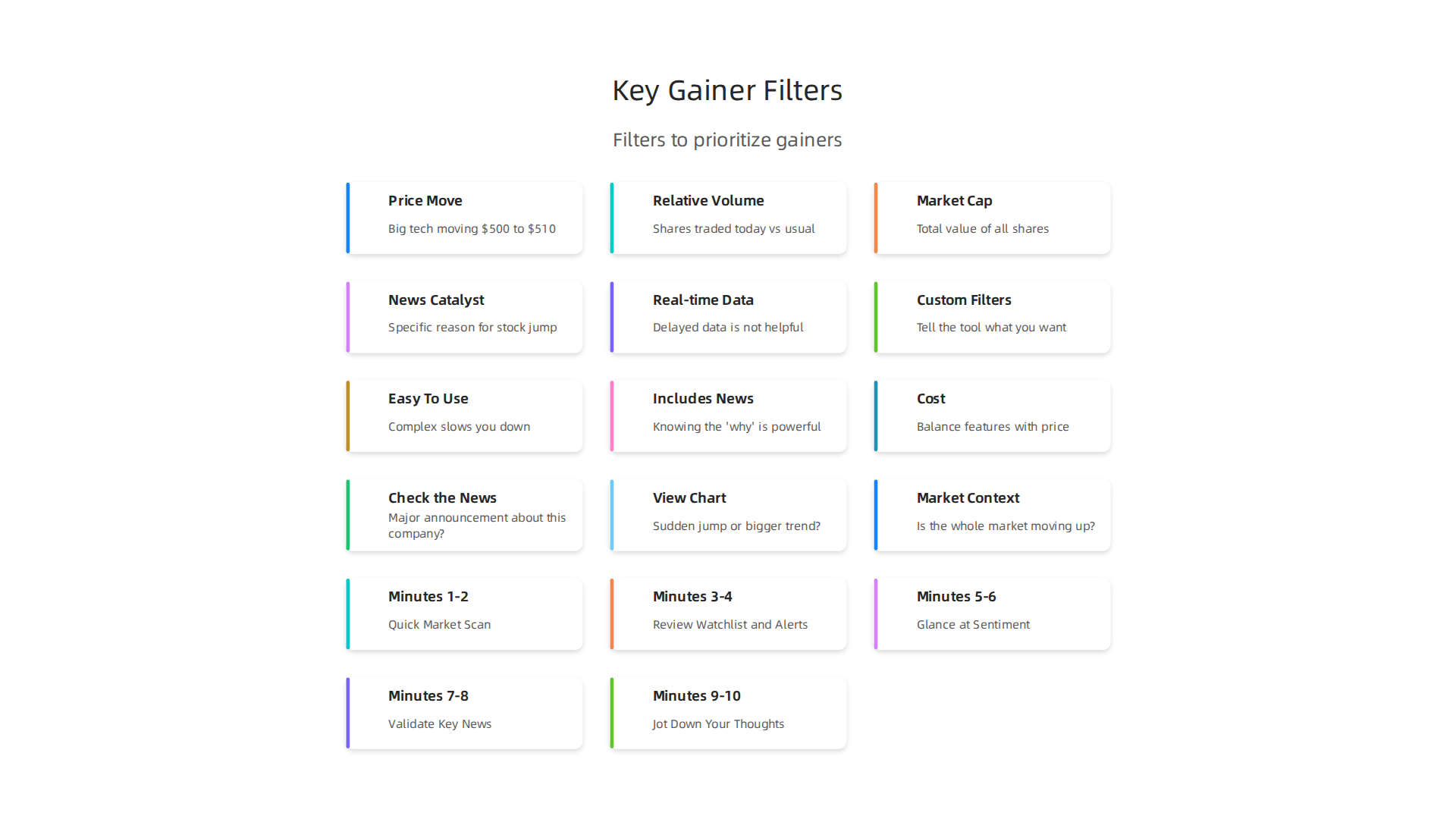
- Price Move (in Dollars): A small company’s stock might go from $1 to $2, which is a 100% gain. But a big tech company moving from $500 to $510 is only a 2% gain. The $10 jump in the big tech stock might be more important because it involves a lot more money changing hands and affects a much larger company.
- Relative Volume: This looks at how many shares of a stock were traded today compared to how many usually trade. If a stock usually trades 1 million shares, but today it traded 10 million shares, that’s a huge increase in volume. High volume with a price jump often means a lot of people are buying and selling, showing strong interest. Companies often rely on data from various outside vendors to provide up-to-date market information, including things like an intraday indicative value per Share.
- Market Cap: This is the total value of all a company’s shares. A company with a market cap of $100 billion making a noticeable move is much more significant than a company worth $100 million doing the same. Larger companies tend to impact the market more widely.
- News Catalyst: This is the most important filter. Was there a specific reason for the stock to jump? Maybe the company announced great earnings, a new product, a big partnership, or there’s a strong trend in its sector. Without a clear reason, a stock’s sudden jump might be short-lived. This is where headlines you might see about stock futures cnbc can give hints before the market opens, or even discussions like "what stock to buy today reddit" can point to underlying interest or rumors.
By using these filters, you can move past simple percentage lists and identify the Top gainer stocks in 2026 that truly signal something important in the Big Tech world. It helps you focus on what really matters instead of getting lost in less important movements.
To really make the most of those filters for finding important [stock gainers today], you need good information. Imagine trying to drive a car with blurry maps. It’s tough to know where you’re going! The same goes for understanding stock movements. Where you get your data from makes a huge difference in how fast, complete, and correct it is.
In 2026, there are many ways to get stock market data, and each has its good and bad points when it comes to speed, how much information it gives, and how much it costs.
Different Kinds of Data Sources
- Exchange Feeds: These are the fastest and most direct sources. They come straight from the stock exchanges themselves, like the NYSE or Nasdaq. Think of it as getting the news directly from the reporter at the scene. This data is super quick, often measured in tiny parts of a second, called milliseconds. For serious traders who need to react instantly, this speed is key.
- Consolidated Feeds: These feeds gather all the information from different exchanges into one place. For example, in the US, a special system collects trades and prices from all the major stock markets. This gives you a full picture, but it can be a tiny bit slower than getting data from just one exchange. Even so, it’s very reliable for understanding the whole market, as explained in guides about Best Stock Market Data APIs for Small-Cap Traders (2026).
- Delayed Public APIs: Many websites and apps offer free or low-cost ways to get stock data. These often use something called an API (Application Programming Interface) to give you the numbers. The catch is, this data might be delayed by a few minutes, or sometimes even more. It’s okay for general watching, but not for making quick trading decisions.
- Data Vendors: These are companies that collect and clean up market data from many sources and then sell it to you. They can offer a range of services, from very fast, expensive feeds to more affordable options with some delay. Some even claim very low latency, like less than 50 milliseconds for real-time data, according to the 2026 Market Data API Scorecard.
Understanding the Trade-Offs
When picking a data source for your [stock gainers today] research, you need to think about a few things:
- Latency (Speed): How fast does the data reach you? For certain trading actions, every millisecond counts. In 2026, waiting even half a second for live prices can be too long. Many experts suggest getting data under 50 milliseconds for the best results, as noted in the Best Financial API Picks for Real-Time Data in 2026. If you’re checking on a popular stock like [pinterest stock] or [negg stock], a small delay might not matter for long-term investing, but it’s critical for quick trades.
- Coverage (What’s Included): Does the data source cover all the markets you care about? Does it include historical data so you can look back at past trends? Some sources might only cover US stocks, while others offer global market information. Getting a wide range of historical data is also important for learning.
- Cost: The faster and more complete the data, the more it usually costs. Direct exchange feeds are very expensive. Delayed public APIs can be free or cheap. Data vendors offer different price plans depending on the speed and coverage you need. For a broader look at providers, check out this guide on the Best Real-Time Stock Market Data APIs in 2026.
By understanding these trade-offs, you can choose the right data source to accurately track and react to [stock gainers today]. Having timely and correct information is the first step to making smart choices in the market. To learn more about how market timing impacts trading, you might find insights in our article on stock market open today daily insights to master your trading strategy.
Want to stay on top of the latest technology and market shifts, especially in AI? Get clear daily AI updates from The Deep View Newsletter.
To really spot those [stock gainers today] quickly, you need more than just good data. You need the right tools to use that data. Think of it like this: having all the ingredients for a great meal is good, but you also need a stove and pots to cook it. In the stock market, these tools are often called stock scanners or dashboards. They help you make sense of all the fast-moving information.
In 2026, these tools are smarter than ever. They watch thousands of stocks at once, looking for specific changes you tell them to find. This means you don’t have to check every single stock by yourself. That would take too long!
How Smart Tools Help You Find Stock Gainers
Good stock scanners and dashboards come with special features to help you find [stock gainers today] super fast:
- Real-Time Sorting: This is perhaps the most important feature. It lets you see which stocks are moving up the most right now. The scanner takes all the live data and puts the biggest gainers at the top of a list. For example, if you’re watching [pinterest stock] or [negg stock], you’ll see them jump up the list if they start making big moves. Many top stock screeners, like those mentioned in a guide to the 10 Best Stock Scanners and Screeners in July 2026, offer this fast sorting.
- Customizable Filters: This is where you tell the tool what you are looking for. You can set rules like:
- "Show me stocks that are up by more than 5% today."
- "Only show stocks that trade a lot, like over 1 million shares."
- "Find stocks in a certain industry, like tech."
- "Look for stocks with a price between $10 and $100."
These filters help you narrow down thousands of stocks to just a few interesting ones. Finding a tool with a lot of filter options is key, as highlighted in comparisons of the Best Stock Screeners in 2026.
- Watchlists: These are like your personal "favorites" list. You can add stocks you want to keep a close eye on, even if they aren’t currently topping the "gainers" list. This is useful for tracking specific companies or sectors.
- Integration with News Feeds: Sometimes, a stock jumps because of important news. A good dashboard will show you headlines related to the stocks you are watching. This helps you understand why a stock is gaining, which is just as important as knowing that it’s gaining.
Using these features together lets you quickly scan the market, apply your rules, and see potential [stock gainers today] as they happen. It makes your work much easier and faster. For more about how to benefit from these quick market movements, consider reading about top gainer stocks in 2026.
A Quick Checklist for Evaluating Tools
If you are looking for a stock scanner or dashboard, especially for a business, here’s a simple checklist:
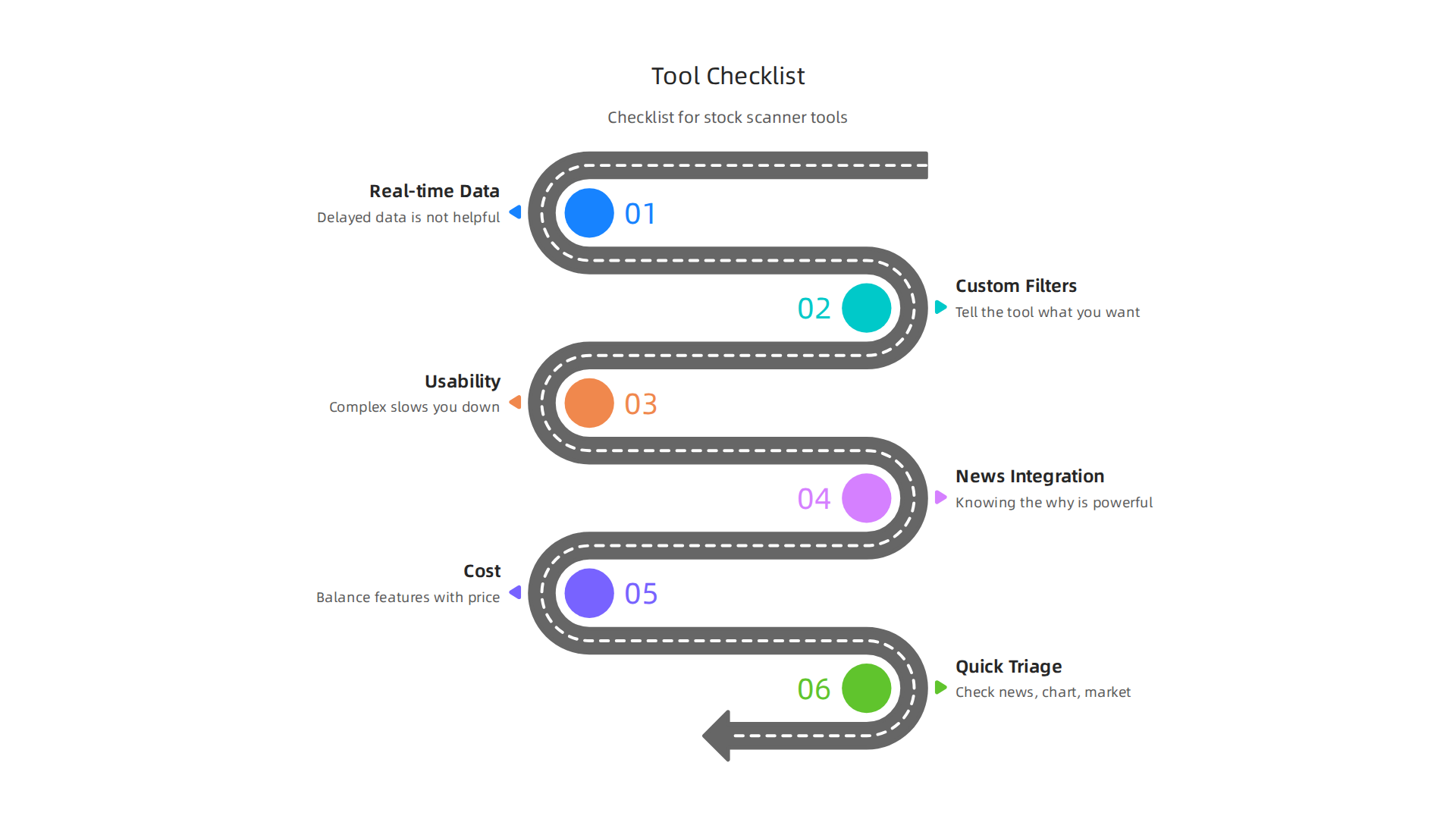
- Is the data real-time? For finding intraday gainers, delayed data is not helpful.
- Can you make your own filters? You need to be able to tell the tool exactly what you want it to find.
- Is it easy to use? A complex tool might have many features, but if it’s hard to learn, it slows you down.
- Does it include news? Knowing the "why" behind stock moves is very powerful.
- How much does it cost? Balance the features you get with the price.
Using these features together lets you quickly scan the market, apply your rules, and see potential [stock gainers today] as they happen. It makes your work much easier and faster. But knowing a stock is gaining is only half the battle. To really understand why a stock is jumping and if that jump will last, you need to look at the stories and feelings around it. This means connecting news headlines, social media buzz, and big events to the stock’s price movements.

Linking News, Social Sentiment, and Events to Explain Today’s Gainers
Imagine a company like Pinterest stock announces a big new partnership. Suddenly, its share price might climb. Or perhaps there’s a lot of chatter on platforms like Reddit about a smaller stock, maybe like NEGG stock, making people wonder "what stock to buy today Reddit" is suggesting. These real-world events and widespread feelings, known as social sentiment, can powerfully influence stock prices.
In 2026, many trading tools try to spot these connections automatically. They read thousands of news articles and social media posts, looking for positive or negative words about companies. This helps traders see if a stock’s sudden rise is because of a real event or just market noise. Research even shows that feelings from social media can affect stock prices, especially right after news comes out [1, 2]. For example, studies have shown that investor sentiment from online sources can even predict returns for major market indexes [3].
However, linking these signals to price moves isn’t always easy. Here’s why:
- Causality vs. Coincidence: Just because a stock goes up after a piece of news doesn’t mean the news caused the rise. It could be a coincidence. Smart tools try to figure out if there’s a direct link.
- Automated Sentiment Limits: Computers are getting better, but they can still miss the full meaning behind words. Sarcasm or complex jokes on social media can fool them. This means you need to be careful with fully automated systems. Even with advanced AI models, sentiment analysis shouldn’t be the only tool you use for predicting stock prices [4].
- Validating Findings: It’s important to check the information yourself. If a tool flags a stock because of "positive sentiment," you should look at the actual news or Reddit discussions. You might find a good reason for the buzz, like an exciting new product, or you might find misleading information. To really cut through the noise, it helps to know how to Filter Yahoo Finance News for Big Tech Market Insights Without the Noise.
Understanding these connections helps you move beyond just seeing that a stock is gaining. It helps you understand why it’s gaining, which is key for making smarter choices about potential stock gainers today. For professionals looking for deeper insights into AI’s role in the tech sector, consider staying informed.
Get clear daily AI updates from The AI Newsletter Worth Reading.
Citations:
- Intraday Stock Prediction Using Sentiment Analysis: Evidence from Dividend Announcements
- Twitter sentiment and stock market movements: The predictive …
- Intraday online investor sentiment and return patterns in …
- STOCK MARKET PRICE PREDICTION USING …
Understanding why a stock is gaining is a big step, but for busy pros, the next challenge is acting fast without getting lost in too much information. You need a system that cuts through the noise. This means setting up smart alerts and having a clear plan to decide if a potential stock gainer today is truly worth your time.
Alerting, triage and decision workflows for busy pros
Imagine you’re trying to find the best stock gainers today. There are thousands of stocks, and news breaks all the time. If your system alerts you to every tiny change, you’ll be flooded with messages. That’s why you need a smart way to get only the most important alerts. The goal is to design simple rules so that only high-priority gainers reach you, the decision-maker.
Here’s how to build a better alert system:
- Set Clear Alert Rules: Don’t just look for any stock that moves up. Set rules that matter to you. For example, you might want to know when a stock goes up by more than 5% in one hour, and has very high trading volume. Or maybe you want alerts only for companies in specific industries, like Big Tech. In 2026, many trading platforms offer ways to customize these alerts, helping you focus on potential
stock gainers todaythat fit your strategy Best Stock Screeners in 2026: The 10 Tools Serious. The best alerts are those that lead to a clear action, not just more data Monitoring and Alerting Best Practices to Reduce. - Simple Triage Steps: Once an alert comes in, you need to quickly check if it’s important. This is called triage. You might have a quick checklist:
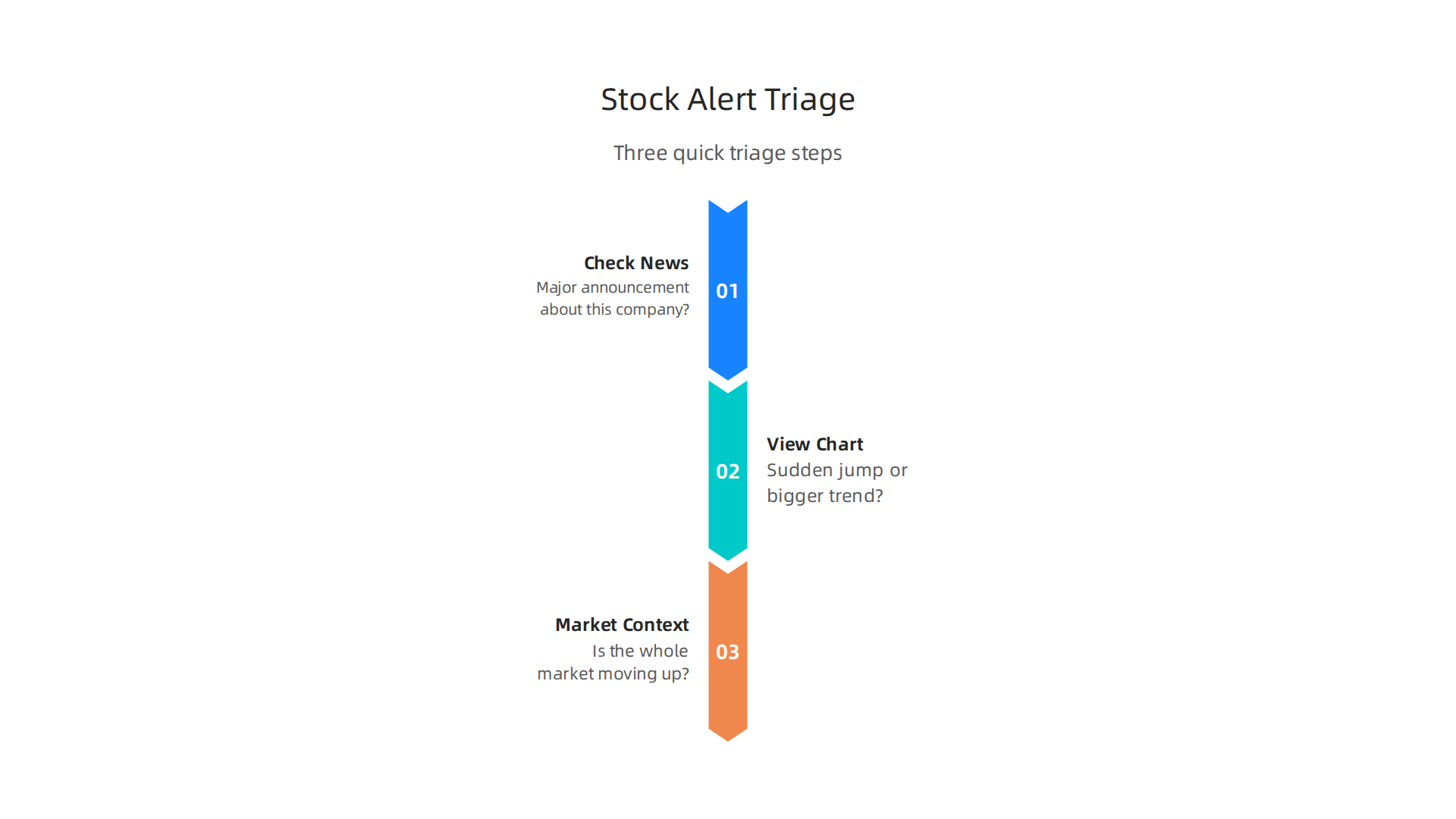
1.  **Check the News:** Is there a major announcement about this company?
2.  **Look at the Chart:** Is this a sudden jump, or part of a bigger trend?
3.  **Market Context:** What are the `stock futures cnbc` reporting? Is the whole market moving up, or just this one stock? This can give you a clue about whether the stock's rise is part of a broader trend or a company-specific event.
- Quick Decision Checklist: If a stock passes your triage, you then need to decide if you should act. A simple checklist can help you make a quick choice:
- Why is it gaining? Do you understand the reason behind the rise? Is it good news, strong earnings, or just a rumor?
- Is the reason strong? Will this reason keep the stock moving up?
- What are the risks? Is there anything that could make the stock drop soon?
- Does it fit your plan? Is this stock something you’d normally consider buying?
By setting up these clear rules and steps, you make sure that when you see a potential stock gainer today, you’re ready to make a smart, quick decision. This helps you avoid chasing every small movement and instead focus on the most promising opportunities. To learn more about how to identify and profit from such market movements, you can read about Top Gainer Stocks in 2026 and How to Profit from Market Momentum.
Having these workflows in place means you spend less time sifting through irrelevant data and more time acting on real opportunities. It helps you stay in control of your trading strategy every day the Stock Market Open Today: Daily Insights To Master Your Trading Strategy.
Having great alerts and a quick checklist is good, but even with those, our minds can sometimes play tricks on us. We might see what we want to see or miss important details. This is why it’s super important to avoid common pitfalls and double-check your findings before you decide to act on any potential stock gainers today.

Avoiding Bias and Verifying ‘Gainers’ Before Acting
Even the smartest professionals can fall into thinking traps when looking at stock movements. These traps are called biases, and they can make you think a stock is a good buy when it’s not.
Common Pitfalls to Watch Out For:
- Survivorship Bias: This happens when you only look at successful stocks from the past and forget all the stocks that didn’t make it. You might think it’s easy to find big winners because you’re only seeing the ones that survived and thrived. But for every
pinterest stockthat became huge, many others failed. Always remember that past success doesn’t promise future gains. - Look-Ahead Bias: This is like cheating in a game. It means you’re using information to make a decision that you couldn’t have known at the actual time of the decision. For example, if you look back at why
negg stockjumped last year, it’s easy to see the news now. But at the exact moment the stock started to rise, that news might not have been public yet. Make sure your decisions are based only on information that was available at that very moment. - Confirmation Bias: This is when you only search for or believe information that supports what you already think. If you have a feeling a stock will go up, you might ignore news that says it will go down. It’s like only listening to friends who agree with you. You need to look at all sides of the story, even the parts you don’t like. Social media, like discussions found when searching "what stock to buy today reddit," can often be full of this type of bias. While online investor sentiment can predict stock price movements, it should not be the only factor you consider STOCK MARKET PRICE PREDICTION USING ….
Quick Verification Steps to Stay Smart:
To make sure you’re making the best choices, here are some ways to quickly verify potential stock gainers:
- Cross-Check Data: Don’t just rely on one source for your information. If one news site says a company had great earnings, check another reputable site. Compare what different financial news channels are reporting about
stock futures cnbcor other market trends. The more sources you check, the surer you can be. - Validate Primary Sources: The best information often comes straight from the company itself. If there’s news about a new product or a big deal, try to find the company’s press release or official announcement. This helps you get the facts directly, instead of through someone else’s interpretation.
- Document Uncertainty: It’s okay not to be 100% sure about every trade. In fact, it’s smart. When you’re making a decision, jot down any unknowns or things that still confuse you. This helps you remember what risks you’re taking and keeps you from jumping in too fast. For example, you might make a note if the market looks shaky, even if an individual stock looks strong. To truly separate signal from noise, it’s key to understand how data impacts your decisions, a topic explored further in our guide on AI ready data your strategic priority for enterprise AI in 2026.
By carefully checking your information and being aware of these common thinking traps, you’ll be much better at picking out the true stock gainers today and avoiding costly mistakes.
For those who want to stay even more informed about the strategic shifts and underlying technology influencing market movements, especially concerning AI advancements, there’s a valuable resource available. Get clear daily AI updates from The AI Newsletter Worth Reading.
By carefully checking your information and being aware of these common thinking traps, you’ll be much better at picking out the true stock gainers today and avoiding costly mistakes. To make this easier and more reliable, it’s smart to have a clear plan for your morning routine.
Daily Checklist and Playbook: A 10-Minute Routine to Spot and Contextualize Gainers
Finding potential stock gainers today doesn’t have to take all morning. With a good system, you can quickly check important information and make better choices. Think of this as your 10-minute daily playbook, designed to cut through the noise and highlight what truly matters. Setting up strong alert systems is a key part of this, helping you focus on actionable insights instead of getting lost in too much data, as highlighted by best practices for reducing alert fatigue in 2026, which suggest regular reviews to improve signal quality and get rid of noisy alerts Monitoring and Alerting Best Practices to Reduce ….
Here’s a simple, timed checklist you can follow:
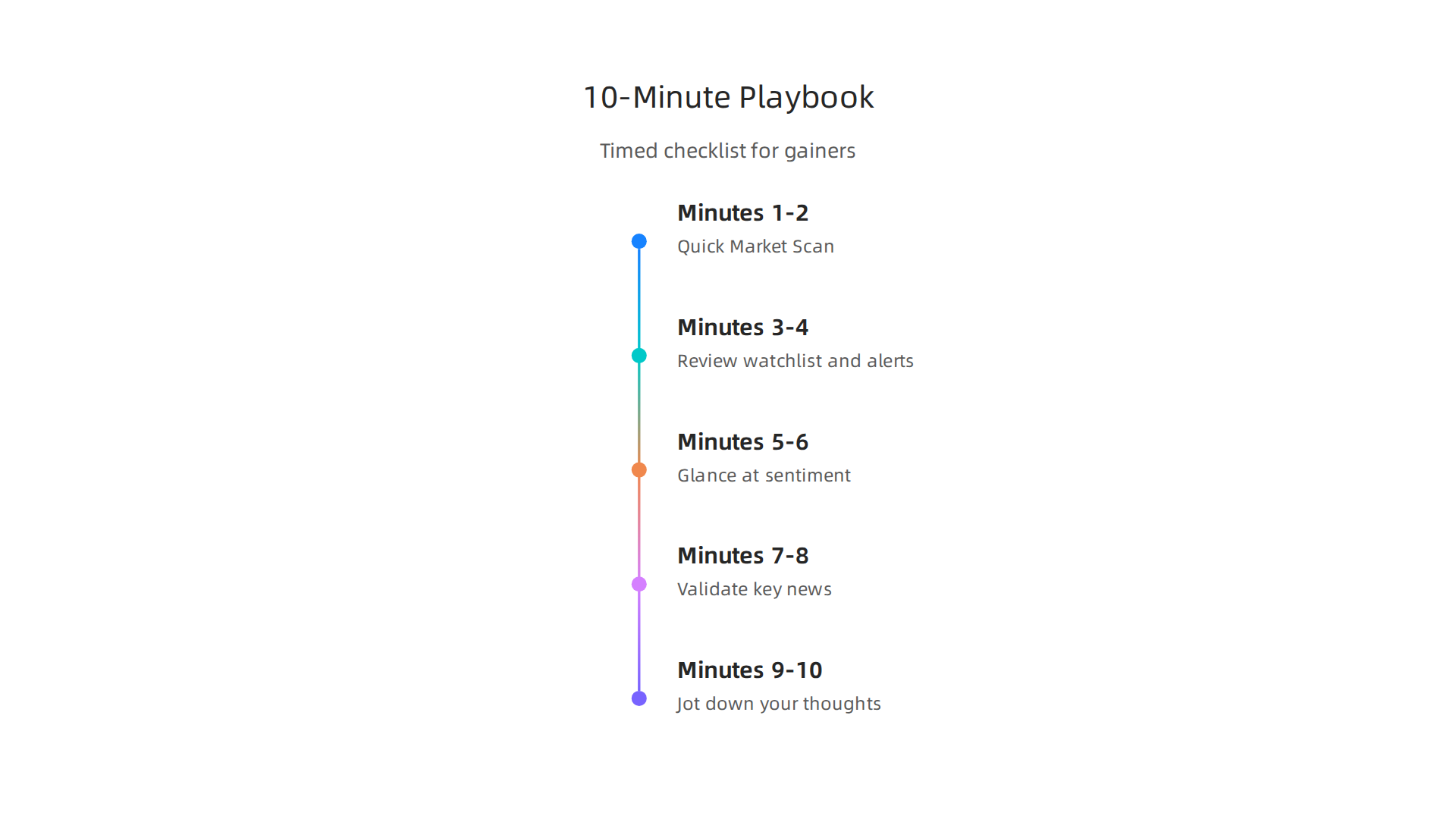
- Minutes 1-2: Quick Market Scan. Start your day by looking at the big picture. What are the main financial news sites saying? Check for headlines about
stock futures cnbcor any major global events that might move markets. Look for general feelings about the market. Is it looking positive or negative today? This quick scan helps you understand the overall mood before diving into individual stocks. - Minutes 3-4: Review Your Watchlist and Alerts. Now, open your list of stocks you’re already watching. Have any of your special alerts gone off? These alerts might tell you if a stock has moved a lot or if there’s important news about a company like
pinterest stockor evennegg stock. These early warnings are your first clue to potential stock gainers today. - Minutes 5-6: Glance at Sentiment. While social media can have biases, a quick look can sometimes show you what many people are talking about. You might check a site like Reddit for "what stock to buy today reddit" discussions, but remember to filter out the noise. This step is about getting a general feel for what retail investors are excited or worried about. For more on this, you can learn how WallStreetBets Reddit moves markets.
- Minutes 7-8: Validate Key News. If you see a potential gainer, quickly check why. Is there real news, like a company announcement or an earnings report? Go to trusted financial news sites or the company’s own website for official statements. This helps you confirm if the reason for the stock’s move is solid. You can learn to filter Yahoo Finance news for big tech market insights.
- Minutes 9-10: Jot Down Your Thoughts. Make a quick note about what you found. Is this stock gainer something you want to look into more, or does it seem too risky? Write down why you think so. This simple habit helps you remember your reasons and makes you think clearly. This can be as simple as a quick memo.
Low-Effort Templates for Staying Organized:
You don’t need fancy tools. A simple notepad or a digital document can work wonders:
- Watchlist: A basic table with columns for "Stock Name," "Current Price," "Why I’m Watching It," and "Alerts Set."
- Quick Memo: A short note with "Stock," "Date," "Why it’s moving (briefly)," "Risks," and "Next Action (Buy/Hold/Pass)."
- Decision Log: This is where you keep a record of your thoughts before making a trade. It helps you see patterns in your thinking and learn from past choices, leading to better decisions about the biggest movers today in big tech stocks.
By making this routine a habit, you’ll be much faster and more confident in identifying real opportunities among the many stock gainers today. It’s all about being prepared and methodical, not rushing.
Summary
This article explains why following daily market moves matters for anyone watching Big Tech and provides a practical framework to spot meaningful "stock gainers today." It shows which filters matter — price move in dollars, relative volume, market cap and a clear news catalyst — and walks through trade-offs among data sources from fast exchange feeds to delayed public APIs. The guide also covers the right tools (real-time scanners, custom filters, integrated news), how to link headlines and social sentiment to price action, and how to build alerting, triage and decision workflows that avoid common biases. Finally, it offers a short 10-minute morning playbook and verification steps so you can quickly find, validate and act on gainers without getting lost in noise.