
Why today’s market open matters (and how to use this update)
For busy people who make big choices, knowing what the stock market is doing right when it opens can save a lot of time. In 2026, the world of investing moves super fast. You need a quick look at the market status to help you decide what to do next. This update is here to give you just that.

When we talk about the stock market open today, we are often looking at the major exchanges in the US. The New York Stock Exchange (NYSE) and NASDAQ both open at 9:30 AM Eastern Time (ET) and close at 4:00 PM ET, every Monday through Friday, unless there’s a holiday, of course. For example, in 2026, the NYSE is closed on days like New Year’s Day and Martin Luther King Jr. Day When Does NYSE Open? Stock Market Hours & Fed Tracker.
Getting this snapshot helps you understand the bigger picture without having to dig through endless news.
This briefing does more than just tell you when the market opens. It helps connect those opening times to bigger ideas in the economy, important moves from Big Tech companies, and smart ways you can invest. For instance, understanding how certain events impact how US stock futures predict Big Tech stock moves before the open can give you an edge. It’s all about getting useful insights quickly, so you can make informed choices about your investments and strategy. You’ll find out what’s moving the market and how it might affect your own financial plans or business decisions.
If you want to keep up with the latest and clearest daily insights into AI and the wider technology sector, we have something special for you. Get clear daily AI updates from The AI Newsletter Worth Reading.
Market Status Snapshot: Which markets and indexes are open now
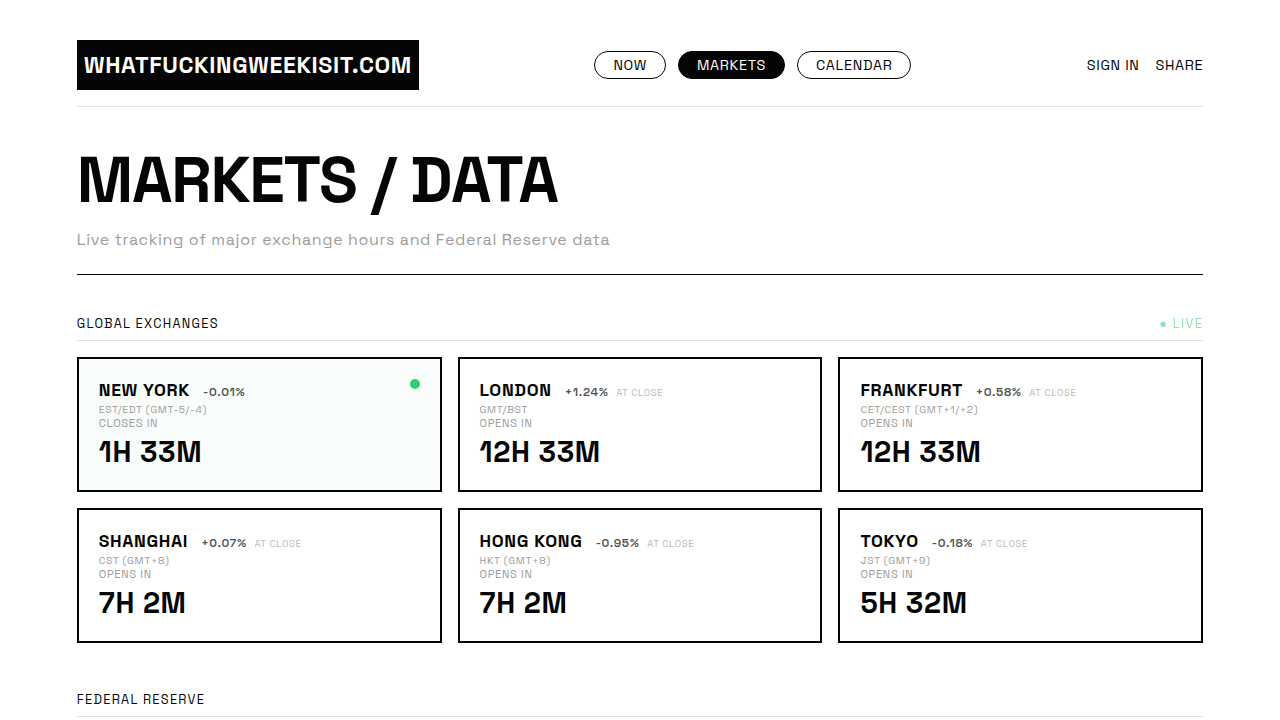
Knowing when different markets around the world open is key to a full stock analysis. While the New York Stock Exchange (NYSE) and NASDAQ open at 9:30 AM Eastern Time, other major markets have their own schedules. This quick look helps you see what’s happening right now, no matter where the markets are.
Here is a simple overview of when some big stock markets usually open and close, keeping in mind that actual times can change with holidays or daylight saving:
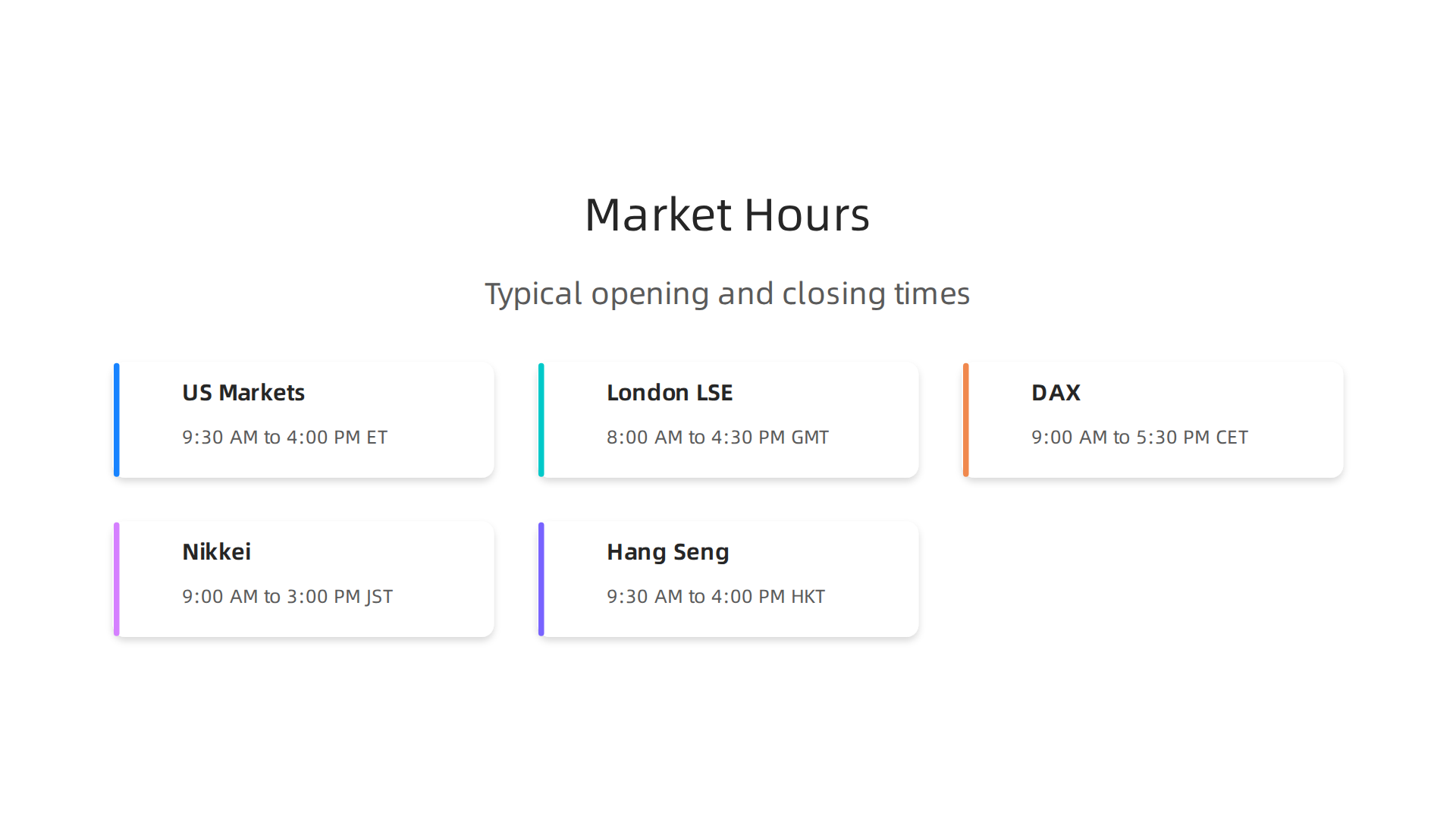
- US Markets (NYSE, NASDAQ, S&P 500): These markets start trading at 9:30 AM ET and close at 4:00 PM ET, Monday through Friday.
- London Stock Exchange (FTSE): The main market in the UK opens at 8:00 AM GMT and closes at 4:30 PM GMT [Is the Stock Market Open? Live Hours for 17 Exchanges].
- DAX (Germany): German stocks, like those on Euronext Paris, typically trade from 9:00 AM CET to 5:30 PM CET [Is the Stock Market Open? Live Hours for 17 Exchanges].
- Nikkei (Japan): The Tokyo Stock Exchange opens for its morning session at 9:00 AM JST and closes for a lunch break at 11:30 AM JST. Trading starts again at 12:30 PM JST and ends at 3:00 PM JST [Global TradFi Market Hours].
- Hang Seng (Hong Kong): Trading starts at 9:30 AM HKT, takes a lunch break from 12:00 PM to 1:00 PM HKT, and then runs until 4:00 PM HKT [Global TradFi Market Hours].
It is also good to remember that many US markets have "pre-market" and "after-hours" trading. Pre-market trading can start as early as 4:00 AM ET, and after-hours trading can go until 8:00 PM ET. These extra hours let people trade stocks outside the regular open times, often because of important news or company updates.
When the stock market open today, watch for "key movers." These are stocks that show big price changes or lots of trades right away. For example, if a stock opens much higher or lower than where it closed the day before, that’s called a "gap." A "volume spike" means many shares of a stock are being bought or sold very quickly. Both gaps and volume spikes tell us that something important might be happening with that company, like a news announcement, and can be crucial for your stock analysis. You can track these significant movements to identify biggest movers today in big tech stocks for 2026.
These early signals are useful for all types of investors. Even if you follow a long-term strategy like a Dave Ramsey investment strategy or look into value investing reddit groups, knowing these fast changes helps you understand the bigger market picture. It can show you which industries are getting attention or which companies are reacting strongly to current events. Sometimes, discussions in online communities like wallstreetbets reddit moves markets can also signal these early movements, showing how retail sentiment impacts stock behavior.
Even with a close eye on individual stock movements, smart investors also look at bigger pictures. This includes knowing about important economic news and world events that can shake up the entire market. When the stock market open today, these larger forces often set the mood for trading.
Important Economic News and Central Bank Updates
Governments and central banks often share information that can really move stock prices. These announcements come out on a schedule, so you can plan to watch for them. For example, reports on how many people have jobs or how much prices are going up (inflation) can change how people feel about the economy.
Here are some types of news to watch for:
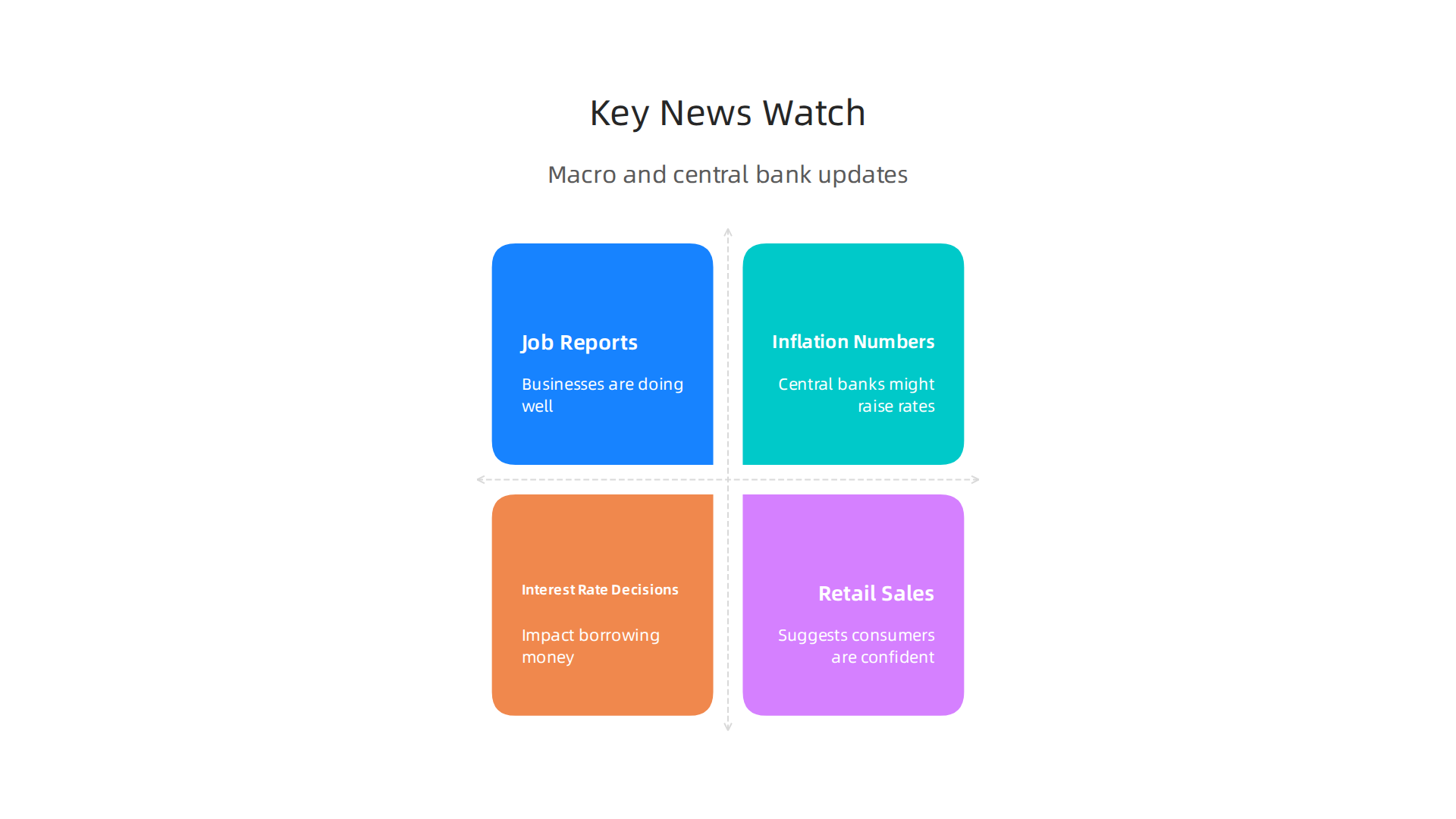
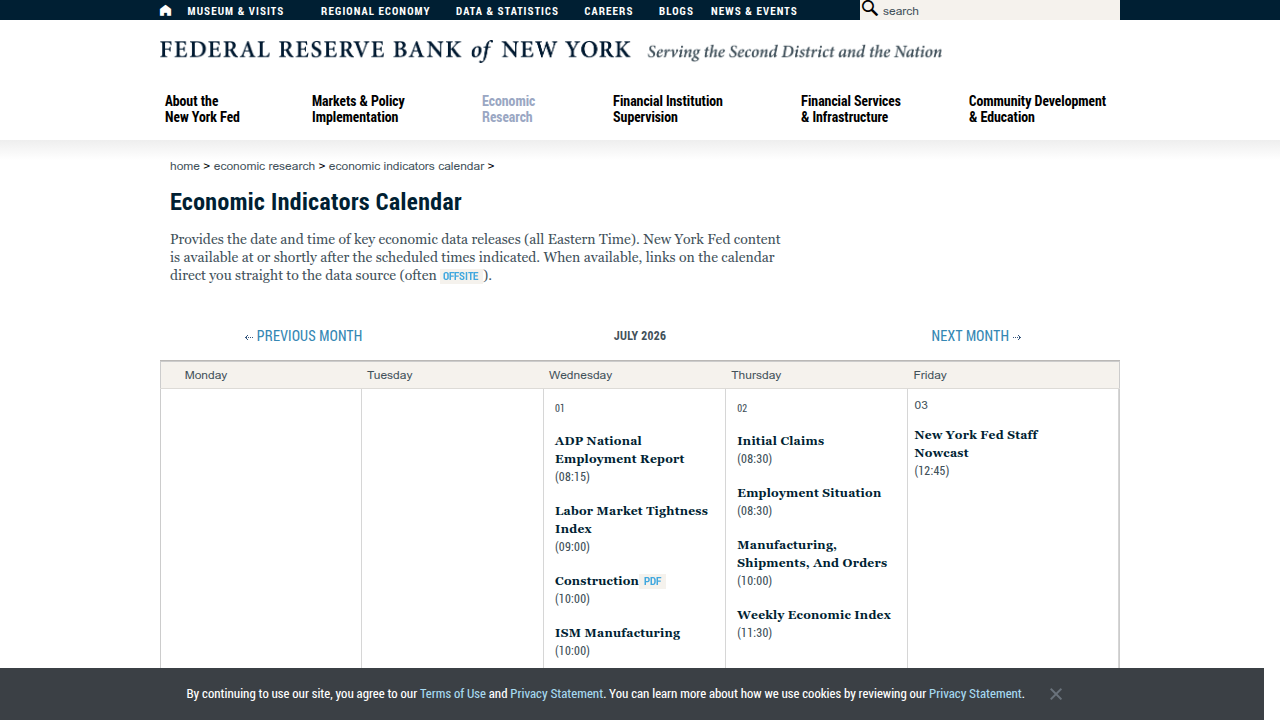
- Job Reports: If more people are working, it often means businesses are doing well, which is good for stocks. These reports can be found on calendars from places like the New York Fed’s Economic Indicators Calendar.
- Inflation Numbers: When prices rise too fast, central banks might raise interest rates. Higher rates can make it more expensive for companies to borrow money and can slow down the economy, which might make stock prices fall. You can see these dates on various economic calendar releases.
- Interest Rate Decisions: Central banks, like the European Central Bank (ECB) or the US Federal Reserve, decide whether to raise, lower, or keep interest rates the same. These decisions have a big impact on how much money people and companies can borrow, affecting everything from housing to business investments. You can track these on an Economic Calendar.
- Retail Sales: This shows how much people are buying. If sales are strong, it suggests consumers are confident and spending, which boosts company profits.
These reports help everyone, whether you follow a Dave Ramsey investment strategy or are part of value investing reddit groups, understand the bigger market picture when the stock market open today. Knowing what’s coming can help you make better decisions for your stock analysis.
World Events and Commodity Changes
Beyond economic numbers, what’s happening around the world also plays a huge part in the stock market. Big news events, like changes in how countries get along or unexpected events in important parts of the world, can make investors feel more or less willing to take risks. For example, if there’s unrest in an area that produces a lot of oil, oil prices might jump. This can affect many companies, from airlines to factories.
- Geopolitical Developments: Events like trade talks between countries or political conflicts can change how businesses operate and how investors see the future. These shifts can reshape the world market order is being reshaped by AI and geopolitical competition.
- Commodity Shifts: Prices of things like oil, gold, or important metals can go up or down based on world events. These changes affect the costs for many companies and can impact their profits, leading to stock price changes.
Keeping an eye on these macro and geopolitical drivers is a vital part of your daily stock analysis. They can give you clues about how different industries or even the whole market might behave.
For clear daily AI updates that impact Big Tech and the broader market, you’ll want to check out The AI Newsletter Worth Reading.
Beyond these large trends, the individual companies, especially the big technology ones, also make a lot of headlines that can move stocks when the stock market open today. Knowing what these giants are up to is a key part of smart stock analysis.

Big Tech & Sector Impacts: Earnings, Launches, and Regulation Moving Stocks
Big Tech companies like Alphabet (Google), Amazon, Meta (Facebook), and Microsoft often share important news about their money and new products. These updates can make a huge difference to how their stocks, and even whole parts of the market, perform. In 2026, many of these big companies released their earnings reports, showing how much money they made and spent, especially on new things like AI.
Earnings Reports and Product Launches
When big companies report their earnings, investors pay close attention. For example, in early 2026, major tech firms had their "earningspalooza," where they shared their latest financial numbers. These reports showed different results, with some companies like Apple seeing their stock go up, while others like Meta saw theirs drop after sharing plans for big spending on new projects. Learning to read these reports helps you see the winners and losers. For instance, in Q1 2026, companies like Alphabet showed how much their cloud business grew thanks to AI, while others like Microsoft also saw big jumps in their cloud services revenue Big Tech Q1 2026 earnings: Key takeaways on AI spending, cloud growth, and more.
These updates don’t just affect the big companies themselves. They also impact all the smaller businesses that work with them. If a Big Tech company launches a new product or platform, it can boost sales for companies that supply parts or create apps for that platform. On the flip side, if a big company faces problems, its suppliers or partners might also feel the pinch. This is why watching Big Tech earnings fuels mixed stock moves, as Apple pops, Meta plunges, and Alphabet surges is important.
Government Rules and AI Ecosystems
Changes in government rules, called regulations, can also shake things up. If new laws are made about how tech companies handle data or what they can do with AI, it can change their costs or how they operate. This means investors need to keep an eye on both what companies are earning and what governments are saying. Looking at how AI drives Big Tech performance, especially for companies like Alphabet Stock 2026 Cloud Revenue Surges, gives clues about where the market is headed.
Whether you follow a Dave Ramsey investment strategy or are part of value investing reddit groups, understanding these company-specific details helps you guess how different industries or the whole market might behave. It helps you see which stocks might be the Biggest Movers Today In Big Tech Stocks For 2026.
While looking at specific companies helps, it’s also very important to check the overall health of the stock market. You wouldn’t just look at one tree to know if a whole forest is doing well, would you? This is where "market breadth" and "fund flows" come in. They tell us if a market rally is strong and healthy, or if only a few big stocks are moving things, which can be a sign of weakness.
Market Breadth, Flows & Technical Signals: Is this a healthy rally or a narrow move?
When the stock market open today, one of the first things experts check is market breadth.

This simply means looking at how many stocks are going up versus how many are going down. If many stocks are moving higher, it shows a strong, broad market rally where lots of companies are doing well. But if only a few big stocks are rising while many others are falling or staying flat, that’s called "narrow breadth." It means the market’s strength is not spread out, which can be risky. In March 2026, some experts noticed that market breadth was getting worse, even as major indexes stayed steady, showing fewer stocks were participating in the gains Market Breadth Breakdown: Why the Market Has “Bad Breadth” in March 2026. Other key signs include how many stocks are hitting new high prices compared to those hitting new lows, and where the most trading money (volume) is going.
ETF and Fund Flow Signals
Another big clue comes from "ETF and fund flows." ETFs are like baskets of different stocks or bonds. When a lot of money flows into these ETFs, it means big investors like pension funds and large institutions are buying them up. This shows where big money thinks the market is headed. In the first half of 2026, money flowing into ETFs reached new records, with over $1 trillion in total inflows by June ETF inflows set records in first half.
However, even with these record inflows, the market breadth sometimes narrowed. This means that while lots of money was coming into ETFs overall, that money might have been focused on a smaller group of leading stocks. For example, in July 2026, despite positive overall flows, market breadth actually contracted, with fewer funds finishing higher than the week before Market Pulse — Narrowing breadth, divergent flows (July 2026). Paying attention to these signals helps you filter Yahoo Finance news and understand if a market’s upward move is truly healthy or if it’s relying on just a few strong players.
Understanding these broad market signals, alongside the company-specific news we talked about earlier, gives you a much clearer picture of what’s happening in the market. It helps you see if the overall market is strong or if it’s moving on shaky ground. For more deep dives into market trends, especially those driven by AI, consider getting expert insights.
Get clear daily AI updates from The AI Newsletter Worth Reading.
Understanding these broad market signals, alongside the company-specific news we talked about earlier, gives you a much clearer picture of what’s happening in the market. It helps you see if the overall market is strong or if it’s moving on shaky ground. For more deep dives into market trends, especially those driven by AI, consider getting expert insights.
Strategy Playbook: Short-, medium-, and long-term moves for professionals
After you check the market’s health signals, like how many stocks are moving up and where the money is flowing, the next step is to use that information to make smart choices. This means turning your morning look at the "stock market open today" into clear plans for different kinds of trading.
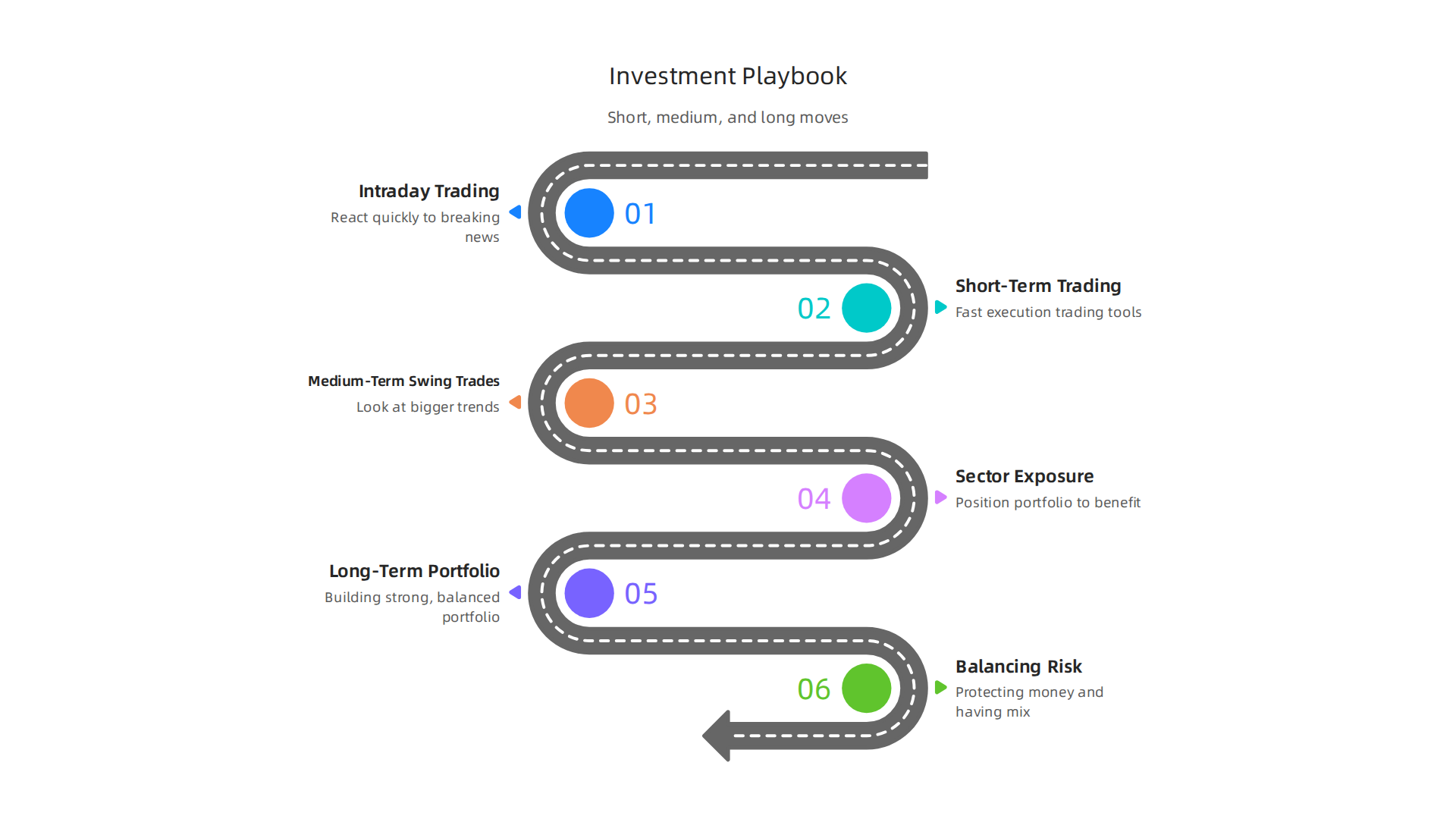
Intraday and Short-Term Trading
For quick moves, like those you make on the day the market opens, you need to be fast. This type of trading is all about reacting quickly to breaking news or big company announcements. For example, when major tech companies like Alphabet, Amazon, Meta, and Microsoft report their earnings, their stock prices can move a lot right at the open. Many of these important earnings reports happened in Q1 2026 and April 2026, causing significant shifts in the market Big Tech Earningspalooza: Alphabet, Amazon, Meta and Microsoft Report Today.
To succeed with these quick trades, you need very fast trading tools. Getting your buy or sell orders through quickly can save you money. In 2026, some platforms are known for their fast order execution, which is key for day traders Which US Trading Apps Actually Have the Fastest Execution? (2026). It also helps to keep an eye on what people are saying on social media, as that can sometimes show where a stock might head in the very short term. Learning how to analyze Reddit sentiment for smarter trades can give you an edge.
Medium-Term Swing Trades and Sector Exposure
For trades that last a few days or weeks, you’ll want to look at bigger trends. This kind of "stock analysis" involves understanding how strong certain industries or parts of the market are. A big theme in 2026 is how much money Big Tech companies are spending on AI and how fast their cloud services are growing. For instance, in Q1 2026, many big tech companies highlighted their large AI investments and strong cloud revenue growth Big Tech Q1 2026 earnings: Key takeaways on AI spending, cloud growth, and more.
If you see that AI is driving a lot of growth, you might want to put more of your money into companies that are leaders in AI, like Alphabet, whose cloud revenue is surging thanks to AI advances. This helps you position your portfolio to benefit from these stronger trends, as detailed in our analysis of Alphabet stock 2026 cloud revenue surges 63 percent as AI drives Big Tech performance.
Long-Term Portfolio Tilts: Balancing Risk
When you’re thinking about your money over many months or years, it’s about building a strong, balanced portfolio. This is where ideas like a "dave ramsey investment strategy" or insights from "value investing reddit" communities come in. It’s not just about chasing the fastest-growing stocks, but also about protecting your money and having a mix that can handle different market conditions.
For example, while tech stocks are exciting, you might want to add some steadier investments that pay regular income, like dividend stocks. You can find ways to balance tech portfolios with dividend growth stocks that provide reliable returns. Looking at how the world market order is being reshaped by AI and geopolitical competition helps you adjust your long-term plans to fit big global changes.
Position Sizing and Risk Management
No matter if you’re trading for a few hours or a few years, it’s very important to manage your risk. This means deciding how much money to put into each trade or investment. If market breadth is narrow, as we discussed before, it might mean the market is riskier, so you might want to invest less or be more careful with your choices. On the other hand, if Big Tech earnings are strong across the board and market breadth is wide, you might feel more confident taking larger positions. Always think about the possible rewards versus the possible risks before you invest.
After you understand the rewards and risks, you need ways to protect your money, especially when the market gets bumpy.
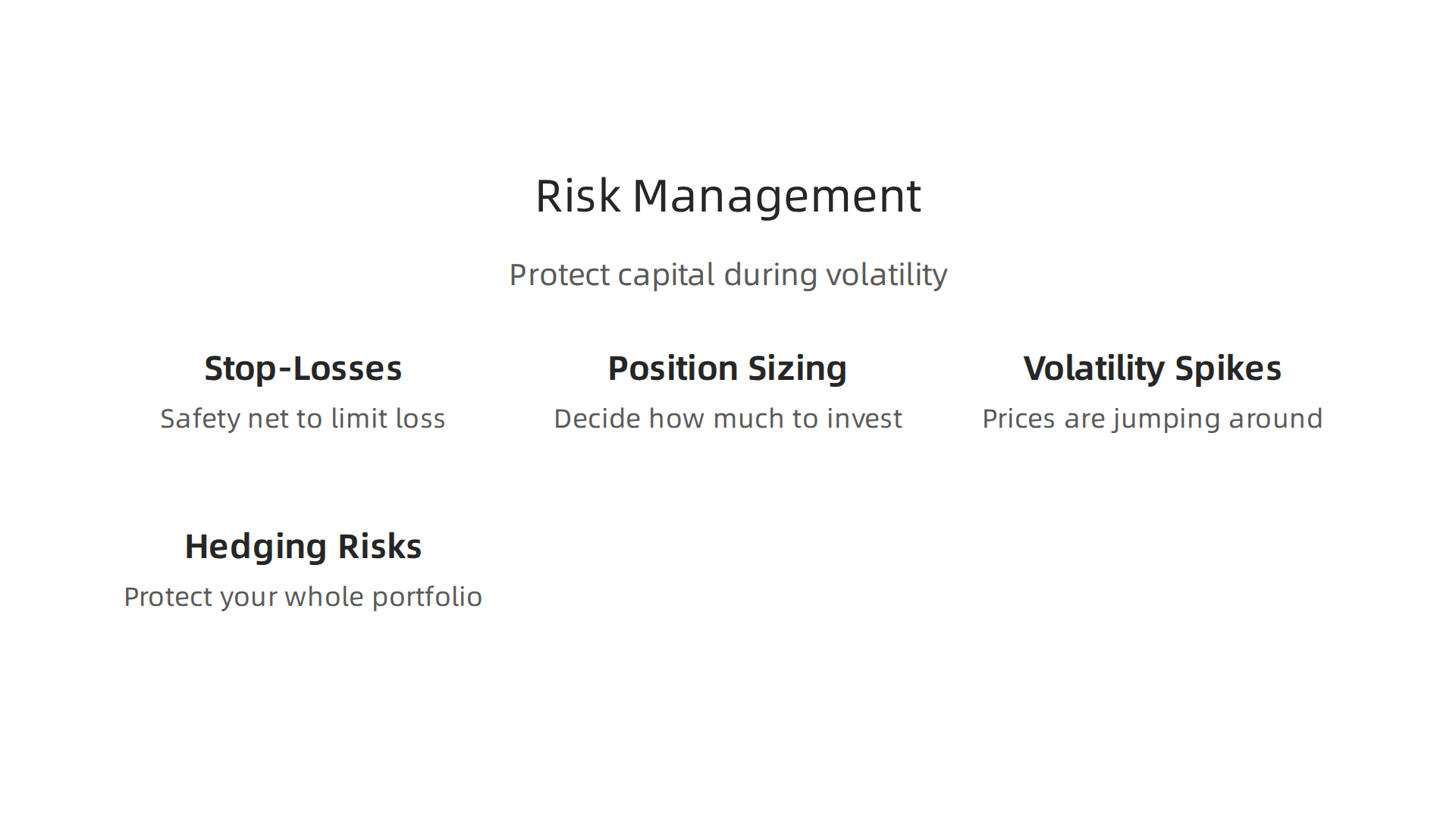
This means having clear rules for how you trade.
Setting Up Stop-Losses and Sizing Your Bets
One smart way to protect your money is by using "stop-loss" orders. A stop-loss is like a safety net. You set a price where, if your stock drops to it, your trading app automatically sells it. This stops you from losing too much money on one trade. For example, if you buy a stock at $100, you might set a stop-loss at $95. If the stock falls to $95, it sells, and you limit your loss to $5 per share.
Another key part of protecting your money is "position sizing." This means deciding how much money to put into each trade. You wouldn’t bet all your money on one stock, right? If the market feels very risky, perhaps because certain big economic reports are coming out, you might choose to invest less in each trade. On the flip side, if the overall market is strong and stable, you might feel okay investing a bit more. This kind of careful stock analysis helps manage your overall risk.
Watching for Volatility Spikes
Market volatility means prices are jumping around a lot. These spikes often happen around big news events. For example, when the government announces new numbers about jobs or how much things cost, the stock market can react strongly, even right at the stock market open today.
To be ready, professionals keep a close eye on the calendar. An Economic Calendar lists all the important economic announcements. Knowing when these big news days are can help you plan your trades, adjust your stop-losses, or even decide to sit out certain parts of the day if you expect big swings. Many important economic releases for 2026 are published on official calendars, allowing traders to anticipate market-moving news 2026 U.S. Economic Calendar.
Hedging Against Risks
Sometimes, you want to protect your whole portfolio, not just one stock. This is called hedging. It’s like buying insurance for your investments. If you have many tech stocks, for instance, and you worry about a general market downturn, you might buy something that tends to go up when tech stocks go down. These "hedges" can help balance your risks. While there isn’t a single "dave ramsey investment strategy" for active hedging, understanding how different parts of the market move together is important.
Finding low-cost, smart hedges is part of good planning. It means looking for investments that do not move in the same way as your main holdings. This can help you protect your money without spending too much. If you’re looking for deeper insights into how artificial intelligence is changing the market and how to spot these trends, you’ll find great value in staying updated.
Get clear daily AI updates from The Deep View Newsletter.
The AI Newsletter Worth Reading
To truly master active trading, it’s not enough to just understand risks. You also need the right tools and ways to act quickly and wisely. This is where clever execution tools, good data feeds, and automation come in handy for busy professionals.
Smart Tools for Quick Trading
Imagine you need to make a trade right when the market opens. You can’t be slow. That’s why professional traders use special tools. These tools help them send orders to the market very fast. The New York Stock Exchange (NYSE) and Nasdaq usually open at 9:30 AM Eastern Time (ET) on weekdays When Does NYSE Open? Stock Market Hours & Fed Tracker. Being ready right at the stock market open today is key for many strategies.
These tools also help you get the best price for your trades. They often have special ways to send your order to the best place for it to be filled quickly. Fast execution is important because prices can change in a blink. Some trading apps are known for their quick execution, meaning your trade happens almost instantly Which US Trading Apps Actually Have the Fastest Execution? (2026).
Getting the Right News and Setting Alerts
There’s a lot of news out there, and not all of it is helpful. Busy traders need ways to cut through the "noise" and focus only on what matters. This means having good newsfeeds that give you important updates without overwhelming you. You can learn how to filter Yahoo Finance news for big tech market insights without the noise.
Alerts are another big help. You can set up rules so your trading app tells you when:
- A stock reaches a certain price.
- There’s big news about a company you own.
- A specific market event happens.
This way, you don’t have to watch your screen all day. The alert lets you know when it’s time to act, helping you catch the biggest movers today in big tech stocks for 2026 without constant checking.
Using Automated Rules
Some smart traders also use automated rules. These are like mini-robots that do simple tasks for you. For example, if you want to buy a stock when its price drops to a certain level, you can set an automatic order. This saves you time and helps you stick to your plan, even when you’re busy. These tools help maintain the quality of your decisions by taking care of the routine work.
Summary
This article explains why the market open matters and how to use that moment to make faster, smarter investment decisions. It summarizes US and major global market hours, explains pre-market and after-hours trading, and highlights the early signals to watch at the open—gaps, volume spikes and futures moves—that often foreshadow bigger intraday trends. You’ll learn which economic releases and geopolitical or commodity events tend to drive volatility, how Big Tech earnings and AI investment shape sector performance, and which breadth and fund-flow metrics show whether a rally is healthy or narrow. The piece then turns those signals into a practical strategy playbook for short-, medium- and long-term trading, covering position sizing, stop-losses, hedging and the execution tools and alerts professionals use to act quickly. After reading, you’ll be able to interpret opening-market signals, adjust risk exposures, and use concrete rules and tools to trade or manage a portfolio more confidently around the market open.