

Have you ever wondered which industries really control the global economy? The answer changes faster than most people realize. Traditional sectors like energy and banking still throw their weight around, but technology has pushed its way to the front. In 2026, the top industries in the world aren’t just big — they are reshaping how money, talent, and power move across borders.
Understanding what drives these shifts matters. If you’re an executive allocating capital or an investor looking for the next opportunity, knowing which sectors lead by market cap, revenue, and growth helps you make smarter decisions.

The data makes one thing clear: information technology now dominates like never before.
According to the PwC Global Top 100 report, the technology sector grew 36% year over year and now makes up 36% of the world’s most valuable public companies. That’s a huge leap. At the same time, countries with market economies like the United States, Taiwan, and Switzerland continue to produce the largest firms. The US alone represents 75% of total market capitalization among the top 100. Meanwhile, top world banks like JPMorgan still hold strong positions in the Forbes Global 2000, proving that finance hasn’t lost its footing.
This article gives you a data-backed look at the world’s leading industries in 2026, with expert context and a forward-looking view. We’ll cover which sectors are growing fastest, how AI and geopolitics are redrawing the map, and what it all means for your strategy.
For a deeper dive into how AI and geopolitical competition are reshaping the global order, check out our guide on the world market order reshaped by AI and geopolitical competition.
And if you want to stay ahead of the AI curve every day, consider The AI Newsletter Worth Reading for clear, actionable updates.

Defining “Top Industries” – Methodology for Ranking
How do you actually measure which industry is really on top? It sounds simple, but different ranking methods produce very different lists.
Some focus on raw size, others on profit, and a few look at future potential. To get a clear picture of the top industries in the world, you need to understand how the rankings work.
Market Capitalization Is the Starting Point
The most common way to rank industries is by market capitalization. That’s the total value of all publicly traded companies in that sector. It’s the metric used by leading index providers like S&P Global and Forbes. Market cap tells you how much investors think an industry is worth. It’s fast, transparent, and easy to compare across sectors.
In 2026, technology dominates this measure. According to Largest Companies by Market Cap in 2026 from AlphaSense, technology, energy, healthcare, and financial services currently lead the global rankings. Specifically, technology firms now hold eight of the ten largest spots by market value, driven heavily by AI growth.
Why Other Metrics Matter
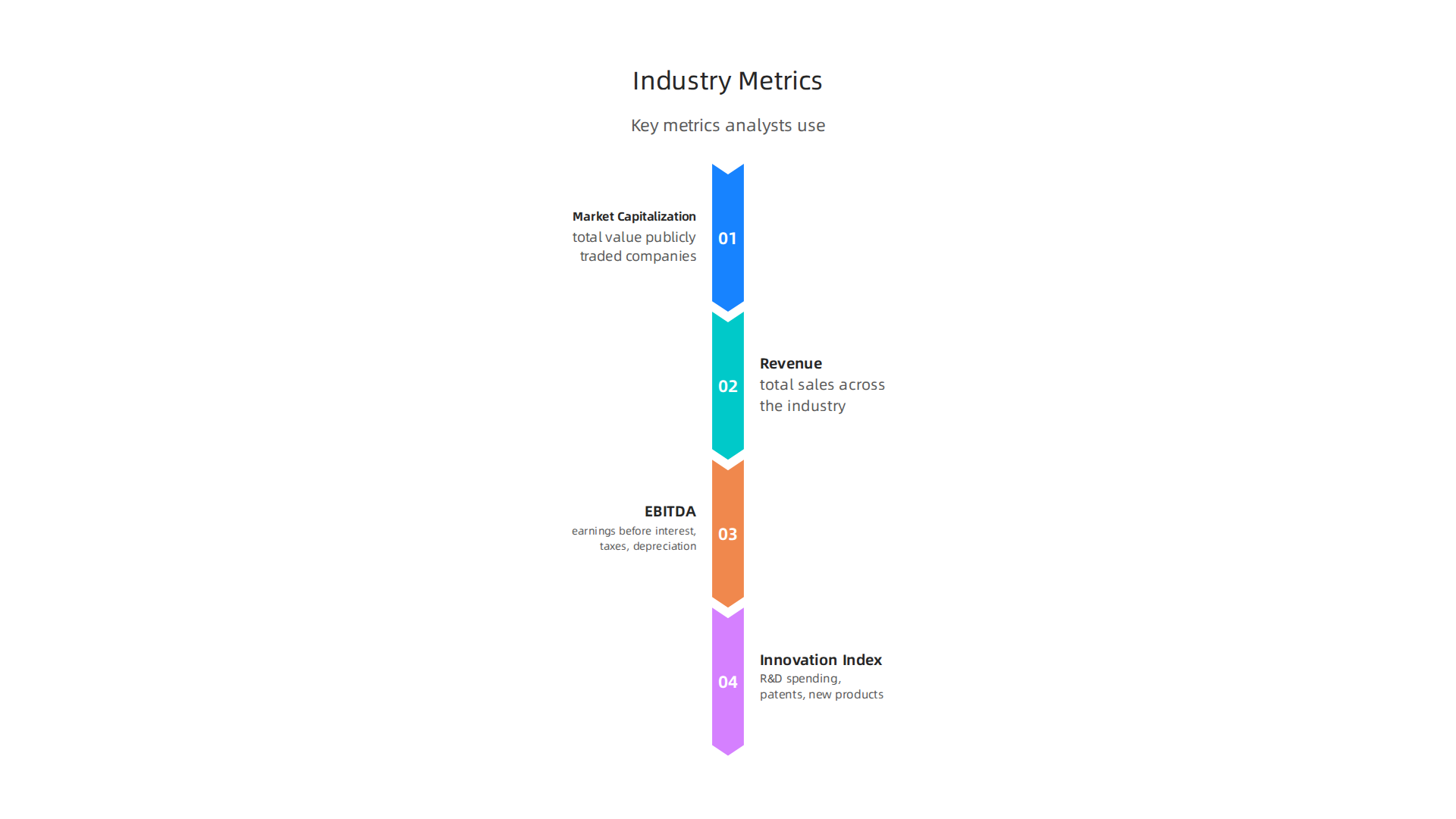
Market cap alone can be misleading. A sector might have a few huge companies but a weak middle. That’s why professional analysts also look at:
- Revenue – total sales across the industry
- EBITDA – earnings before interest, taxes, depreciation, and amortization; a proxy for cash flow
- Innovation Index – measures R&D spending, patents, and new product launches
For example, healthcare has enormous revenue but lower market cap growth than tech. Energy has strong EBITDA but volatile valuations. By layering these metrics, you see which sectors are truly healthy versus just hyped.
How Top Indices Shape the Rank
The methodology behind indices like the S&P Global 1200 or Forbes Global 2000 determines which companies even qualify. Some weight by float-adjusted market cap, others by revenue or a composite score. This affects which countries of market economy appear most. Currently, the United States, Taiwan, and Switzerland produce the largest firms because their market structures favor scale and innovation.
If you’re tracking these shifts for your own portfolio, understanding index methodology is key. You can explore how a total market index fund performance and costs compares to sector-specific funds for a deeper breakdown.
The Big Picture for 2026
Technology has surged ahead in 2026, but it didn’t happen overnight. The combination of AI adoption, cloud infrastructure spending, and chip demand pushed tech past healthcare and financials. However, revenue and EBITDA rankings still show energy and banking as heavyweights. The true "top industry" depends on which yardstick you pick — and that’s exactly why you need to know the methodology before you act.
Technology Sector: AI, Cloud, Semiconductors Lead
So when you pick market cap as your yardstick, one sector pulls far ahead. Technology is now the clear leader among the top industries in the world. The sector reached a total market capitalization of $53.4 trillion in 2026, according to an overview of the most valuable industries in 2026. That is more than the next three largest sectors combined.
What drives this massive growth? Three engines are firing at once.
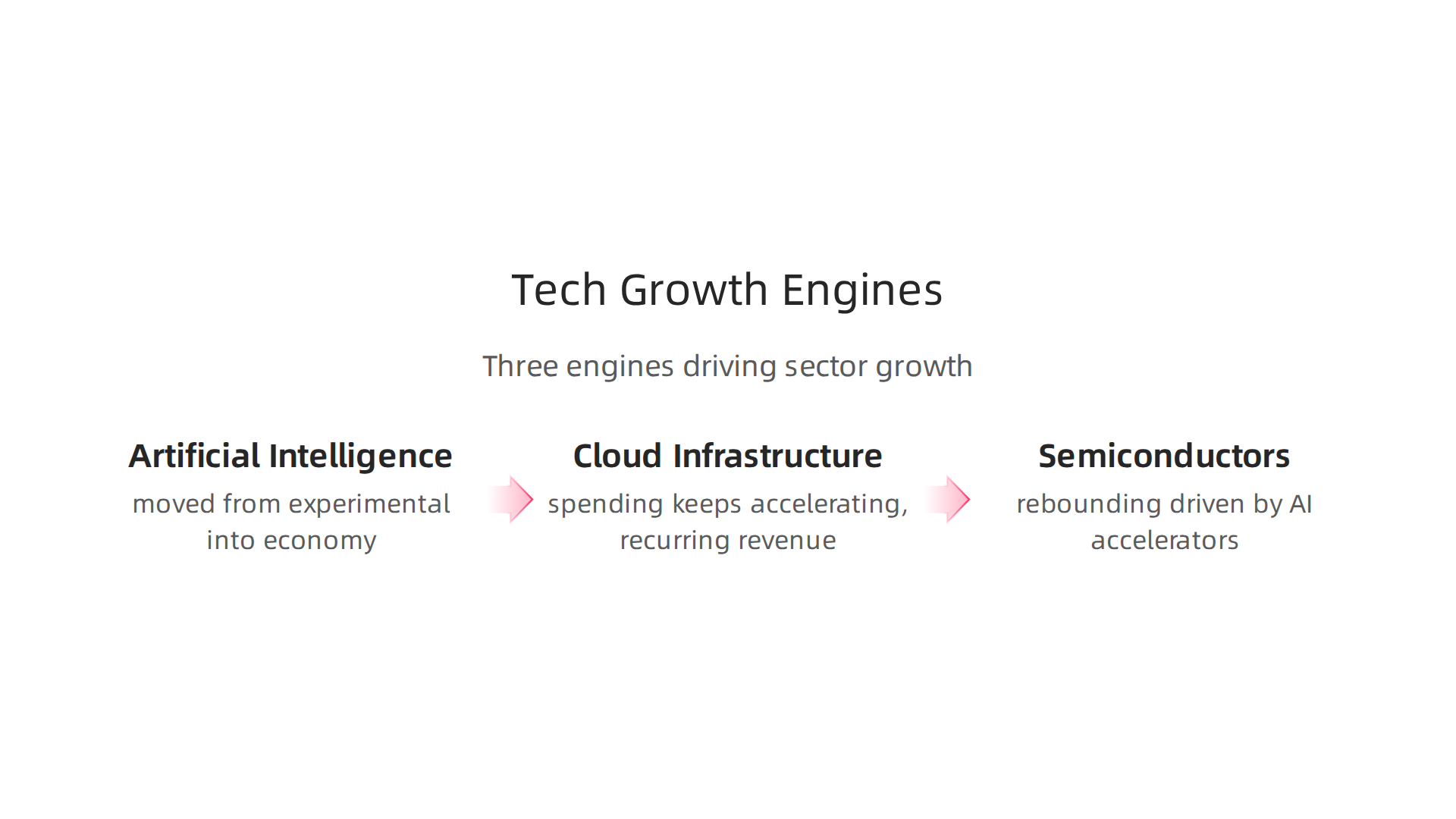
First, artificial intelligence. AI has moved from experimental projects into every corner of the economy. NVIDIA, the biggest beneficiary, reached a $5.2 trillion market cap by May 2026. Its GPUs power the majority of AI training and inference workloads worldwide. The list of the world’s largest companies by market cap now includes eight tech firms, with NVIDIA at the top followed by Alphabet, Apple, Microsoft, and Amazon.
Second, cloud infrastructure spending keeps accelerating. AWS, Microsoft Azure, and Google Cloud together control more than 60% of the global cloud market. Companies are migrating workloads and layering AI services on top, which creates sticky, recurring revenue for these providers.
Third, semiconductors are rebounding in a big way. After a rough 2023 and 2024, chip sales bounced back driven by demand for AI accelerators and high-bandwidth memory. TSMC and Broadcom, with market caps of $2 trillion and $1.9 trillion respectively, are the backbone of the global chip supply chain.
The major countries of market economy, especially the United States, Taiwan, and South Korea, dominate this sector because their market structures support massive scale and innovation. These nations produce the firms that keep the entire tech ecosystem running.
If you want to understand how these shifts affect global markets, you can read about how the world market order being reshaped by AI is changing the competitive landscape for everyone.
For professionals tracking this space, staying current on AI breakthroughs is tough. The AI Newsletter Worth Reading delivers clear daily updates to help you stay ahead of the biggest developments.
AI and Machine Learning Applications
So how big has the AI market actually become? Numbers tell a clear story. The global artificial intelligence market size in 2026 hit $539.45 billion, according to the Artificial Intelligence Market Size & Share Report, 2026-2033 from Grand View Research. That aligns with the explosive growth you saw in the technology sector above.
But it is not just the total market that matters. The rise of generative AI is transforming how businesses operate. In fact, generative AI tools delivered an estimated $172 billion in value to U.S. consumers in 2026, as shown in the 2026 AI Index Report from Stanford HAI. That number tripled per user in just a year. Generative models now help with writing, coding, designing, and much more.
Enterprise adoption is not slowing down either. Most large organizations now run AI across multiple departments. The top AI firms driving all this progress include OpenAI, Google DeepMind, Anthropic, Meta AI, and Microsoft AI. Each one pushes the boundaries of what machines can do.

For content creators specifically, tools like text-to-video AI are reshaping how stories get told. You can explore how text-to-video artificial intelligence drives future content creation to see the practical applications in action.
Cloud Computing and the Semiconductor Backbone
AI’s rapid growth does not happen in a vacuum. Cloud computing and semiconductors are the physical backbone making it all possible. The global cloud market continues to expand, with hybrid multi-cloud now the standard operating model for most enterprises. Total worldwide AI spending — which includes cloud infrastructure and specialized hardware — is projected to surpass $2 trillion in 2026, according to the State of AI 2026 report.
At the heart of this boom are the chip makers. NVIDIA and AMD dominate the AI chip market, while Intel is making a solid comeback in data center CPUs. These companies produce the processors that power everything from cloud servers to edge devices. The demand for their products keeps rising as more businesses move workloads to the cloud.
Supply chain shifts are also reshaping the industry. TSMC and Samsung now lead advanced manufacturing at the 3nm and 2nm nodes, making them indispensable to the global chip ecosystem. All of this happens against the backdrop of AI and geopolitical competition reshape world markets, where trade tensions and national security concerns drive decisions about where chips are made.
Cloud computing and semiconductor manufacturing are two of the top industries in the world right now. If you want to stay informed about all these fast-moving developments, consider subscribing to The AI Newsletter Worth Reading for clear daily updates that cut through the noise.
Healthcare and Biotechnology: The Longevity Boom
The world is getting older. Aging populations in many countries with market economies are creating massive demand for new medicines, treatments, and health services.

That makes healthcare and biotechnology two of the most important top industries in the world right now.
Consider the numbers. The global biotechnology market is already worth $2.02 trillion in 2026 and is projected to grow to $6.34 trillion by 2035, according to the Biotechnology Market Size report. That is a compound annual growth rate of over 13 percent. Few other top industries in the world can match that pace.
What is driving this boom? A big part is the surge in new therapies like CRISPR gene editing, mRNA treatments, and cell therapies. These are no longer science fiction. They are becoming real, scalable treatments. Biotech companies are raising record amounts of funding through IPOs and private investments. In 2025, the industry saw revenue grow 13 percent to $232 billion, according to EY’s 2026 Biotech Beyond Borders report.
Digital health is also exploding. Telemedicine, once a pandemic stopgap, has become a standard part of healthcare. About 30 to 40 percent of medical consultations now happen online in many developed countries. Investors are pouring billions into health tech platforms, wearable devices, and AI-powered diagnostics.
For people watching these industries, the healthcare and biotech space offers some of the biggest opportunities. If you are looking for ways to track high-growth sectors like this, you might find our list of Stock Advisor Top 10 Picks for Big Tech Investors in 2026 helpful. It covers top picks that often overlap with the healthcare and tech crossover.
Energy: Renewables, Electrification, and ESG
The energy sector is going through its biggest transformation in over a century. This shift makes it one of the top industries in the world to watch closely in 2026.
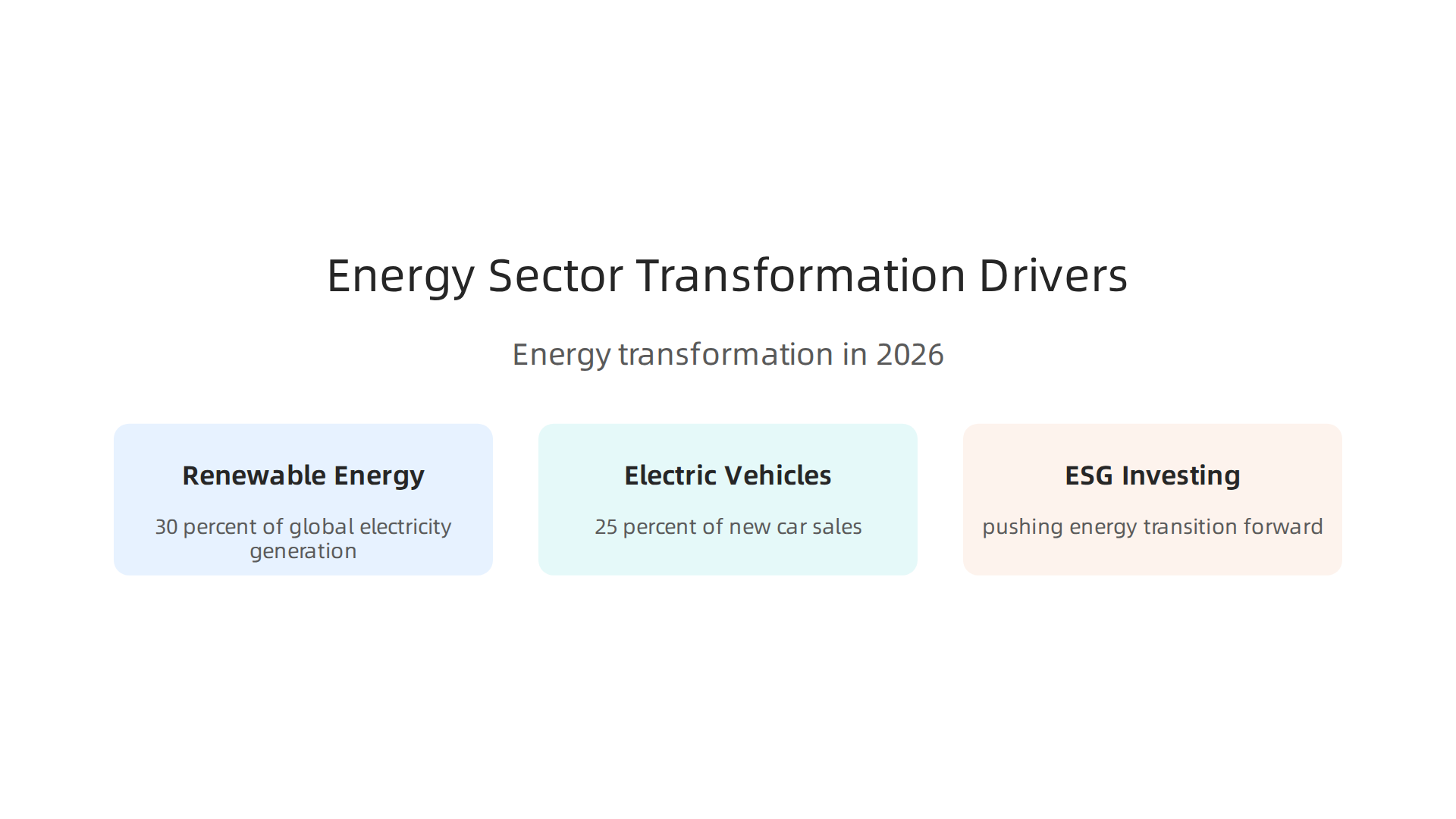
Renewable energy now accounts for about 30 percent of global electricity generation. Solar and wind are leading the way. Solar panel installations reached record levels in 2025, and the pace is still picking up in 2026. Many countries with market economies are investing heavily in wind farms and solar arrays. The cost of both technologies keeps falling, making them cheaper than coal and gas in most parts of the world. Battery storage is growing fast, too, helping solve the problem of what happens when the sun is not shining or the wind is not blowing. Wind energy is also expanding quickly, especially offshore wind farms in Europe and Asia. These massive projects help countries meet climate goals while creating thousands of jobs. Solar capacity alone is expected to grow by another 25 percent in 2026, making it the fastest growing energy source in history.
Electric vehicles are another huge part of the story. Global EV sales hit around 20 million units in 2025, making up about 25 percent of new car sales. That number keeps climbing in 2026. Battery prices have dropped fast, and charging networks are expanding every month. Automakers are racing to launch new EV models. China, Europe, and North America are leading the transition, but emerging markets are starting to catch up. For investors trying to understand this shift, our detailed Tesla stock analysis for 2026 can help you track one of the key players driving EV growth.
ESG investing is also pushing the energy transition forward. Funds focused on environmental, social, and governance factors now manage massive amounts of capital. Global investment in clean energy reached over $2 trillion in 2025 and is still growing. The Inflation Reduction Act in the US and similar policies in Europe and Asia are speeding up the shift. Companies that adapt to these changes are seeing strong growth. Those that do not are falling behind.
The energy transition is creating millions of new jobs in manufacturing, installation, and maintenance of clean energy systems. AI is playing a bigger role, too. Smart grids use AI to predict energy demand. Wind and solar farms use AI to optimize power output. EV charging networks use AI to manage loads efficiently. If you want to stay ahead of how AI is reshaping industries like energy, you might enjoy The AI Newsletter Worth Reading. It delivers clear daily AI updates straight to your inbox.
Finance and Fintech: Digital Transformation of Money
Money is changing faster than ever. Digital payments, lending apps, and blockchain finance are reshaping how people and businesses handle money every single day. This transformation makes the financial sector one of the top industries in the world to track closely in 2026.
The global fintech market is now valued at roughly $459 billion in 2026. According to one Fintech Market Size, Share, Growth report, it could nearly triple in size by 2034. Digital payments make up the biggest slice, accounting for about 47 percent of fintech revenue in the United States alone. Lending platforms and insurtech are growing fast right behind them. A McKinsey analysis of fintech industry trends shows that global fintech revenues hit roughly $650 billion in 2025 and have grown about 23 percent annually over the past four years. That pace far outpaces the broader financial services industry.
Central bank digital currencies, or CBDCs, are another big trend shaking up the sector. China leads with its e-CNY, which is already live and handling millions of transactions. More than a dozen other countries with market economies are testing or rolling out their own digital currencies. These government-backed digital dollars, euros, and yuan could change how international payments work over time. A J.P. Morgan sector spotlight on fintech points to growing convergence between traditional finance and digital assets.
Decentralized finance, or DeFi, is also making a real comeback. After a tough period a few years ago, the total value locked in DeFi protocols has rebounded strongly in 2026. Clearer regulations in Europe and parts of Asia are bringing confidence back to the space. The Fintech Trends for 2026 report on LinkedIn highlights that stablecoins and artificial intelligence are becoming core infrastructure for modern finance.
For investors, fintech offers plenty of real opportunity. Companies are changing how people borrow, spend, and save money every day. You can dig deeper into one standout player with our SoFi Technologies stock analysis for 2026. The shift toward digital money is creating clear winners across payments, lending, and infrastructure.
Consumer Goods and E-Commerce: The Platform-Driven Economy
Shopping looks nothing like it did a few years ago. You can buy almost anything from a phone and have it show up the same day. This shift makes consumer goods and e-commerce one of the top industries in the world to watch in 2026.

E-commerce sales now surpass $7 trillion globally. They represent roughly a fifth of all retail spending. Countries with market economies have seen the fastest growth. The US, China, and parts of Europe lead the way. Digital payments power much of this expansion. Mobile wallets and buy now pay later services make buying online even easier. A US Fintech Market Trends report shows that digital payments alone captured nearly 47 percent of fintech revenue in the United States last year. That connection between payments and shopping keeps getting tighter.
Direct to consumer brands are changing the game in categories like apparel and beauty. These D2C companies skip traditional stores and sell straight to you online. They now hold about 18 percent of the market in clothing and cosmetics. Big brands are taking notice. Many have launched their own online only lines to compete. The platform driven economy rewards companies that own the customer relationship from start to finish.
Supply chains and AI powered logistics have become huge competitive advantages. The brands that win are the ones that get products to doorsteps fast and cheap. Companies now use artificial intelligence to predict demand, route deliveries, and manage inventory in real time. That means fewer empty shelves and fewer shipping delays. You can learn more about how tech is reshaping global markets in our article on how the world market order is being reshaped by AI and geopolitical competition.
Staying on top of these changes takes effort. The news moves fast and the noise is constant. That is why thousands of professionals rely on a daily briefing to cut through the clutter. Get clear daily AI updates from The Deep View Newsletter. It delivers the most important tech trends straight to your inbox so you never miss what matters.
Conclusion: Navigating the Top Industries of 2026
The top industries in the world today are not isolated from each other. Technology touches every sector, from healthcare to finance to consumer goods. The companies that dominate the global market are the ones that combine AI, logistics, digital payments, and sustainability into one clear strategy.
Just look at the numbers. Information Technology now represents 36 percent of the world’s 100 most valuable companies, with a market capitalization of over $18 trillion. The sector grew 36 percent year over year according to the PwC Global Top 100 companies report. That growth is driven by the semiconductor boom and AI infrastructure buildout. But it is not just tech companies winning. Banks, health firms, and energy players that adopt digital tools are also rising fast.
Executives in countries with market economies need to watch for disruption that jumps across industries. A breakthrough in AI can reshape retail, banking, and healthcare all at once. A new regulation in one sector can change the rules for another. The old way of focusing only on your own industry no longer works.
Data-driven strategy is the new baseline. Leaders who invest in understanding cross-sector trends make better decisions. They spot opportunities before competitors do. They also avoid blind spots that could cost them.
Continuous learning matters more than ever. The pace of change in 2026 is fast and the information flow is overwhelming. Professionals who stay ahead are the ones who find reliable ways to cut through the noise. For investors and decision makers looking for actionable insights, our guide to the top stock picks for big tech investors in 2026 offers a practical starting point.
The top industries in the world will keep shifting. But one thing stays the same: those who combine curiosity with smart strategy will come out ahead.
Summary
This article maps the world’s top industries in 2026 using data-driven metrics and expert context to show which sectors shape global capital, talent, and power. It explains the ranking methods—market capitalization, revenue, EBITDA, and innovation measures—and why methodology matters when comparing industries. The piece shows technology as the clear leader today, driven by AI, cloud infrastructure, and a semiconductor rebound, while healthcare, energy, finance, and consumer goods remain critical when judged by revenue or cash flow. You’ll learn how AI and geopolitics are redrawing which countries and firms dominate, which metrics reveal true sector health, and how executives and investors can track these shifts with index choices, sector funds, and focused monitoring. Practical examples and data points illustrate where growth is concentrated and what trends to watch next.