

Introduction: Navigating the Noise to Monitor Paramount and Big Tech
Here’s the thing about tracking a stock like Paramount in 2026. The information coming at you is relentless. Earnings calls, regulatory filings, streaming subscriber numbers, analyst upgrades, and social media chatter all blend into a deafening roar.

If you’re trying to monitor paramount stock alongside other big tech positions, you’ve probably felt that sinking feeling of missing what actually matters.
I’ve been there. You open your news feed and see headlines about Paramount’s Q1 revenue beating estimates at $7.35 billion, but also that adjusted EPS slipped 21%. Both facts are true. Which one drives the next move? That’s the challenge of separating signal from noise.
The media landscape is shifting fast. Paramount+ added 700,000 subscribers last quarter and streaming revenue jumped 11%, according to a CNBC report on Paramount Skydance Q1 2026 earnings. Meanwhile, free cash flow is still under pressure, and transformation costs are running several hundred million. If you’re also watching stocks like GLW, EPD, or IVV for a diversified view, keeping all these threads straight without a system is nearly impossible.
That’s why a structured, research-backed approach matters. You need a framework that helps you cut through headlines and focus on the financial metrics, competitive positioning, and regulatory risks that actually move the needle. This article gives you exactly that. We’ll walk through how to deep-dive into paramount stock with the same repeatable process used by seasoned professionals, while keeping a broader portfolio perspective in mind.
If you’re tired of chasing every hot take and want a smarter way to stay informed on big tech, consider subscribing to The AI Newsletter Worth Reading. It delivers clear daily updates on the tech shifts that matter most, so you spend less time scrolling and more time understanding.
Why Paramount Stock Belongs in a 2026 Big Tech Investment Watchlist
Let me ask you something. When you think about the companies that shape how we watch TV, scroll through ads, and consume news, which names come to mind? Netflix? Apple? Google? Sure. But there’s another player sitting right in the middle of it all: Paramount Global.
Here’s why paramount stock deserves a spot on your 2026 watchlist. Paramount isn’t just another media company. It’s a unique hybrid. It owns a legacy broadcast network (CBS), a major film studio (Paramount Pictures), and a growing streaming business (Paramount+). That puts it at the crossroads of old media and new tech. When streaming grows, Paramount benefits. When TV ad sales slow down, Paramount feels the pain. It’s a bellwether for the entire media sector.
2026 is shaping up to be a pivotal year. The streaming wars are entering a new phase focused on profitability rather than just subscriber growth.
Paramount+ has already shown progress, with direct-to-consumer revenue jumping 11% year over year in Q1 2026, as reported in the Paramount Skydance Q1 2026 earnings breakdown. Meanwhile, the ad market is slowly recovering, and there’s constant chatter around potential M&A. A merger or acquisition could reshape the entire landscape. If you’re monitoring paramount stock, you’re essentially monitoring the health of the whole sector.
But here’s the thing. Tracking Paramount alone isn’t enough if you’re building a diversified big tech portfolio. You also need to keep an eye on names like glw stock (Corning), epd stock (Enterprise Products Partners), and ivv stock (iShares Core S&P 500 ETF) to balance exposure. Each of those has its own set of drivers, and without a system, the information overload becomes crushing.
That’s why a repeatable framework matters. Instead of reacting to every headline, you learn to focus on the metrics that actually matter: streaming ARPU, free cash flow trajectory, and ad market trends. If you want to build that skill, check out this repeatable stock analysis framework designed for big tech investors.
Paramount stock in 2026 offers a microcosm of the broader challenges every big tech investor faces. You have legacy businesses that are shrinking, new growth engines that are still finding their footing, and a competitive environment that changes every quarter. Mastering how to monitor this one stock teaches you a process you can apply to any company in your watchlist.

So yes, Paramount belongs on your list. Not because it’s the safest bet, but because it’s one of the most informative. Watching it closely gives you clarity on where media, streaming, and advertising are heading. And that clarity is exactly what you need to make smarter decisions across your entire portfolio.
Paramount’s Position in the Big Tech & Media Landscape: A 2026 Snapshot
So where exactly does Paramount fit in 2026? Think of it as the hybrid kid at a party who hangs out with two very different friend groups. On one side you have the old school media giants. On the other, you have the fast moving tech platforms. Paramount sits right in the middle.
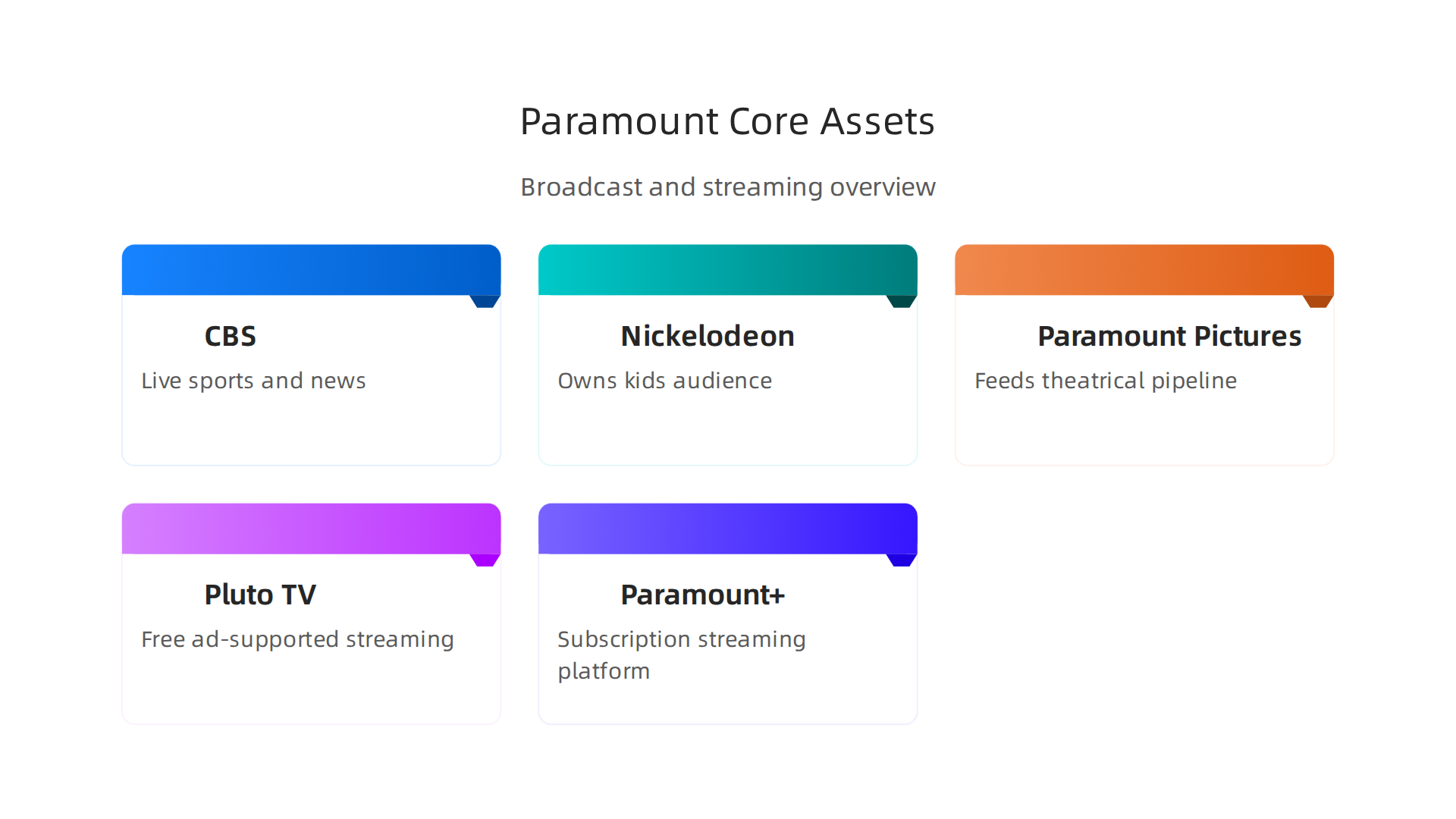
Here is what makes paramount stock so interesting. The company owns a collection of assets most competitors would love to have. CBS gives it live sports and news. Nickelodeon owns the kids audience. Paramount Pictures feeds the theatrical pipeline. And Pluto TV plus Paramount+ cover both free ad-supported and subscription streaming.
That kind of variety inside one stock is rare.
But here is the catch. Those assets compete directly with the biggest companies in the world. When you buy paramount stock, you are betting against Apple, Amazon, Netflix, and Google for talent, content, and advertising dollars. Those four tech giants spent enormous sums on content in 2025, with Netflix alone pouring around $18 billion into programming, according to the Streaming Year in Review 2026. Paramount has to keep up without the same deep pockets.
The streaming market itself is huge and still growing. The global video streaming market hit an estimated $195.85 billion in 2026, up from $159.98 billion the year before, based on video streaming market statistics. Every player is fighting for a piece of that pie. Paramount+ grew its subscriptions by 14% to over 79 million, but Disney+ had 131.6 million and Netflix had far more. The gap is real.
That is why Paramount has been making strategic moves in 2025 and 2026. We are talking about streaming joint ventures, cost restructuring, and talk of selling off non-core assets. The company is trying to slim down and focus on what actually makes money. If you track other names like glw stock, epd stock, or ivv stock for diversification, understanding how a hybrid media company adapts under pressure gives you a useful reference point for the whole sector.
The bottom line is this. Paramount stock gives you exposure to both the old TV ad economy and the new streaming economy in a single ticker. That overlap is messy, but it is also informative.
If you want to stay sharp on how these dynamics play out across the entire big tech landscape, you might enjoy a daily dose of curated insight. The The AI Newsletter Worth Reading delivers clear daily updates on exactly the kind of tech, media, and AI shifts that affect stocks like Paramount and the broader market.
Key Metrics and Data Points Every Paramount Stock Tracker Should Monitor
The stock price moves up and down every day. But if you are following paramount stock, the real story lives in a few numbers that tell you if the business is getting stronger or weaker.
Here is what matters most.
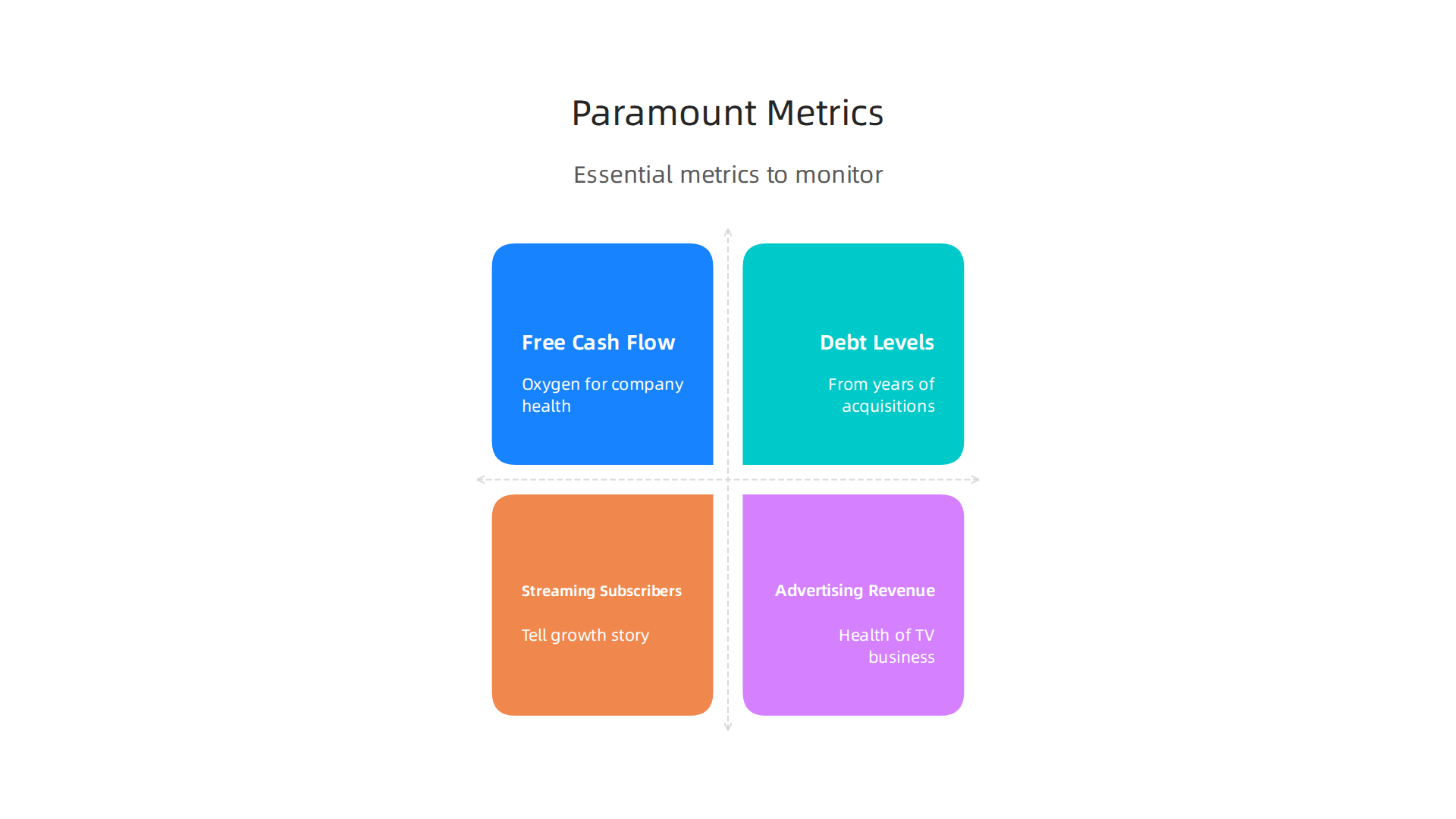
Free cash flow is the oxygen. Without it, a company cannot pay down debt, invest in content, or return cash to shareholders. In Q1 2026, Paramount reported negative free cash flow because of transformation costs, but management expects to return to positive free cash flow by the end of the year, as noted in the Paramount Skydance Q1 2026 earnings report. Watch this number closely. If free cash flow keeps improving, it means the streaming pivot is working.
Debt levels matter even more. Paramount carries a meaningful debt load from years of acquisitions and content spending. Every quarter, check the total debt and how it compares to EBITDA. In Q1 2026, adjusted EBITDA hit $1.2 billion, up 69% from the same quarter last year. That gives the company more breathing room. A rising EBITDA relative to debt is a green flag.
Streaming subscriber counts tell you if the growth story is real. Paramount+ added about 700,000 net subscribers in Q1 2026. But underlying additions were around 2 million. The difference is that the company deliberately exited over 1 million low-value international bundle subscribers who paid less than $1 per month. That is a smart move. Chasing cheap subs inflates the number but hurts profitability. Focus on the underlying adds and the average revenue per user. Paramount+ ARPU grew 14% in Q1 thanks to a January price increase.
Advertising revenue trends show the health of the core TV business. CBS, Comedy Central, and the rest of the linear portfolio still generate billions. But that revenue declined 6% year over year in Q1. That is the old economy bleeding. The offset is that streaming advertising through Pluto TV and Paramount+ is growing fast. The Direct-to-Consumer segment saw an 11% revenue jump to $2.4 billion. The mix matters more than any single number.
For deeper context, you can apply a repeatable stock analysis framework for tech investors to compare Paramount with peers in the sector.
How to read the filings like a pro. The quarterly 10-Q and annual 10-K contain all the metrics above. Look at the management discussion section first. They will tell you if subscriber growth is accelerating or slowing. Check the cash flow statement for free cash flow. Compare the current quarter to the same quarter last year, not the prior quarter, because media revenue has strong seasonal patterns. Also look for any mention of transformation costs or restructuring charges. Those distort short term numbers but can lead to a leaner company.
Compare to sector benchmarks. The streaming market keeps expanding. Global video streaming hit nearly $196 billion in 2026. Paramount’s growth is in line with that trend, but its margins still trail Netflix and Disney. Ask yourself: Is Paramount closing the gap on profitability? If the EBITDA margin moves from 16% toward 20% over the next few quarters, that is a strong signal.
Tracking paramount stock is not about guessing the next price move. It is about watching these core metrics shift over time. When free cash flow turns positive, debt shrinks, and streaming revenue accelerates, the stock usually follows.
Tools and Platforms for Tracking Paramount Stock and Diversified Holdings
Knowing the right metrics is half the battle. The other half is having the right tools to watch them without spending all day refreshing web pages. Whether you are checking paramount stock daily or managing a full portfolio with other big tech names, a good platform saves time and helps you spot trends faster.
Free and Paid Platforms for Everyday Tracking
If you want something simple and free, Yahoo Finance is hard to beat. You can set up a watchlist for paramount stock, add tickers like AAPL, AMZN, GOOGL, NFLX, DIS, and WBD, and see price changes, earnings dates, and key ratios in one view. For a deeper look, Yahoo Finance offers a paid tier with more historical data and advanced charts. You can learn more about navigating this platform by reading about using Yahoo Finance for big tech insights.
For investors who want professional-grade analysis, Koyfin is a strong Bloomberg Terminal alternative that is much more affordable. It gives you access to macro data, sector comparisons, and detailed financials for thousands of stocks. You can build custom dashboards that show paramount stock alongside its streaming rivals. Another popular choice is Seeking Alpha, which offers analyst ratings, earnings call transcripts, and community discussion. If you prefer a tool that combines screening with deep fundamentals, Stock Rover is worth exploring.
If you want a full comparison of what is available, check out this review of the best stock tracking apps in 2026.

It breaks down free versus paid tiers and which platform suits different investing styles.
Setting Up Custom Dashboards for Paramount and Big Tech Peers
The real power comes from creating a dashboard that tracks paramount stock alongside the companies that shape its competitive landscape. For example, you might want to see the streaming subscriber numbers for Netflix, Disney, and Warner Bros. Discovery all in one place. Most advanced platforms let you build a custom screen with key fields like revenue growth, free cash flow, and debt to EBITDA.
In Koyfin, you can create a multi-asset page that pulls in paramount stock, glw stock (Corning, a key supplier for streaming hardware), epd stock (Enterprise Products Partners, for broader market exposure), and ivv stock (iShares Core S&P 500 ETF) to compare performance against the benchmark. Update your dashboard once a week and you will see the story unfold without constant manual searching.
Using Alerts and Screeners to Stay Ahead
You do not need to sit and watch the price tick all day. Set up alerts for key events. Many platforms allow you to trigger a notification when a stock moves more than a certain percentage, when earnings are released, or when an insider buys shares.
For paramount stock, you could set an alert for any news about its streaming subscriber count or free cash flow. That way, you get notified only when something important happens. Screeners are also useful for finding opportunities. You can filter for media stocks with improving EBITDA margins or rising ARPU. This turns hours of research into a five minute scan.
Staying informed about the technology and media landscape is also crucial. The streaming business is deeply tied to AI, content delivery, and platform shifts. For daily updates on AI and tech trends that affect companies like Paramount, consider subscribing to The AI Newsletter Worth Reading. It delivers clear, concise insights straight to your inbox, helping you connect the dots between technology news and your investment thesis.
With the right tools and a few smart alerts, you can track paramount stock and your broader portfolio in a way that feels effortless.

The goal is to spend less time clicking around and more time making thoughtful decisions.
Regulatory and Competitive Risks Facing Paramount in 2026
But making thoughtful decisions about paramount stock also means understanding the risks that could shake the company. In 2026, regulatory and competitive pressures are front and center. Here is what you need to know.
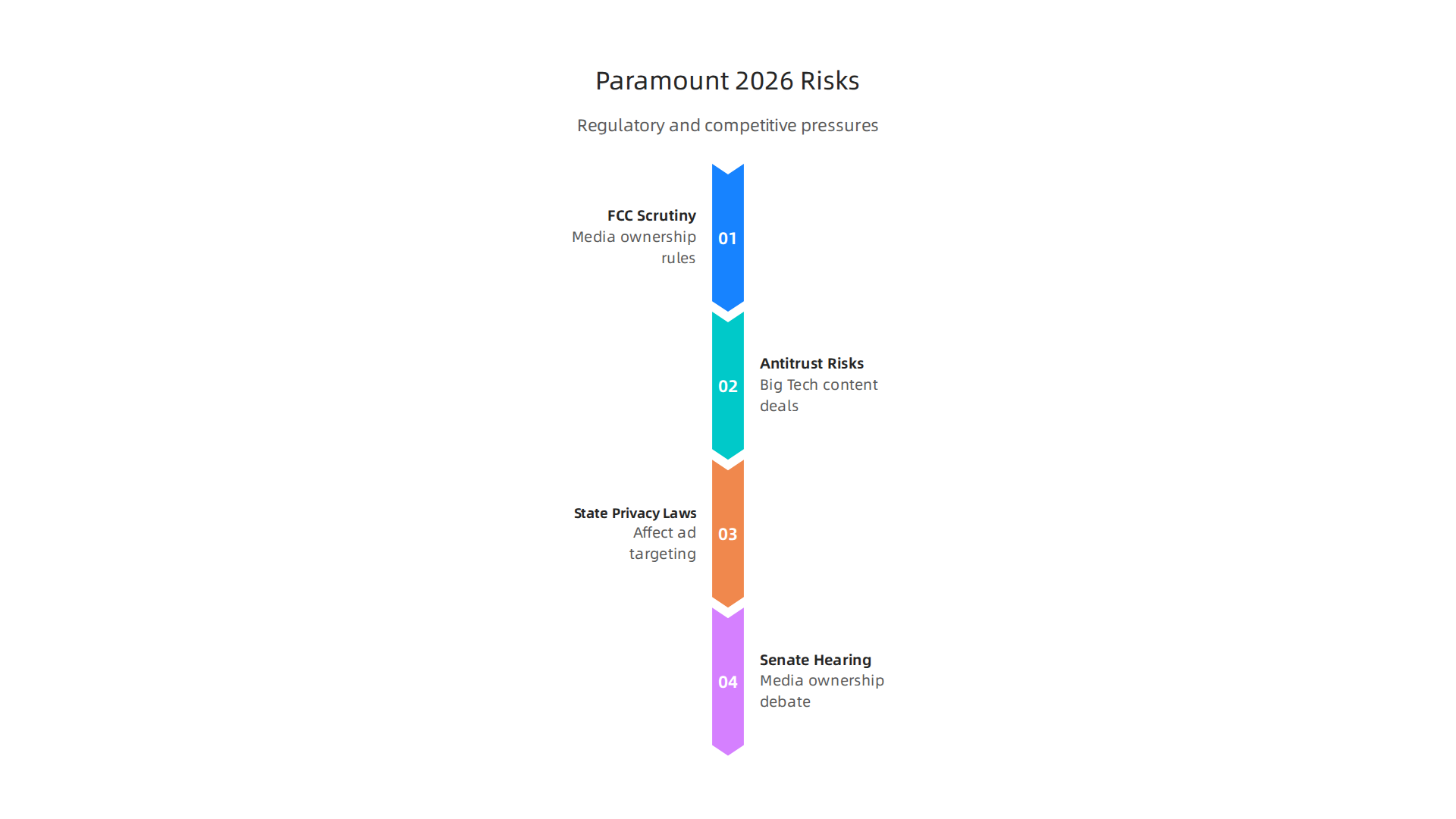
FCC Scrutiny and Media Consolidation
The Federal Communications Commission (FCC) is actively rethinking media ownership rules. In March 2026, the FCC approved a controversial merger between Tegna and Nexstar, allowing Nexstar to reach 80 percent of US households.

Experts warned this was a sign of increasing media concentration. You can read more about the FCC approval of the Tegna-Nexstar merger and its implications for local news.
This matters for paramount stock because any large merger attempt, like the rumored Paramount-Skydance deal, could face heavy scrutiny. Lawmakers have pushed back hard. Representative Frank Pallone wrote to the FCC chairman saying the agency has no authority to eliminate the 39 percent national ownership cap. The Pallone letter on media ownership caps makes it clear that changing these rules would require an act of Congress.
If the rules stay tight, Paramount may find it harder to merge or acquire other media companies. That could limit its ability to grow and compete with bigger players.
Antitrust Risks from Big Tech Content Deals
Paramount relies on distribution deals with Big Tech companies like Apple, Amazon, and Google. But antitrust regulators are watching these partnerships closely. If a major tech company faces a breakup or new restrictions, it could hurt Paramount’s negotiating power.
For example, if Apple or Amazon are forced to change how they bundle content, Paramount could lose access to millions of potential viewers. These deals are a big part of Paramount’s streaming strategy. Any disruption could hit subscription growth and ad revenue.
Staying on top of these shifts requires a broad view of the market. The article on the world market order reshaped by AI and geopolitical competition explains how these forces are playing out.
State-Level Privacy and Data Regulation
Privacy laws are not just a federal issue. States like California, Virginia, and Colorado have passed their own data protection rules. These laws affect how Paramount can target ads to users. Since advertising is a key revenue source for Paramount, stricter privacy rules could lower the value of its ad inventory.
Each state has different rules, making compliance costly. This is a risk that affects not just paramount stock but also other media stocks. Investors should watch for new state laws that could squeeze advertising margins.
The Senate held a hearing in February 2026 to examine broadcast media ownership rules in the digital age. You can find details on the Senate hearing on media ownership rules. Lawmakers are debating whether the old rules still make sense when so much content is consumed online. The outcome could reshape the playing field for Paramount and its rivals.
What This Means for Your Investment
These regulatory and competitive risks are real. They can affect paramount stock in ways that go beyond quarterly earnings. By keeping an eye on FCC decisions, antitrust actions, and state privacy laws, you can make smarter decisions about when to buy, hold, or sell.

For a deeper look at how these trends connect to the broader market, check out the analysis of stock advisor top picks for big tech investors in 2026.
Integrating Paramount Stock into a Broader Market Monitoring Strategy
Now you understand the risks weighing on paramount stock. But watching just one ticker is a trap. The smartest investors know that a single stock lives inside a bigger ecosystem. If you only track Paramount, you miss the signals that move it.
Here is how to build a smarter monitoring system.
Expand Your View Beyond One Stock
Paramount does not operate in a vacuum. Its revenue depends on streaming growth, ad market health, and big tech partner deals. So you need to look at related areas too.
Start with the big picture. The global video streaming market was worth roughly $969.56 billion in 2026 and is expected to keep climbing. Check out the full breakdown of the video streaming market size forecast for 2026 to see the growth trajectory. When this sector grows, it lifts all boats, including Paramount.
But also watch what happens with stocks like glw stock and epd stock. These are in different industries, but they can tell you about broader market sentiment. When investors flee risky sectors and pile into defensive plays, it often means trouble for media stocks like Paramount.
Use Correlation Analysis and Sector Rotation Indicators
You do not need to be a quant to use correlation analysis. Here is the simple version.
| What to Watch | Why It Matters for Paramount Stock |
|---|---|
| IVV stock (S&P 500 ETF) | If the whole market drops, Paramount usually drops too |
| Streaming peers (Netflix, Disney) | Their earnings give hints about Paramount’s next quarter |
| Big Tech stocks (Apple, Amazon) | Distribution deal changes affect Paramount’s reach |
| Ad spending trends | Paramount relies on ad revenue more than some rivals |
When you see sector rotation happening, like money moving from growth stocks to value stocks, pay attention. Paramount sits in a tricky spot. It is a legacy media company trying to act like a growth stock. If investors rotate out of media, paramount stock could slide even if the company reports good numbers.
Check out the analysis of stock advisor top picks for big tech investors in 2026 to see how the pros are positioning themselves right now.
Build a Weekly and Monthly Review Cadence
You cannot check paramount stock every hour. That leads to emotional decisions. Instead, set a rhythm.
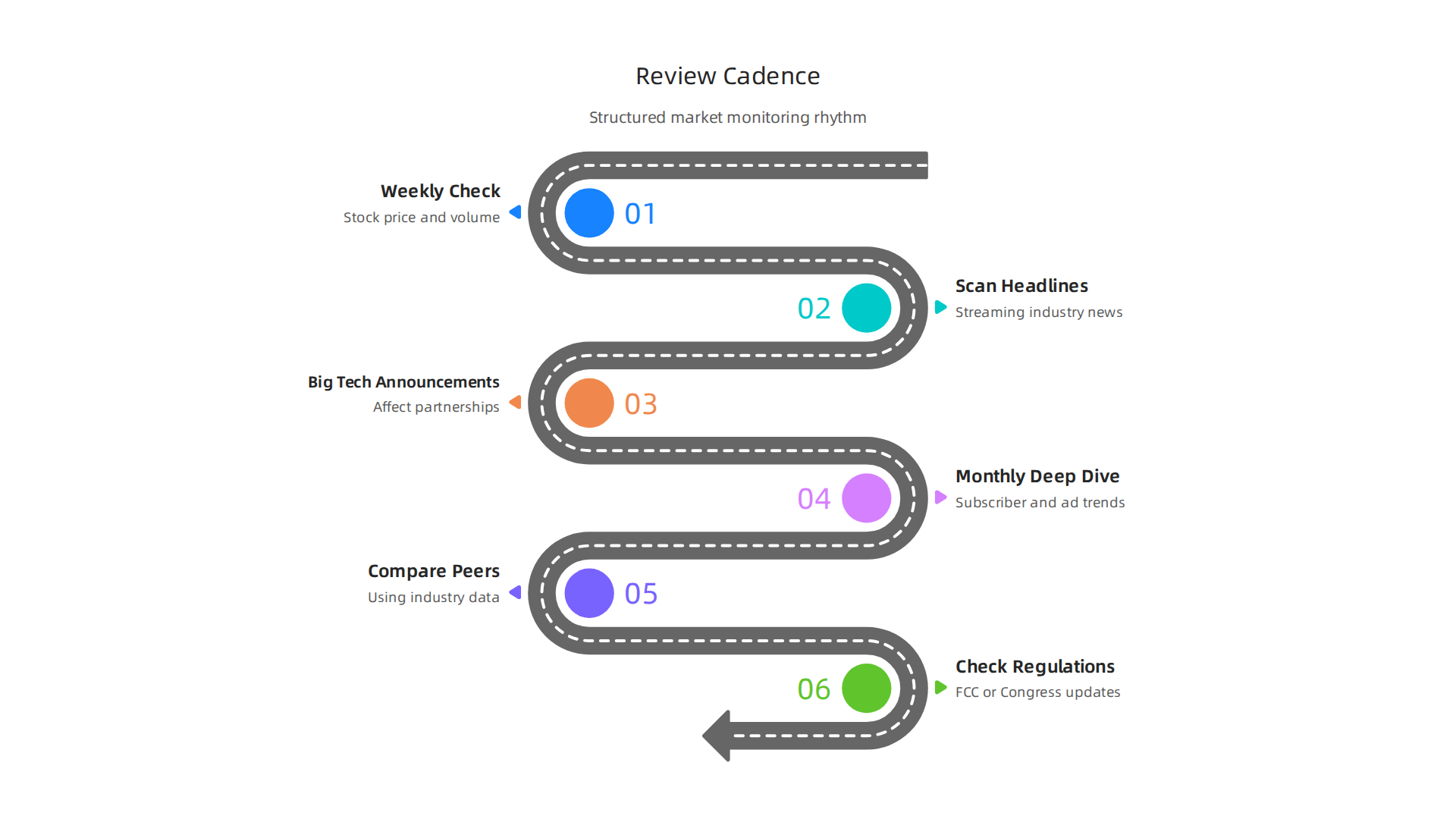
Weekly check (10 minutes):
- Look at Paramount’s stock price movement and volume
- Scan one or two streaming industry news headlines
- Note any big tech company announcements that could affect partnerships
Monthly deep dive (30 minutes):
- Review Paramount’s latest subscriber numbers and ad revenue trends
- Compare performance against streaming peers using industry data
- Check for regulatory updates from the FCC or Congress
A great way to simplify this is to use a portfolio tracking app. The 2026 guide to the best stock tracking apps for monitoring your portfolio shows you tools that pull all your positions into one dashboard. This saves time and helps you spot patterns.
The US video streaming services industry reached $102.8 billion in 2026 according to the 2026 video streaming services industry analysis. That is a huge market. But not every company wins equally. Your job is to watch which ones are gaining share and why.
Make It a Habit, Not a Hobby
The investors who succeed with paramount stock are the ones who stay informed without obsessing. They build a system. They check the right signals. And they keep learning.
If you want to stay ahead of the fast moving shifts in big tech and AI, consider getting daily updates that cut through the noise. The AI landscape changes weekly, and it directly affects how media companies compete. That is where a curated source of insights can make the difference.
Summary
This article explains a practical, repeatable approach to monitoring Paramount stock in 2026 and why the company matters for any big-tech or media-focused watchlist. It shows how Paramount’s hybrid mix of broadcast, film, and streaming makes it both informative and complex to follow, and it identifies the specific numbers that drive value — free cash flow, debt versus EBITDA, streaming subscriber trends, ARPU, and advertising revenue mix. You’ll learn how to read 10-Q/10-K filings efficiently, which sector benchmarks to compare, and how regulatory and antitrust shifts can alter the company’s prospects. The guide also covers the best tools and platforms for building custom dashboards, setting alerts, and using weekly/monthly cadences so you stay informed without obsessing over noise. By the end, you’ll be able to set up a simple monitoring system, interpret the signals that matter, and integrate Paramount into a diversified portfolio context.