

The world of artificial intelligence is moving very fast in 2026. For leaders and investors, it is super important to know who the main players are and what they are doing. One company you really need to understand is Anthropic.
Who is Anthropic AI?
Anthropic is a company focused on making AI safe and helpful. It started in 2021 in San Francisco.
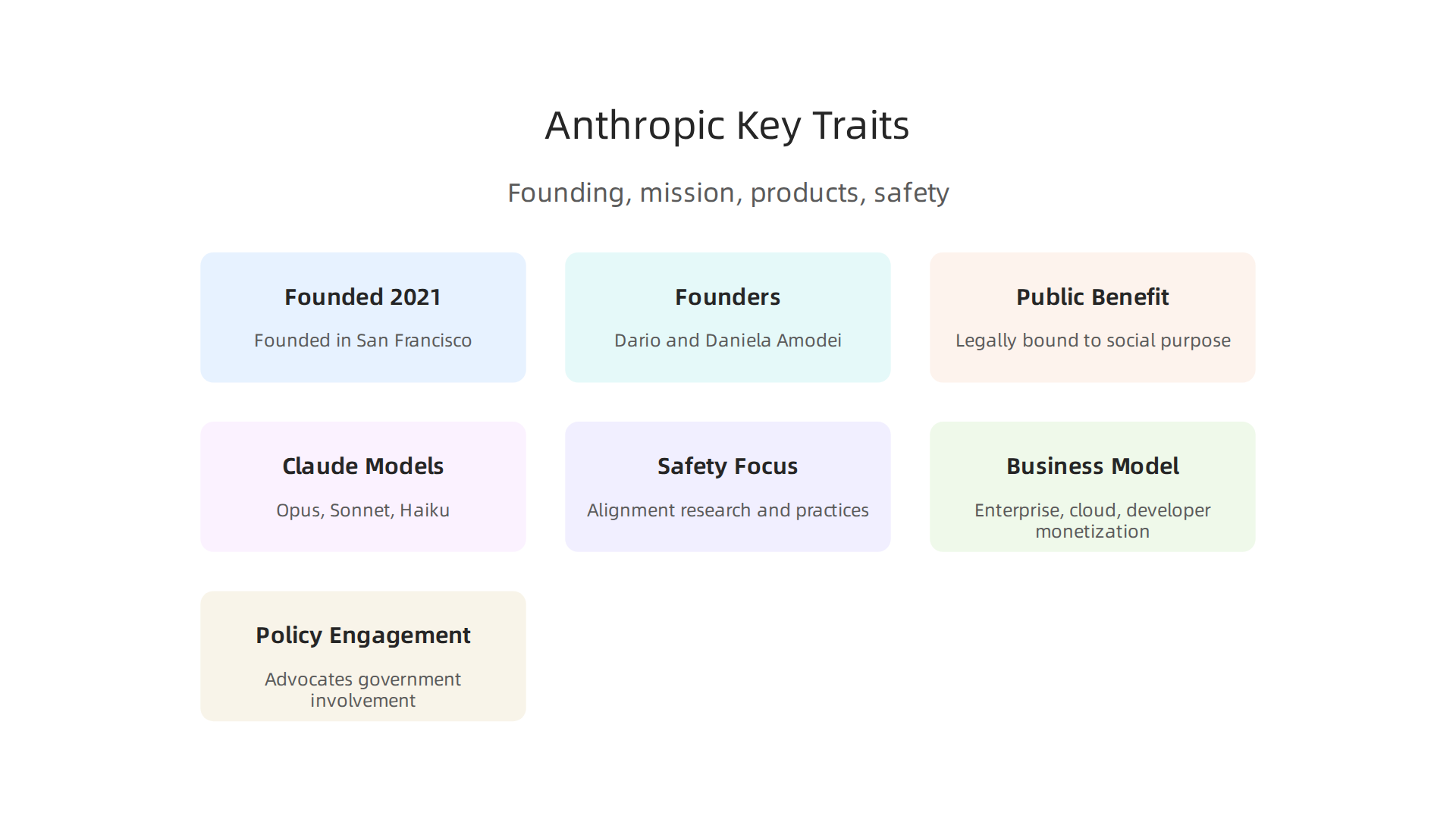
It was founded by Dario and Daniela Amodei, along with other people who used to work at OpenAI. They wanted to build AI systems that are very safe and easy to understand. Anthropic is well-known for creating the Claude family of AI models, which includes versions like Opus, Sonnet, and Haiku [^1]. They set up Anthropic as a "public benefit corporation," which means they are legally bound to serve a social purpose, like making AI safer, not just to make money [^2].
Why This Briefing Matters for Your Decisions
Anthropic is now one of the biggest AI companies, drawing a lot of attention and funding [^3]. For people who make big decisions in business or investing, understanding Anthropic’s unique approach to AI safety and its technology is key.

This is not just about knowing a name. It is about seeing how this company affects the wider world of AI, from how technology is built to how it is used safely.
This guide will give you clear, easy-to-understand information about Anthropic AI. We will help you see the important signals in the busy AI market and figure out what matters most. By the end, you will have a better idea of how Anthropic fits into the big picture and what it means for future trends. Staying informed about the top industries in the world, especially those shaped by AI, is very important right now [^4].
For more daily insights into what is happening with top tech and AI news, you can get clear daily AI updates from The AI Newsletter Worth Reading.
[^1]: Anthropic History 2026: Claude AI Timeline, Funding & IPO
[^2]: Report: Anthropic Business Breakdown & Founding Story
[^3]: Anthropic Company History 2026: Founders, Investors, and …
[^4]: Top Industries in the World 2026
Founding, Mission, and Governance: Reading the Intent Behind Anthropic
Now that you know a little about Anthropic AI, let’s look closer at why it started and how its special rules guide everything it does. The story of Anthropic AI began with a strong belief in making artificial intelligence safe and good for everyone. This belief deeply shapes how the company works, from its research ideas to its leadership choices.
Anthropic was founded in 2021 by a group of smart people, including siblings Dario and Daniela Amodei. They used to work at OpenAI, another big AI company.
But they left because they had strong ideas about how to make AI safe that were different from OpenAI’s path at the time [^1]. Their main goal was to create AI systems that are not just powerful but also safe, easy to understand, and helpful. This focus on safety is not just a nice idea; it is built into the very core of Anthropic.
Actually, Anthropic is set up as a "public benefit corporation" (PBC) [^2]. This is not the usual way most companies are built. A PBC means the company has a legal promise to do good for society, not just make money for its owners. For Anthropic, this social purpose is all about AI safety. This special setup means that when they decide what new AI features to build or what research to fund, safety is always a top concern. This kind of careful approach helps Anthropic stand out among the biggest AI companies in 2026.
The leaders at Anthropic also play a big part in its direction. Dario Amodei, the CEO, and Daniela Amodei, the President, make sure that the company stays true to its safety mission. Their leadership and the people on their board send clear signals about where Anthropic is headed. They guide how the company builds its AI models like Claude. This means their research and development (R&D) priorities are always focused on making sure AI tools are helpful and do not cause harm.
Understanding how Anthropic is built, its strong mission, and its leaders helps us see its true intent. This is important because the way companies like Anthropic develop AI can change how the whole world market order is being reshaped by AI and geopolitical competition. It shows that they are not just trying to make the fastest or most powerful AI, but the most responsible one.
[^1]: What Is Anthropic?
[^2]: The story of Anthropic
Now, let’s look at the special AI tools that Anthropic AI makes, especially their main one called Claude. Just like we learned that Anthropic cares a lot about safety, all their AI models are built with this idea first. They are not just smart; they are designed to be helpful and safe for everyone.
The Claude Family: Smart, Safe, and Fast AI
Anthropic’s most well-known product is the Claude AI family of models. Think of Claude as a super-smart helper that can understand and create human-like text. In 2026, there are a few versions of Claude, each with its own strengths:
- Claude Opus: This is the smartest and most powerful version. It can handle very complex tasks and is great for deep thinking and tough problems.
- Claude Sonnet: This model is a good all-rounder. It’s fast and smart enough for most everyday tasks, like summarizing long documents or answering detailed questions.
- Claude Haiku: This is the quickest and lightest model. It’s perfect for instant replies and quick tasks where speed is key.
These models work by taking your words and trying to understand what you need, then giving you a useful answer or completing a task. From writing emails to helping with creative ideas, Claude is designed to be a flexible assistant.

Built-in Safety and How it Works
What makes Anthropic’s Claude stand out from other AI, even among the biggest ai companies, is its deep focus on safety. They use a special way of training called "Constitutional AI" [^1]. Imagine teaching a child good manners and rules. Constitutional AI is similar. It gives Claude a set of guiding principles or a "constitution" to follow. This means Claude learns to avoid harmful or unhelpful answers on its own.
For example, when Claude is faced with a tricky question, it doesn’t just give any answer. It checks its "constitution" to make sure its reply is harmless, honest, and helpful. This training helps Claude maintain a very high harmless response rate, over 99% in tough tests [^2]. This makes it a more trustworthy tool compared to general AI tools or even something like forethought ai or galaxy ai models that might not have such strict safety layers built in.
Technical Steps and Everyday Uses
Behind the scenes, Claude models are built using advanced technology that allows them to process a lot of information quickly. They have low latency, which means they respond fast, making conversations flow smoothly. For developers, Anthropic offers application programming interface (API) features. This allows other programs and apps to connect with Claude, making it easy to add Anthropic’s smart AI into many different services. This also means Claude can be used for many things, like:
- Writing and summarizing: Creating reports or quick summaries.
- Customer service: Helping businesses answer customer questions.
- Coding help: Assisting programmers with writing or fixing code.
- Creative brainstorming: Giving ideas for stories or projects.
The way Anthropic AI builds Claude truly reflects its mission to create AI that is not just powerful, but also safe and beneficial for society. This makes Anthropic a key player to watch in the world of AI, setting a high standard for how stealth ai development and other advanced AI systems should consider safety alongside ability.
If you are a professional operating within or closely observing the technology sector, it is vital to stay informed on the movements within Big Tech. Get clear daily AI updates from The AI Newsletter Worth Reading.
[^1]: Anthropic 2026: Claude 4, Safety Research, and What’s Next
[^2]: Hardening Against Prompt…
Anthropic AI doesn’t just talk about safety; they put it into practice. Their "Constitutional AI" is a big part of this, setting rules for their models to follow. But how do we know these rules are really working? And what else does Anthropic do to make sure its AI is safe and helpful?
Anthropic’s Safety Research and How It Works
Anthropic’s focus on safety is built on several important ideas. One key idea is making AI systems honest and harmless. They continually update their safety training, using better data and new ways to guide their AI. This helps Claude models become more aligned with human values, meaning they act in ways we expect and find useful. In 2026, Anthropic has shared a lot of research on how they achieve this. For example, they’ve been exploring ways to teach Claude why it should follow its rules, not just what the rules are. This helps the AI understand the spirit of the rules, not just the letter. You can read more about this in their Teaching Claude Why – Alignment Science Blog.
They also work on "scalable oversight." This means creating methods to check AI models even when they become very smart. As AI like stealth ai or models from biggest ai companies get more powerful, it can be hard for humans to fully understand everything they do. Anthropic wants to make sure humans can still guide these advanced AIs safely. They even use AI itself to help find and fix problems in other AI models.
When it comes to building their models, Anthropic doesn’t just hope for the best. They have a strict "Frontier Safety Roadmap" which outlines how they plan to keep their AI safe as it becomes more advanced. This includes regularly checking Claude’s behavior to make sure it acts in line with their safety rules. For developers who use Claude’s API, these safety layers are built-in, helping ensure that any application using Anthropic’s anthropic ai technology maintains a high level of safety.
Checking Safety Claims: What to Look For
It’s one thing for an anthropic ai company to say its AI is safe, but it’s another to prove it. This is where independent checks and being able to repeat results come in. When looking at safety claims from any AI company, even large ones that make galaxy ai or forethought ai models, it’s good to ask a few questions:
- Are the methods shared? Anthropic often shares how they train their AI for safety. This helps others understand and even try to copy their safety steps.
- Are there public evaluations? Companies should test their AI and share the results. Anthropic provides "Model Cards" that detail how their Claude models perform in different safety tests, like their Model Card and Evaluations for Claude Models.
- Do outside groups test it? Sometimes, other companies or researchers test AI models to see how safe they really are. For instance, in 2026, even OpenAI did a safety evaluation that included Anthropic’s models.
By looking for this kind of information, we can get a better idea of how serious a company is about AI safety and how well their claims hold up. Understanding these detailed evaluations is key for professionals tracking the strategic shifts in technology. You can learn more about how Artificial Intelligence images drive strategic insights across the industry.
While Anthropic works hard to make its AI safe, it also needs a strong business plan to grow and reach more people. This involves how they make money and who they team up with. Anthropic has put a lot of effort into making sure their anthropic ai models, like Claude, are used widely by businesses and developers in 2026.
Business Model, Partnerships, and Go-to-Market Strategy
Anthropic’s way of doing business centers on a few main paths to earn money.
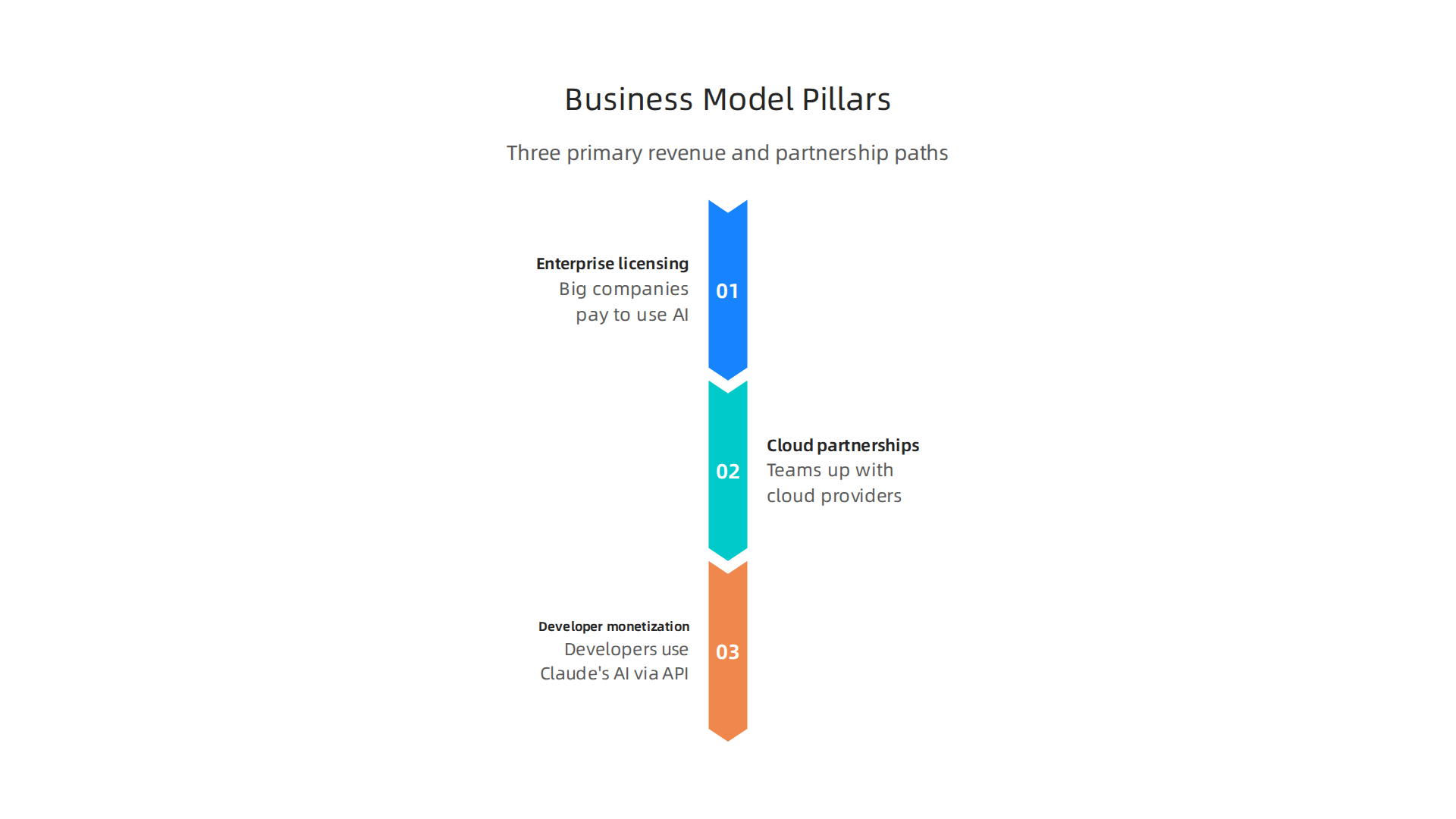
First, they focus on enterprise licensing. This means big companies pay to use Anthropic’s powerful AI models for their own needs. These companies might use Claude for writing, customer service, or to help with complex tasks. For many biggest ai companies, offering custom solutions to businesses is a key part of their growth.
Second, cloud partnerships are very important. Anthropic teams up with major cloud service providers, like Google and Amazon. These partnerships give Anthropic access to a lot of computing power, which is needed to train and run large AI models. For instance, in 2026, Anthropic expanded its partnership with Google and Broadcom for more computing resources, and also made a deal with SpaceX for data center capacity to boost Claude’s performance for users with higher demands. Such moves help Anthropic compete with other large models like galaxy ai or forethought ai by ensuring they have the infrastructure to scale.
Third, Anthropic also thinks about developer monetization. This means making it easy for other developers to use Claude’s AI through an API (a way for different software to talk to each other). Developers can build new apps and services on top of Anthropic’s AI, and Anthropic earns money from how much they use the service. This creates a big network of users and applications, helping anthropic ai spread even further.
Beyond how they earn money, Anthropic has also made smart strategic partnerships and investments. These partnerships help them reach more customers and stay ahead in the competitive AI market. For example, in 2026, Anthropic invested $100 million into its Claude Partner Network. This network helps other companies learn how to use and build with Claude, creating a wider ecosystem around Anthropic’s AI models. They’ve also seen significant investments, like AMD’s commitment to invest up to $5 billion and use Anthropic’s AI in their graphics processing units. Big funding rounds also show strong belief in Anthropic’s future, with the company raising $65 billion in Series H funding in 2026. They also joined forces with financial giants like Goldman Sachs and Blackstone in a $1.5 billion venture to bring AI to many businesses.
These partnerships and investments are not just about money. They change how Anthropic distributes its AI and how it stands against competitors.

By working with cloud providers, chipmakers, and other businesses, Anthropic ensures its technology is widely available and deeply integrated into the tech world. Understanding these big strategic moves is key for anyone watching the future of technology. If you want to keep up with these kinds of changes in the tech world, consider signing up for a specialized newsletter.
The AI Newsletter Worth Reading
Get clear daily AI updates from The Deep View Newsletter.
When we look at how anthropic ai stands against others, it’s like watching a race where each runner has special skills. Anthropic has worked hard to make its AI not just smart, but also safe. This focus on "safe AI" is a big strength.
Competitive positioning: strengths, weaknesses, and tactical threats
Anthropic’s biggest strength is its strong focus on AI safety and ethics. In 2026, many companies care deeply about using AI responsibly. Anthropic makes sure its models, like Claude, are designed to be helpful and harmless, reducing risks for businesses that use them. This gives them an advantage over some other biggest ai companies because trust is so important in new technology.
Another key strength for anthropic ai is how much it focuses on enterprise customers. Anthropic has been busy making Claude ready for big businesses. They have expanded Claude’s features to help with things like governance and how different systems work together. In fact, in the first five months of 2026, Anthropic made over 100 updates to Claude, boosting its ability to work with other enterprise tools and helping it stand out against rivals like OpenAI and Google in the business world Anthropic builds out Claude as OpenAI and Google stay …. This strong push into making Claude fit into existing company setups is a tactical advantage. They also made many new connections with other businesses to grow their network for Claude’s use Anthropic’s Massive Enterprise Expansion: 10 Strategic Partnerships …. This means more companies can easily use their AI.
However, Anthropic also faces weaknesses and threats. The world of AI is moving incredibly fast, and competition is fierce. Companies like OpenAI and Google are also launching big efforts to get enterprise clients

Anthropic and OpenAI are both launching joint ventures for …. Other players like galaxy ai and forethought ai are constantly improving their own models too.
One challenge is the cost of powerful AI. While Anthropic’s models are strong, they might be more expensive for some users or smaller developers compared to other options. This could limit how widely anthropic ai can be used outside of large businesses. Also, the need for huge amounts of computing power is a constant demand. Even with big partnerships, keeping up with the endless need for more power and faster chips is a race that never truly ends.
Another threat comes from regulations. As AI becomes more common, governments around the world might create new rules for how it can be used. These rules could affect how quickly Anthropic can develop and release new versions of Claude. Staying ahead in this quickly changing world of AI, both in technology and in rules, is a big task for any of the biggest ai companies. You can learn more about how cloud revenue is surging and AI is driving big tech performance by reading about Alphabet stock 2026 cloud revenue surges 63 percent as AI drives big tech performance. The global market is also being reshaped by this intense competition and AI’s impact, changing the World market order is being reshaped by AI and geopolitical competition.
Regulatory Posture and Policy Engagement: Anticipating Compliance Risks
The rapidly changing world of AI brings up big questions about rules and laws. Anthropic ai, known for its strong focus on safety, is not just waiting for new rules to appear. They are actively helping to shape them. This approach helps them get ready for any problems or changes with the law.
In 2026, Anthropic has made it clear that they want governments to be involved in guiding advanced AI.

They have shared ideas for an Advanced AI Framework, which is like a guide for how to manage powerful AI systems. This plan talks about making things clear, having outside groups check AI, and even giving governments power to stop dangerous uses. This shows Anthropic is thinking ahead about what it means to build safe AI for businesses, as described in their AI Policy Blueprint. In fact, Anthropic has urged the U.S. government to require safety tests for the most capable AI models.
Anthropic works directly with leaders to make sure its voice is heard. They have talked with the White House about setting AI security rules. They’ve also been active at the state level, supporting strong AI safety proposals in places like Massachusetts, as part of their state-by-state plan to ratchet up AI rules.
Privacy is another key area. Anthropic ai knows that rules about how AI uses personal data will shape their products. Also, national security is a growing concern. In June 2026, the US Commerce Department put out a new export control rule for advanced AI models like Anthropic’s Mythos and Fable. This means they now need a license to share these models outside the country, as the Commerce Department extends export controls to advanced AI models. This shows how anthropic ai needs to be ready for changes in how they can sell their AI products across borders.
These kinds of rules mean that companies like Anthropic, and other biggest ai companies such as those developing galaxy ai or forethought ai, must think about compliance from the very start. It changes how they design their AI models, what features they can offer, and where they can sell them. Building AI that meets strict safety rules and also respects privacy is a complex task. For anthropic ai, this focus on responsible AI is part of their core mission, but it also adds to the challenges of speedy development. You can learn more about how artificial general intelligence images drive strategic insights in the broader AI landscape.
By being involved in policy talks and making public recommendations, Anthropic hopes to help create a future where AI is powerful yet safe, and where they can keep growing their reach responsibly. Staying informed on these fast-moving AI policy developments is crucial for anyone watching the tech world. For clear daily AI updates and to stay ahead of these trends, consider subscribing to The AI Newsletter Worth Reading.
Signals to watch and scenario planning: short- and medium-term indicators
Because the world of AI changes so fast, just understanding current rules isn’t enough. People who work in big companies, invest money, or make laws need to keep a close eye on what’s coming next. This means looking at both clear numbers and less obvious signs to guess how companies like anthropic ai and other biggest ai companies might change their plans or launch new products.
How to spot changes early
You can look at different kinds of clues to see what companies like anthropic ai are planning.
Clear Numbers (Quantitative Indicators):
These are facts and figures you can measure.
- Who is using what: One big sign is how many businesses are choosing a certain AI tool. For example, in May 2026,
Anthropic‘s Claude AI saw more American businesses using it than OpenAI’s ChatGPT. This was a big moment forAnthropic, showing it’s gaining ground in the business world, even with new threats popping up Anthropic finally beat OpenAI in business AI adoption – VentureBeat. This kind of shift can mean big strategy changes forAnthropic aiand its rivals. - Growth in users: How many people are using an AI product, and how fast that number grows, tells a lot. For instance, Claude AI saw a huge jump in users year over year, nearing 300 million active users by mid-2026 The Claude Wave: How Anthropic is Quietly Rewriting. This shows strong public interest and use.
- Money coming in: How much money a company is making, or how fast its income is growing, is a key indicator. If the income grows very quickly, it suggests strong product demand.
- What they’re building: Look at where companies are putting their money for research. For
Anthropic ai, their 2026 enterprise roadmap focuses on things like making AI agents smarter and better ways for businesses to manage AI tools Anthropic Enterprise Roadmap 2026: What’s Coming for Claude. This tells you what kind of new features and products to expect.
Less Obvious Signs (Qualitative Indicators):
These are things you observe, not strictly measure.
- Policy shifts: Changes in how a company talks about safety or its own rules can be telling. For instance,
Anthropicchanged its core safety promise at one point, which suggested it was feeling pressure from rivals or other factors Anthropic ditches its core safety promise in the middle of an AI red line fight with the Pentagon. - Government talks: When governments start looking closely at AI companies, or when companies make recommendations to the White House, it hints at future rules and how they might affect business.
- Public announcements: What leaders say in interviews or how they talk about their future plans can give hints. For example, the Chief Product Officer of
Anthropictalked about how AI would start doing more actual work in 2026, showing a focus on practical applications How AI Starts Doing the Work in 2026 with Anthropic CPO.
Your monitoring checklist for 2026
To stay ahead, make a list of things to check regularly.
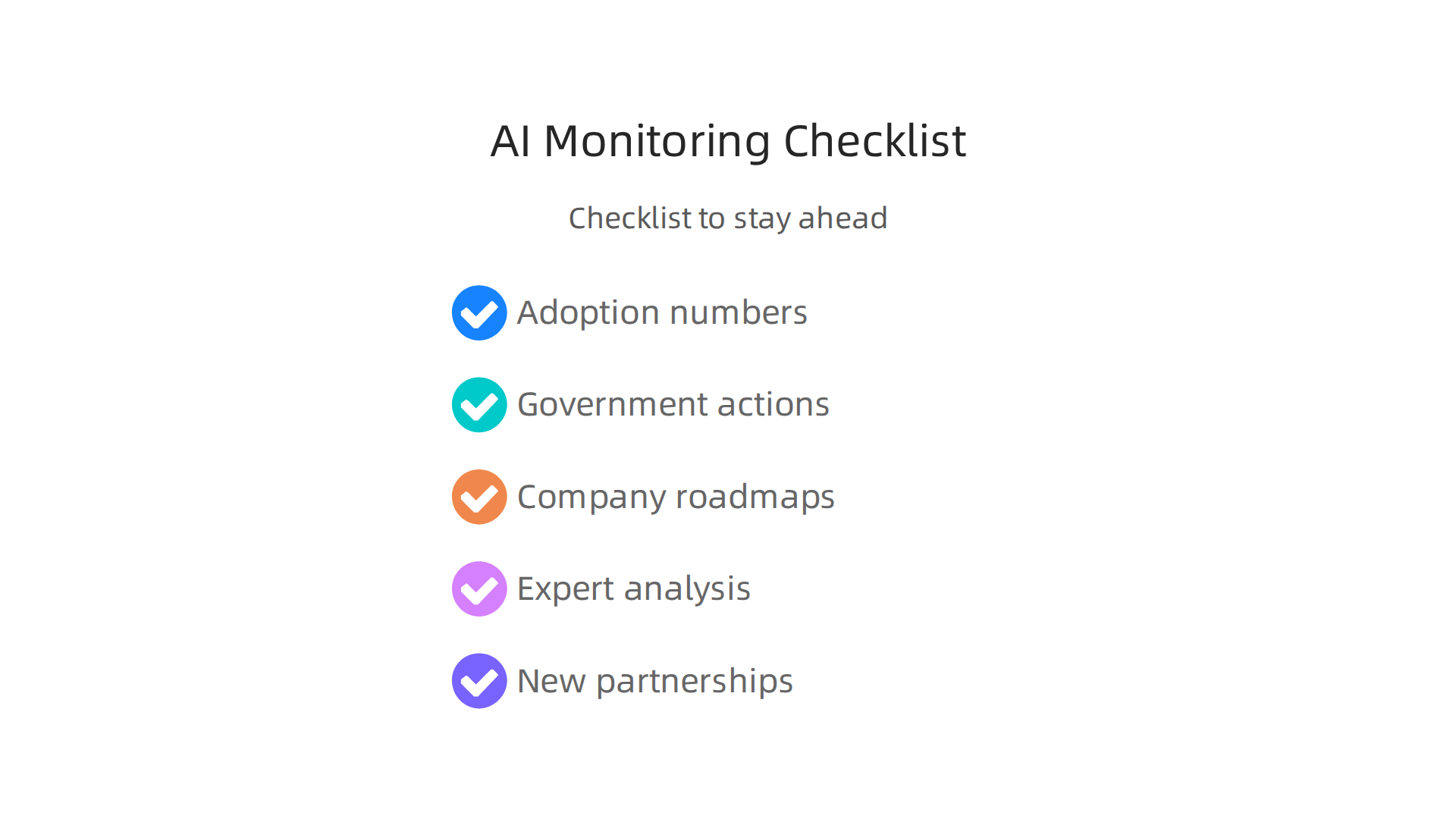
- Track adoption numbers: Pay attention to how many people and businesses are using different AI tools. This helps you see who’s winning the race among
biggest ai companieslikeanthropic ai, and new players likeforethought aiorgalaxy ai. You can learn more about how to measure product adoption effectively by checking out how to measure product adoption. - Watch government actions: Keep an eye on new laws, export rules, and statements from governments around the world. These rules can deeply affect how AI companies operate.
- Read company roadmaps: Look for official plans and strategy documents from
anthropic aiand others. These often lay out their goals for the next year or two. - Follow expert analysis: Read what industry experts and financial analysts say about these companies. They often highlight key trends and potential risks.
- Look for new partnerships: When AI companies team up with others, it often signals new directions or a push into different markets.
By keeping track of these signals, executives, investors, and policy teams can make better decisions in the fast-paced world of AI. It helps them understand not just where anthropic ai is today, but where it’s likely headed tomorrow. For a broader perspective, understanding the top industries in the world in 2026 can provide crucial context for AI’s role.
Summary
This briefing explains who Anthropic is, why its safety-first approach matters, and how the company shapes the AI market in 2026. It covers Anthropic’s founding as a public benefit corporation, the leadership behind Claude, and the product family (Opus, Sonnet, Haiku) designed for different use cases. The article details Anthropic’s core safety methods — notably Constitutional AI and scalable oversight — plus how those controls show up in model cards and public evaluations. It also lays out the company’s business model, key cloud and chip partnerships, funding signals, and competitive position relative to other major AI players. Readers will get practical guidance on which quantitative and qualitative indicators to watch (adoption, partnerships, roadmaps, policy moves) and how regulatory changes could affect Anthropic’s global reach. By the end, professionals and investors will be better equipped to assess Anthropic’s risk profile, strategic direction, and implications for enterprise adoption.