

Introduction: Why the Stock Advisor Top 10 Still Matters for Big Tech Investors
It is 2026. And Big Tech is bigger than ever. Capital spending on AI infrastructure is on track to hit massive numbers this year. The Magnificent Seven stocks, companies like Alphabet, Amazon, Apple, Meta, Microsoft, Nvidia, and Tesla, still largely control the market’s direction. In fact, many of these mega cap tech firms continue to drive the majority of S&P 500 earnings growth. [4 of the top 5 contributors to Q1 earnings were Mag 7 companies.
](https://pathstone.com/wp-content/uploads/2026/05/2026-05-04-Monthly-Market-Insights.pdf)
For the average investor, this creates a real problem. There is too much noise. You see headlines about what the Jim Cramer investment club is saying. You stumble into endless debates over whether you should just buy a broad index fund like VTI stock or try to pick individual blue chips like JPM stock. You might even read another Acorns investing review wondering if a robo-advisor can fix it all. It gets exhausting trying to separate real signals from fleeting hype.
That is exactly why a focused strategy is so powerful right now. Instead of chasing every hot tip, successful investors are zeroing in on what really works. A concentrated "stock advisor top 10" approach helps you do one critical thing. It cuts through the fog. It forces you to evaluate only the highest-conviction names, the ones with real competitive advantages in a world dominated by AI and massive market caps.
Making smart decisions in this environment requires more than a list of tickers. You need deep context and reliable daily analysis to understand the strategic moves these companies are making. That is the kind of insight we cover at Big Tech News Today, and it is exactly why we recommend staying sharp with focused daily briefings. Get the AI briefing that cuts through the hype from The Deep View Newsletter.
1. Prioritize Companies with AI Monetization in 2026
Here is the big challenge for investors in 2026. Everyone is talking about AI. Big Tech companies are spending huge amounts of money on it. Capital spending on AI infrastructure is on track to reach $700 billion this year, according to the World Economic Forum.
But spending money does not always mean making money.
The real winners are the companies that can turn this spending into actual revenue. You can see it happening right now. Four of the top five contributors to S&P 500 earnings growth this year are Magnificent Seven companies. Alphabet, Nvidia, Amazon, and Meta are driving these results.
This is where a "stock advisor top 10" approach really pays off. It forces you to look past the hype and focus only on companies with proven AI revenue.
So how do you spot real monetization? Look at the numbers.
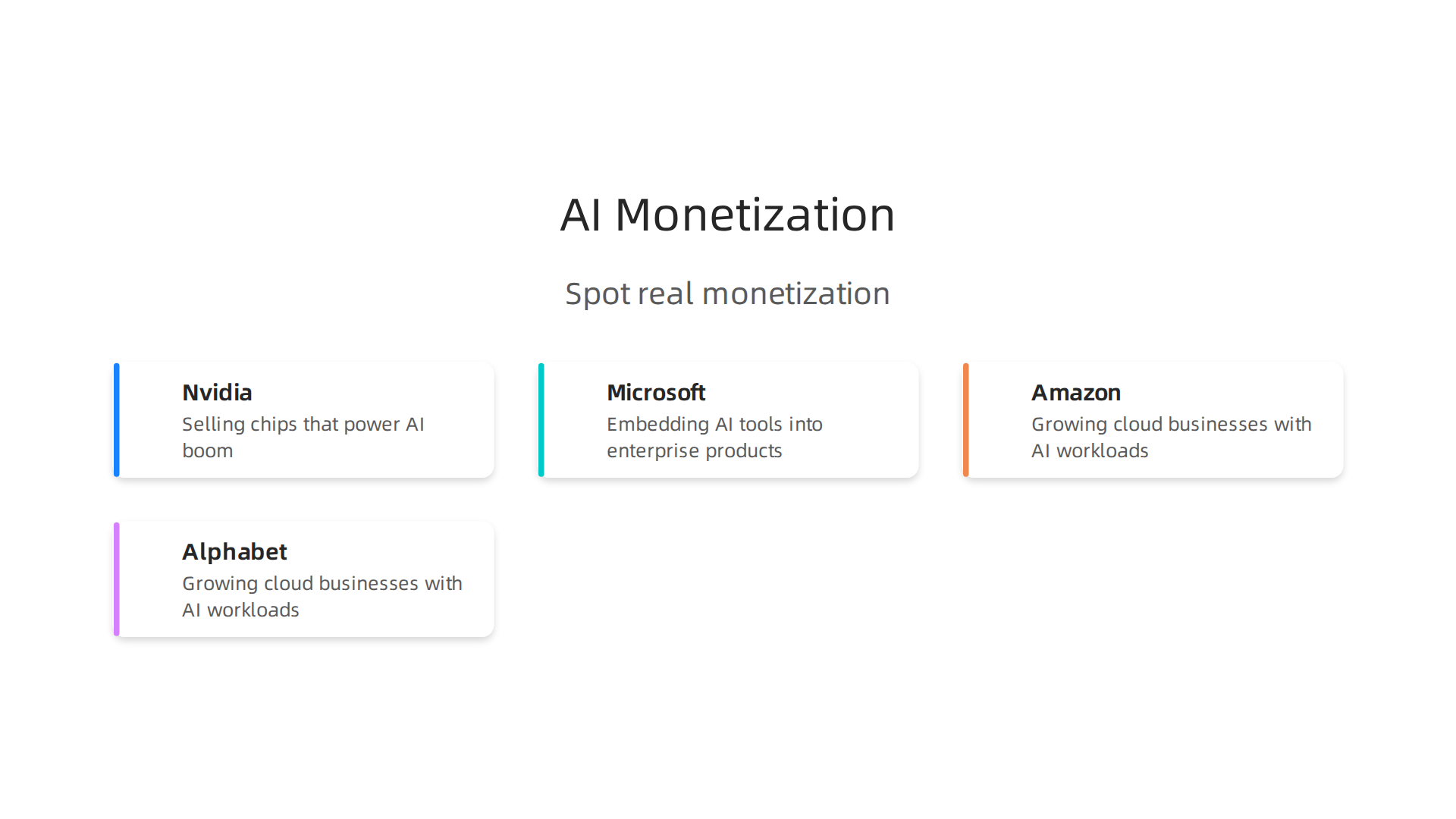
- Nvidia is selling the chips that power the AI boom.
- Microsoft is embedding AI tools into its enterprise products.
- Amazon and Alphabet are growing their cloud businesses with AI workloads.
A smart concentrated strategy does not let you own companies just because they have a good story. It forces you to own companies that are actually delivering results. That is the difference between just buying a broad fund like VTI stock and following a focused "stock advisor top 10" plan.
If you want to see which stocks are moving based on these real earnings signals, check our daily tracker of the biggest movers today in big tech stocks for 2026.
Tracking all of this can still feel overwhelming. That is why we recommend a daily briefing that cuts straight to the important stuff. Get the AI briefing that cuts through the hype from The Deep View Newsletter.
2. Favor the Mega-Cap Leaders for Stability
Once you know which companies are actually making money from AI, the next step is finding safety in your picks. Markets in 2026 have had their share of shake ups. The J.P. Morgan mid year outlook noted roughly 10% drawdowns in major stock markets this year. That kind of volatility can make you nervous.
Here is the good news. The biggest tech companies act like anchors in a storm. Mega-cap leaders like Apple, Microsoft, and Nvidia have enormous cash reserves and pricing power.

That means they can keep investing in AI even when the economy slows down. They can also buy back their own shares or raise dividends to support their stock price.
A recent report from Stifel confirmed that mega-cap technology remains a major earnings driver in 2026. The results are still dominated by the Magnificent Seven companies. This is not just a story. It is real earnings power.
When you build a stock advisor top 10 portfolio, these mega-cap names should be the foundation. They are the core holdings that give your portfolio stability. Think of them as the concrete slab before you start adding riskier bets.
That is why many smart stock pickers look at services like the Jim Cramer Investment Club or compare options like an Acorns investing review. They want to see which mega-caps are always included. Because if you own VTI stock, you get these giants automatically. But a focused list lets you own more of what works.
If you want to track which mega-caps are moving the markets right now, check our daily list of the biggest movers today in big tech stocks for 2026. It shows you exactly which leaders are driving the action.
And if you want to stay ahead of all the news without getting overwhelmed, get the AI briefing that cuts through the hype from The Deep View Newsletter. It delivers the essential updates straight to your inbox every day.
3. Assess Regulatory Risk Before Investing
So you have picked your mega-cap leaders. They are stable, powerful, and pouring billions into AI. But here is the thing. Even the biggest tech companies face a threat that cash alone cannot fix: regulation.
In 2026, governments around the world are tightening the rules on Big Tech. The European Union’s Digital Markets Act (DMA) is already in full effect. It labels certain platforms as “gatekeepers” and forces them to change how they operate. The DMA aims to stop companies like Google, Meta, and Apple from abusing their market power. And the US is watching closely. California recently proposed its own digital antitrust rules called BASED, which would ban self-preferencing practices. That means a company like Google could no longer favor its own services in search results.
These laws can directly hit a company’s bottom line. Fines are one thing. But forced changes to business models can be much more expensive. For example, Apple might have to allow third-party app stores. That would cut into its lucrative App Store revenue. Meta could face limits on how it uses personal data for advertising. And Google’s search dominance could be weakened.
So when you build your stock advisor top 10, you must weigh these legal risks against the growth potential. A company with a huge AI bet might still be a bad pick if regulators force it to change its most profitable practices. Even a fund like VTI stock holds these companies, and its performance can get dragged down if one of its top holdings takes a regulatory hit. Similarly, analysts who follow the Jim Cramer Investment Club often flag regulatory headlines as key signals. And if you are reading an Acorns investing review, you might notice that its portfolios are diversified, but that does not remove the risk for the whole tech sector.
Tracking regulatory news is a smart way to stay ahead. For a deeper look at how antitrust cases are shaping tech, check out our piece on how the VIX stock became a Big Tech volatility index. It shows how uncertainty around regulation can move markets.
Regulation is not going away. In fact, it is speeding up. To keep up with every new rule, fine, and policy change that could affect your stocks, get the AI briefing that cuts through the hype from The Deep View Newsletter. It delivers the essential updates on regulation and more straight to your inbox every day.
4. Look for Diversified Revenue Streams
So you know regulation is a real risk. But here is one way to fight back. Look for companies that do not rely on just one thing to make money.
Think about Apple. Sure, the iPhone is still huge. But Apple now makes billions from services like the App Store, Apple Music, and iCloud. That means if iPhone sales slow down, services can keep the cash flowing. Amazon is another great example. Its cloud business AWS is a profit machine. And its advertising business is growing fast. So Amazon is not just an online store anymore. It is a tech and ad powerhouse too.
Companies with multiple growth engines are more resilient. They do not crash when one product cycle ends.

That is why stock advisor top 10 picks often favor firms with balanced portfolios. You get stability plus growth.
The numbers back this up. Mega cap tech companies are still the biggest earnings drivers for the whole market, as a recent Stifel report shows. And these same firms are spending massive amounts on AI infrastructure. The World Economic Forum says capital spending by major tech firms on AI could hit $700 billion in 2026. That kind of investment builds future revenue streams.
Even a fund like VTI stock gives you diversified exposure. But if you pick individual names, focus on those with multiple income sources. The Jim Cramer Investment Club often highlights companies that have both a core business and a fast-growing side. And if you read an Acorns investing review, you will see they build portfolios around broad diversification, not single bets.
One company that has been quietly diversifying is IBM. It is shifting from old hardware to cloud and AI services. For a closer look, check out our analysis of how IBM stock in 2026 shows steady growth through AI and cloud transformation.
Revenue diversification is a powerful shield. And to stay on top of which Big Tech firms are building new income streams, you need daily, clear updates. Get the AI briefing that cuts through the hype from The Deep View Newsletter. It helps you track shifts in strategy before they hit the headlines.
5. Don’t Ignore Valuation: P/E vs. Growth
You found a company with diverse revenue streams. That is great. But here is where many investors trip up. They pay too much for the stock. Even a wonderful business can be a bad investment if you buy it at the wrong price.
So how do you avoid overpaying? You check valuation.
The most common tool is the P/E ratio, or price to earnings. It tells you how much you are paying for each dollar of profit.
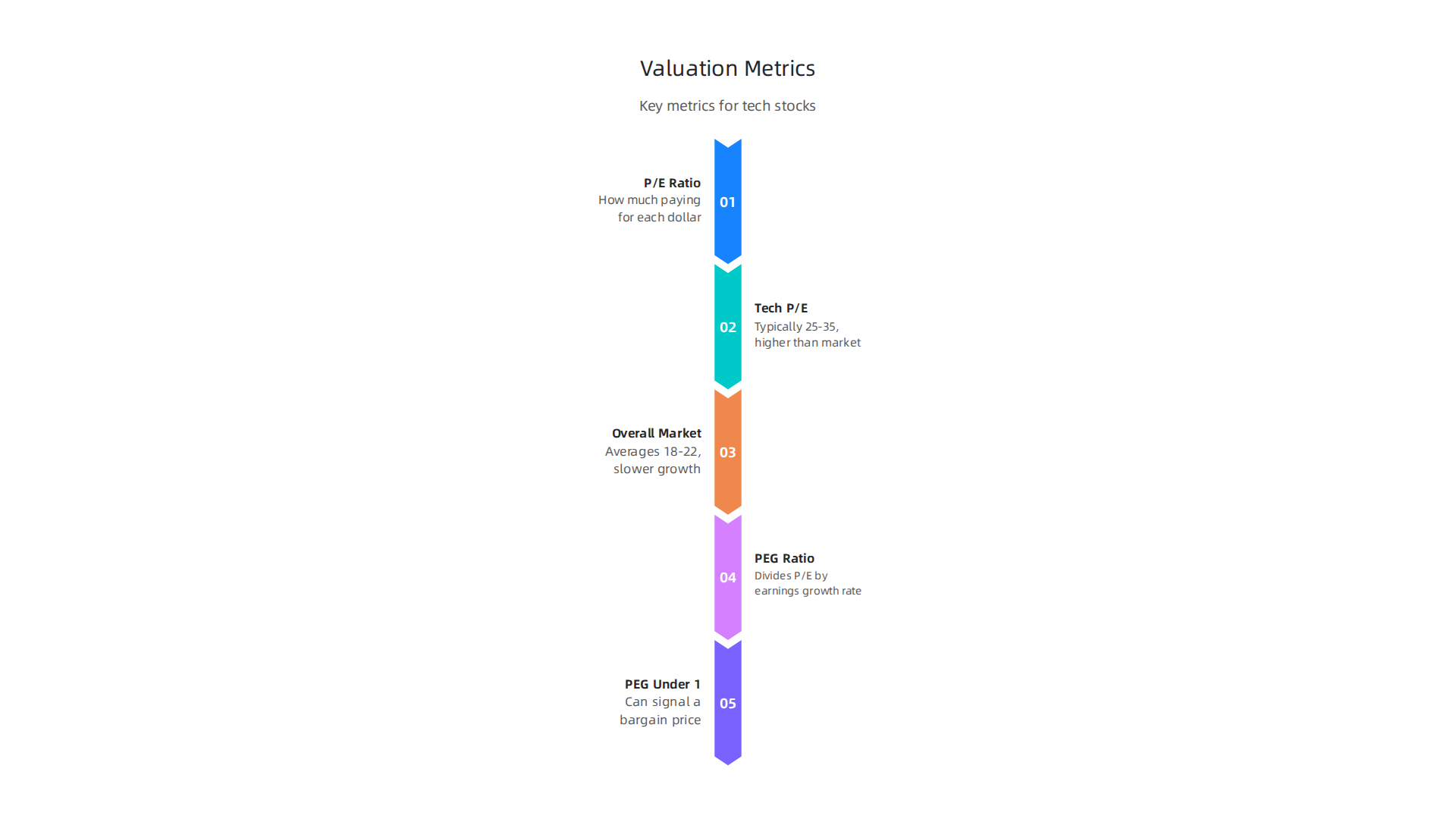
Tech stocks often trade at higher P/E ratios than the rest of the market. The technology sector typically trades at a P/E of 25 to 35, while the overall market averages 18 to 22, according to AllInvestView. That makes sense because tech companies grow faster.
But not all high P/E stocks are overvalued. Some deserve a premium because their earnings are growing fast. That is where the PEG ratio comes in. It divides the P/E by the expected earnings growth rate. A PEG ratio under 1 can signal a bargain. In 2026, several AI chip leaders like Nvidia, AMD, and Broadcom still trade at attractive PEG ratios below fair value, according to Tickeron. That means their growth justifies their price.
On the other side, you have companies whose P/E looks cheap because the market has given up on them. Some large cap tech stocks trade at lower multiples because their growth has slowed. But if you find one where growth is about to reaccelerate, you get a double win. Meta is often mentioned as a candidate. The key is to compare the P/E with the growth rate.
Stock advisor top 10 lists are a useful starting point. They often highlight both high growth names and value plays. But you should always do your own valuation check before buying. A list can point you in the right direction; your own math seals the deal. The same goes for any tip from the Jim Cramer Investment Club. His picks get attention, but you still need to look at the numbers yourself.
If you prefer a hands off approach, a broad ETF like VTI stock gives you exposure to many companies at once, so you do not have to worry about individual valuations as much. That is one reason why an Acorns investing review often highlights low cost ETFs for beginners. You still benefit from big tech growth without the headache of picking individual stocks.
When you look at valuation, also watch market sentiment. High P/E stocks are more vulnerable to volatility. If a company misses earnings by a little, its stock can drop a lot. Understanding those risks helps you stay calm. For a deeper look at how volatility affects big tech valuations, read our breakdown of how the VIX stock became a big tech volatility index in 2026.
One final note: use forward P/E, not trailing P/E, when possible. Forward P/E uses expected future earnings, which is more useful for fast growing companies. And always check the PEG ratio for any stock labeled as a "growth" pick. It could save you from buying at the top.
If you want to track which big tech firms are building the revenue streams that fuel their future earnings, you need clear daily updates. Get the AI briefing that cuts through the hype from The Deep View Newsletter. It helps you spot shifts in valuation and growth before the rest of the market catches on.
6. Consider Dividend-Growing Tech Stocks
Think tech stocks don’t pay dividends? That used to be true. But in 2026, some of the biggest names in the sector are returning cash to shareholders. Apple, Microsoft, and even Meta now pay dividends. And they’re increasing those payouts each year. That’s a powerful signal.
A growing dividend tells you a company is financially healthy. It means management believes earnings will keep rising. It also gives you a cushion when the market turns down. During a bear market, dividend income can help offset price drops. You get paid to wait for the recovery.
This is where most stock advisor top 10 lists fall short. They tend to focus on high-growth names. They often overlook steady dividend growers. If you’re an income-focused investor, you need to screen for this yourself. Don’t assume a list has you covered.
The same goes for tips from the Jim Cramer Investment Club. Cramer loves growth stories. But dividend stocks need a different lens. You want companies with a history of raising payouts, not just big yields.
One great example is IBM. The company has paid dividends for over a century and increased them regularly. As IBM shifts toward AI and cloud, it still rewards shareholders. Learn more in our breakdown of IBM stock in 2026.
If you prefer a hands-off approach, an ETF like VTI stock gives you exposure to many dividend-paying tech giants in one trade. That’s one reason an Acorns investing review often highlights low-cost ETFs for steady income. You don’t have to pick individual stocks.
Don’t forget to check payout ratios. A safe dividend uses less than 60% of earnings. Too high, and a cut could be coming. Also look for consistent growth over five years or more.
With interest rates still shifting in 2026, dividend-growing tech stocks offer a rare mix of income and upside.
To stay ahead of which big tech firms are building the cash flows that support those dividends, you need clear daily updates. Get the AI briefing that cuts through the hype from The Deep View Newsletter. It helps you spot the dividend growers before the rest of the market catches on.
7. Leverage Dollar-Cost Averaging for Volatile Names
Here’s a problem every investor faces. You see a stock like Tesla or Nvidia drop 10% in a week. You want to buy, but you freeze. What if it drops 20% next week? So you wait. And then it bounces back 15% overnight. You missed the window.
Dollar-cost averaging (DCA) solves this problem completely.
DCA means you invest a fixed dollar amount on a regular schedule. Maybe $500 every Monday. Or $1,000 every two weeks. You do not try to guess the bottom. You just keep buying regardless of price.
Over time, this smooths out your entry point. You buy fewer shares when prices are high. You buy more shares when prices fall. It removes the fear and greed from investing.
The S&P 500 has delivered an average annual return of about 10% since its inception, but it rarely moves in a straight line. In 2022, the market dropped over 18%. In 2023, it jumped over 26%. If you tried to time those moves, you probably got it wrong. DCA helps you stay invested through both the drawdowns and the recoveries.
How does this connect to a stock advisor top 10 list? Let’s say your stock advisor top 10 includes a volatile name like Nvidia or Tesla. Instead of investing your full lump sum today, spread that purchase over 10 weeks. You reduce the risk of buying right at a local peak. This is especially smart for names near 52 week highs.
If you follow tips from the Jim Cramer Investment Club, you hear about buying on weakness a lot. DCA is the most disciplined way to actually do that without freezing up.
An Acorns investing review will tell you that automated DCA is their whole model. It works because it removes emotion. You can apply this same logic to any holding. Use a broad fund like VTI stock as your core DCA holding. Then add individual names like JPM stock for stability.
Even the best stock advisor top 10 stocks fail if you buy them at the wrong price. DCA protects you from that mistake.
To understand the sharp swings driving these volatile names, read our breakdown of how the VIX stock became a big tech volatility index in 2026. The VIX measures market fear. DCA helps you ignore it.
Staying consistent with your DCA plan depends on knowing which names are worth buying on the dips. Get the AI briefing that cuts through the hype from The Deep View Newsletter. It helps you identify the real long term winners before the rest of the market piles in.
8. Use Stock Advisor Lists as a Starting Point, Not a Script
Here is a mistake too many people make. They find a stock advisor top 10 list, buy every name on it, and hope for the best. Then the first stock drops 15%, and they panic sell.
That is not investing. That is gambling with a shopping list.
A stock advisor top 10 list is a great starting point. It saves you hours of research. But it should never be your final decision.
You need to customize the list for your own situation. Ask yourself questions like these:
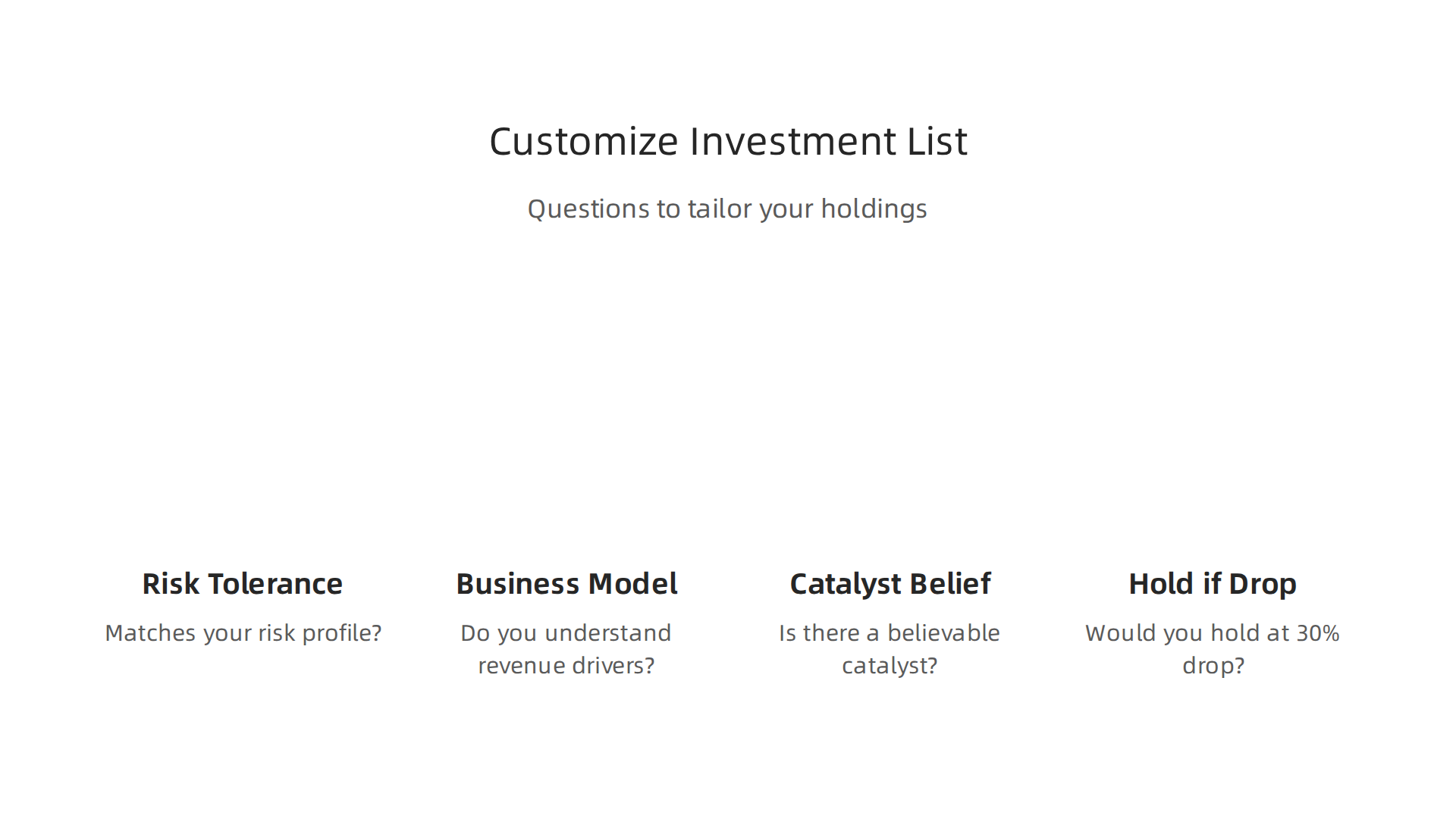
- Does this company match my risk tolerance?
- Do I understand how this business makes money?
- Is there a catalyst I believe in over the next 6 to 12 months?
- Would I still hold this stock if it drops 30%?
If you cannot answer yes to all four, skip that pick. Even the best performing stocks in 2026 came with serious volatility. Look at the data. The S&P 500 has delivered an average annual return of about 10% since it started, according to Fidelity. But in 2022, it dropped over 18%, as Slickcharts shows. You need real conviction to sit through those drawdowns.
When you combine a stock advisor top 10 pick with your own research and timing, something changes. You stop hoping and start knowing. That is the difference between holding through a dip and selling at the bottom.
If you follow the Jim Cramer Investment Club, you have heard him say do your own homework. He is right. Use his picks as ideas. Then build your own thesis.
Read our guide on how Renaissance Technologies uses quant strategies. It shows how professional funds build conviction around their picks. The same discipline applies to individual stocks.
Here is the real edge. A stock advisor top 10 list tells you what to buy. But only you can decide when to buy and how much conviction to carry. That is where the real returns come from.
If you are building a portfolio around these ideas, use stable names like JPM stock as your foundation. Then layer in higher conviction picks from the list.
For stocks near 52 week highs, apply the DCA strategy from the previous section. Spread your entry over time. That reduces the sting if the stock pulls back after you buy.
Staying informed on which names have real staying power versus which ones are just momentum plays is the key to long term success. Get the AI briefing that cuts through the hype from The Deep View Newsletter. It helps you spot sustainable trends before the crowd catches on.
9. Track Insider Buying and Institutional Ownership
You have customized your stock advisor top 10 list. You know your conviction level. Now you need one more filter that most retail investors skip.
Look at who else is buying the same stocks.
Two metrics tell you a lot about a stock’s real potential. Insider buying and institutional ownership. When company executives put their own cash into shares, that is a strong signal.

They know the business better than anyone. If a CEO or CFO is buying, they usually expect the stock to go up.
Institutional ownership matters too. Big money managers like BlackRock, Vanguard, and Fidelity move markets. When institutions increase their positions, it creates buying pressure. That often leads to higher prices over time.
Here is how to use both signals to check your stock advisor top 10 picks.
Start with insider transactions. Free tools like SEC filings on EDGAR show every insider buy and sell. Look for patterns. A single insider selling might mean nothing. But if three executives buy within a month, pay attention. That is conviction in action.
Then check institutional ownership. The S&P 500 has delivered an average annual return of roughly 10% since it began, according to Fidelity. But individual stocks depend on who holds them. Look for rising institutional interest quarter over quarter. That tells you smart money is flowing in.
You want to see both signals align. Insider buying plus rising institutional ownership. That is a powerful validation for any stock you are considering.
If insiders are selling heavily while institutions are leaving, walk away. That stock might look cheap, but the people closest to it do not believe in the story.
The same discipline applies whether you are looking at stable names like VTI stock or higher conviction picks from a Jim Cramer Investment Club list. Check who owns it and who is buying more.
For a deeper look at how professional traders spot opportunities, read our analysis of how Renaissance Technologies uses quant strategies to find patterns institutional investors miss. The same data-driven thinking applies to tracking ownership changes.
Staying on top of who is buying and selling gives you an edge most people ignore. It turns a stock advisor top 10 pick from a guess into a well-researched bet.
To make sure you catch institutional moves early, subscribe to The Deep View Newsletter. It delivers daily AI and tech insights that help you spot which sectors the big money is betting on before the news hits headlines.
10. Stay Disciplined: The Long Game Wins
You have your stock advisor top 10 list. You checked insider buying and institutional ownership. Now comes the hardest part.
Doing nothing.
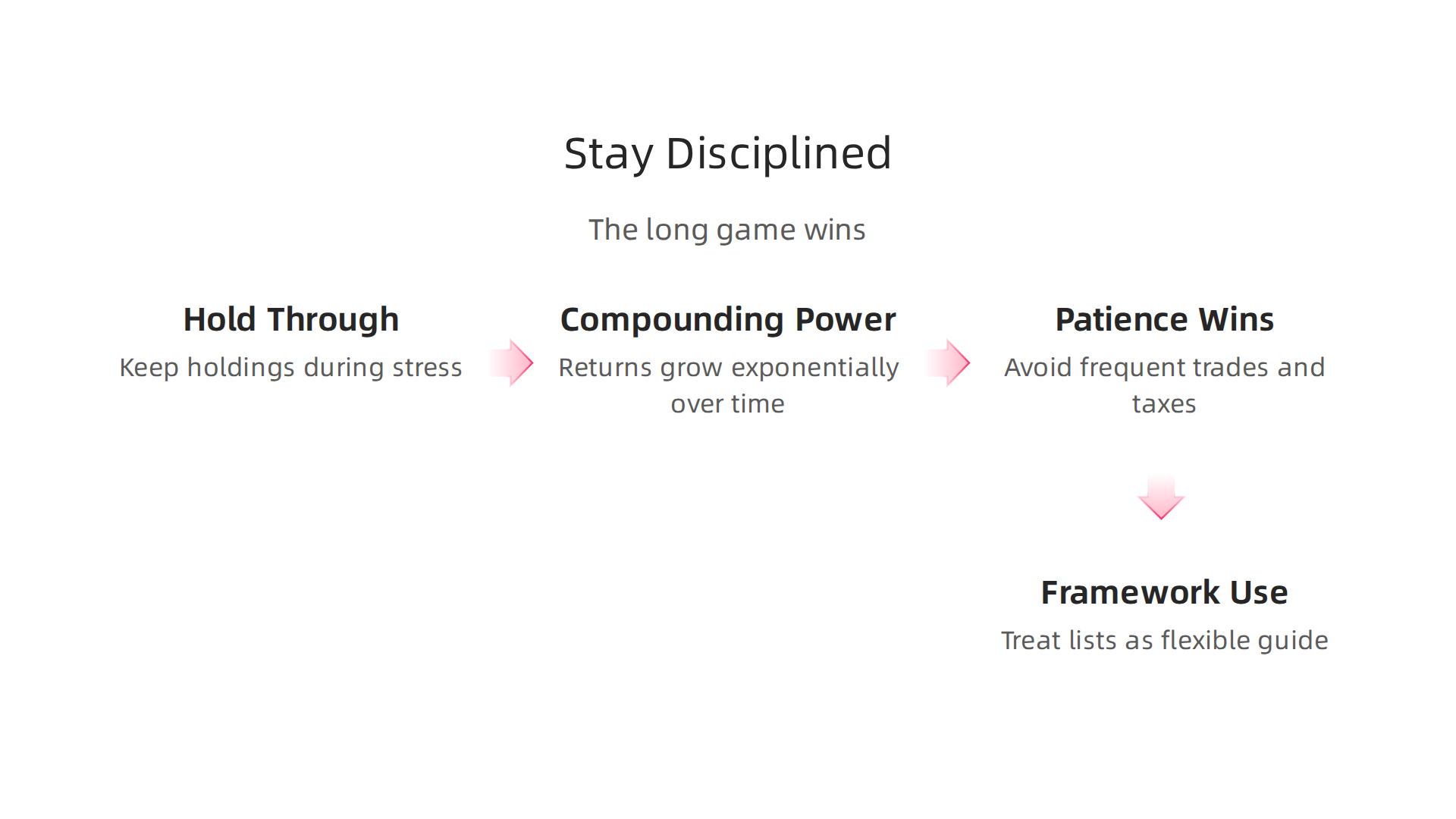
Here is the truth most people miss. The best returns in big tech come from holding through the scary days.
When the market drops 10% in a month, your instincts will scream at you to sell. But history says otherwise.
The S&P 500 has delivered an average annual return of about 10% since it began, according to Fidelity. But look closer at the recent data. The index returned over 25% in 2024 and over 26% in 2023, as Slickcharts shows. It also dropped over 18% in 2022. The money was made by people who stayed in.
That is the long game.
Compounding works best when you leave your money alone. Dividend reinvestment turbocharges the effect over time. If you chase every hot tip or panic sell every time the news looks bad, you break the engine.
Your stock advisor top 10 list works best as a long-term framework. Think of it as a set of guidelines, not a daily trading checklist. A stock like VTI stock or JPM stock might sit quiet for months. Then it jumps 15% in a week. You only capture that jump if you are still holding.
Even the best performing stocks in 2026, as tracked by NerdWallet, tell the same story. The winners are usually the ones investors held through volatility.
Patience beats activity. Frequent trading costs you in fees, taxes, and missed gains. A Jim Cramer Investment Club approach works when you pick solid names and then trust the process.
For a deeper look at how to separate real signals from daily noise, read our analysis on how to cut through the noise with futures news for big tech. It helps you ignore the short-term panic and focus on what matters.
The investors who win over decades are not the smartest or the fastest. They are the most disciplined. They build a stock advisor top 10 list, check their conviction once a quarter, and let time do the heavy lifting.
To keep that long-term perspective sharp every day, subscribe to The Deep View Newsletter. It delivers clear daily AI and tech insights that help you see the big picture and avoid reacting to every headline.
Summary
In a market dominated by the Magnificent Seven and massive AI spending, a focused