

Introduction
SpaceX finally went public on June 12, 2026, and the stock immediately surged past $2 trillion in market cap. After years of being a private company available only to accredited investors, regular people can now buy shares under the ticker "CX." The demand was enormous: over 500 million shares changed hands on day one.
But here’s the thing. Even though you can now buy SpaceX stock directly, understanding what you are buying is still tricky. The company brought in $18 billion in revenue in 2025 but lost $4.9 billion. Its valuation of roughly $2 trillion means you are paying about 100 times revenue. That kind of multiple demands a clear-eyed look at the numbers.
This article will give you a practical framework for thinking about SpaceX’s valuation, the risks involved, and smarter ways to invest in the space economy. We will also look at related stocks and ETFs that give you indirect exposure to SpaceX and the broader space boom. For example, the ARK Innovation ETF (ARKK) holds space-adjacent companies, while Unity Software and Aeva Technologies (AVAV) represent different parts of the technology stack that could benefit from a growing space sector.
Every insight here is grounded in real data, regulatory filings, and expert analysis. We want to help you cut through the hype and make informed decisions.
One of the best ways to stay sharp on fast-moving tech stories like this is to get clear, daily updates on AI and big tech. That is exactly what The Deep View Newsletter delivers.

It is a free resource that breaks down the most important developments in plain language.
The key to investing in a company like SpaceX is understanding that it is still a high-risk, high-reward bet.

The company spends billions on Starship development and Starlink expansion. Revenue is growing fast, but so are costs. In this article, we will walk through what the numbers really mean and how you can evaluate SpaceX alongside other opportunities in your portfolio.
Why You Can’t Buy SpaceX Stock on the Open Market
Wait, if SpaceX already went public on June 12, 2026, why are we talking about not being able to buy it? Because for nearly 20 years before that, the exact opposite was true. From its founding in 2002 until this year, SpaceX remained a private company. Elon Musk repeatedly stated that he had no plans for an IPO in the near term. That meant regular investors had zero access to buy shares through standard brokerage accounts or stock exchanges.
Instead, the only way to get a piece of SpaceX was through private secondary markets. These platforms allowed existing employees and early investors to sell their shares, but only to accredited investors — people with a net worth over $1 million or an annual income above $200,000. If you didn’t meet those thresholds, you were out of luck. According to pre-IPO SpaceX stock trading details, shares changed hands on secondary markets at valuations that fluctuated wildly based on rumors and fundraising rounds. The process was complicated, illiquid, and out of reach for nearly everyone.
That all changed on June 12, 2026, when SpaceX began trading on Nasdaq under the ticker "CX." Now anyone with a brokerage account can buy or sell shares during market hours. The IPO was the largest in history, raising $75 billion at a price of $135 per share. The stock surged over 19% on day one, pushing the market cap past $2 trillion.
But understanding this history matters. It helps explain why so many investors were eager to buy on day one — they had been locked out for years. It also highlights how rare it is for a company of this size to stay private for so long. Many other high-profile tech companies, like Figma, are still navigating their own paths to public markets. If you want to learn more about how those companies compare, take a look at our detailed breakdown of Figma stock valuation and IPO analysis.
Now that you know the backstory, let’s talk about what the numbers look like today and whether the current stock price makes sense.
The Private Company Landscape for Space Ventures
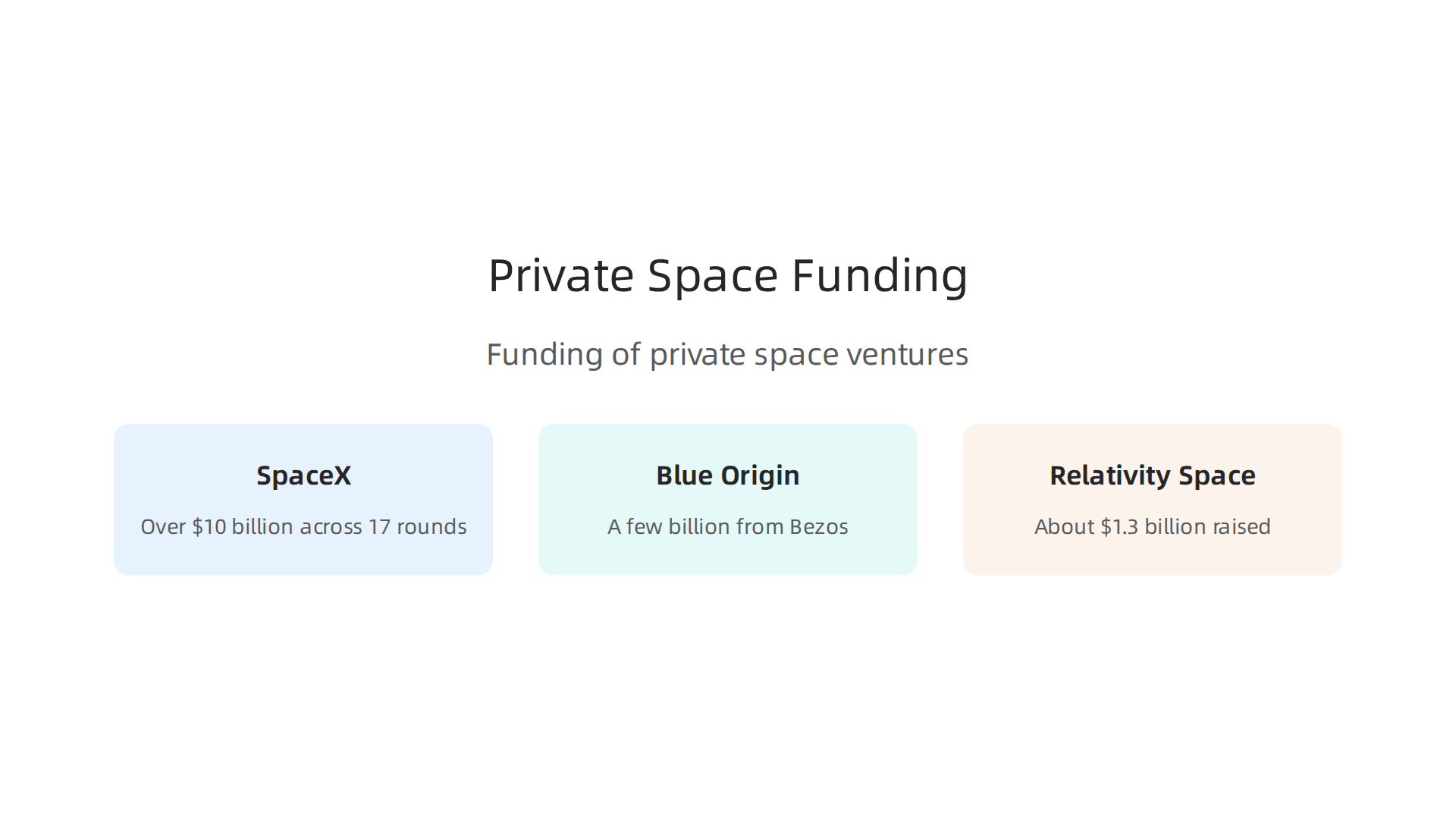
SpaceX is now public, but most of its competitors are not. Blue Origin, Relativity Space, and Astra still operate as private companies.
That means regular investors cannot buy their stock on public exchanges either.
For these companies, the main ways for investors to get in are private fundraising rounds or SPAC mergers. Several space startups went public through SPAC deals in the early 2020s, but many of them struggled afterward. The private route gives companies more control, but it also keeps regular people out.
Looking at SpaceX’s funding history helps put its valuation in context. The company raised over $10 billion across 17 rounds before its IPO. That is far more than any other private space firm. Experts have tried to break down what SpaceX is really worth. One detailed valuation analysis from a finance professor estimated the company at roughly $1.2 trillion before the IPO.
For comparison, Blue Origin has raised a few billion dollars from Jeff Bezos personally. Relativity Space raised about $1.3 billion. These numbers are tiny next to SpaceX. That gap explains why SpaceX could demand such a high IPO price while others stay private longer.
If you want to see how other Elon Musk companies trade on public markets, check out this Tesla stock analysis for a different kind of comparison.
How to Gain Exposure to SpaceX: Indirect Plays
Since SpaceX stock is now public and priced high, many regular investors look for other ways to ride the wave.

The most straightforward option is buying shares of companies connected to the space industry. That is where exchange-traded funds (ETFs) come in handy.
The ARK Space & Defense Innovation ETF (ARKX) is one of the most popular choices. It holds a basket of public companies that work in space exploration, defense, and related technologies. Its top holdings include Rocket Lab, L3Harris Technologies, and Kratos Defense & Security Solutions. You can see the full list of ARKX holdings on StockAnalysis for the latest weights.
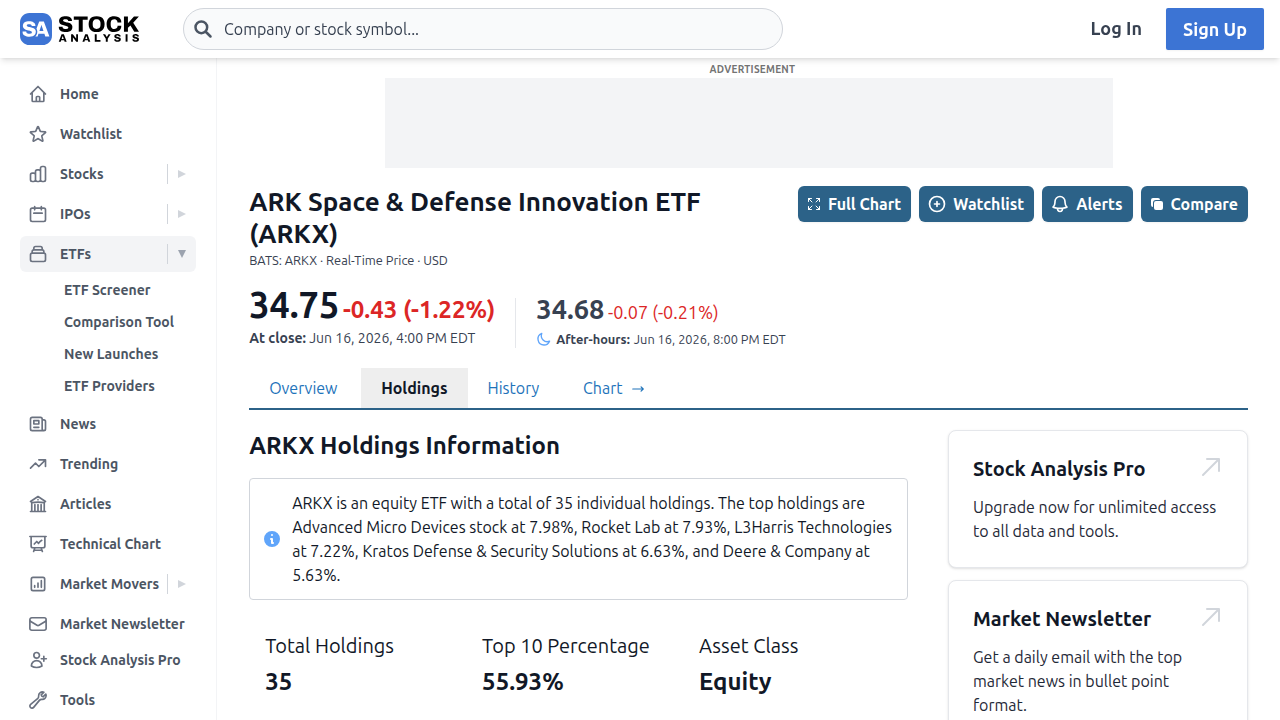
By buying ARKX, you get exposure to several firms that supply rockets, satellites, and defense systems. That is an indirect way to benefit from the same tailwinds that lift SpaceX stock.
Another route is using pre-IPO funds. These funds let accredited investors buy shares of private companies, including SpaceX, before they go public. ARK Invest offers an interval fund called ARKVX. According to their Q1 2026 fund webinar, SpaceX is a mid-teens percentage position in that fund. You can watch their SpaceX IPO and OpenAI discussion on YouTube for more details. These options come with higher fees and require you to be an accredited investor, so they are not for everyone.
Finally, consider the Starlink factor. SpaceX owns Starlink, the satellite internet service. Starlink’s growth creates demand for partners like Tesla and Alphabet. When Starlink succeeds, those stocks may benefit, providing another hedge tied to SpaceX’s long-term vision. If you want to learn how to track market signals more effectively, this guide on filtering Yahoo Finance news for big tech insights can help you cut through the noise.
Space ETFs and Their Holdings
Beyond the funds we just covered, several other space ETFs offer different approaches to investing in the sector.
The key is understanding how each fund selects its stocks.
ARK Space & Defense Innovation ETF (ARKX) focuses on companies tied to space exploration and defense innovation. As of early 2026, its top holdings include L3Harris, Rocket Lab, and Kratos. But it also holds non-space names like Tesla, Trimble, and Deere. This broader mandate means you get exposure to space-adjacent industries. For a full breakdown, check the ARKX holdings list on ARK’s official site.
SPACE (the Procure Space ETF) takes a purer approach. It invests in companies that generate at least 50% of their revenue from space-related activities. That means satellite operators, launch providers, and space infrastructure firms. Holdings include Iridium Communications, Maxar Technologies, and Virgin Galactic. If you want direct space exposure without mixing in defense contractors, SPACE is a cleaner choice.
UFO (the ETFMG Space Exploration & Innovation ETF) tracks an index of companies involved in space travel, satellite tech, and exploration. It holds names like Rocket Lab, Planet Labs, and Spire Global. UFO includes smaller pure-play firms that do not appear in broader ETFs.
ROKT (the SPDR S&P Kensho Final Frontiers ETF) takes a wider view, including space, ocean, and deep earth exploration. Its holdings cover aerospace, robotics, and defense. It is less focused but gives you exposure to emerging frontier technologies.
Holdings for these funds are updated quarterly. Checking the current top positions can reveal where the market is betting on Starlink’s supply chain and Starship manufacturing. For example, ARKX’s inclusion of Alphabet and Amazon hints at the cloud and connectivity plays tied to satellite internet.
If you want to track how Big Tech stocks like Tesla perform relative to space trends, this guide on deciphering Tesla stock on Yahoo Finance can help you spot the signals.
Secondary Market and Pre-IPO Funds
If you missed the chance to buy spacex stock through an ETF or direct IPO allocation, secondary markets and pre-IPO funds offer alternative routes. These options are especially useful for accredited investors who want exposure before the public listing.
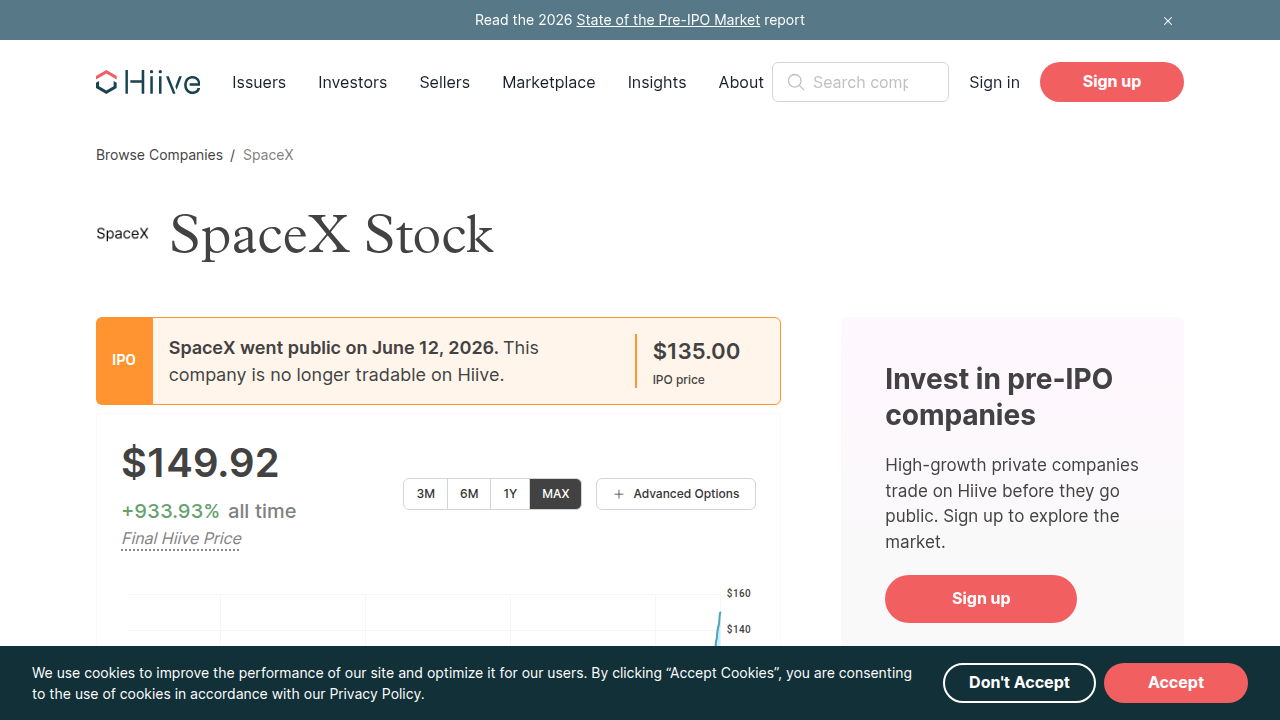
Platforms like Forge Global, EquityZen, and Hiive connect buyers with current SpaceX shareholders. According to the SpaceX IPO Guide on BitMEX, shares on these platforms trade between $420 and $674 per share. But there is a catch. SpaceX executed a 5-for-1 stock split on May 4, 2026. Many platforms had not updated their prices at the time, so a $420 pre-split price is really $84 post-split. Always verify the basis before comparing.
Hiive offers real-time pricing and, as of April 2026, listed SpaceX shares near $832 per share (pre-split). You can check the latest SpaceX pre-IPO data on Hiive to see current bids and asks.
Another path is pre-IPO funds. These funds pool money from investors to buy stakes in private companies like SpaceX. For example, the Private Shares Fund (PRIVX) held SpaceX and xAI as its largest position, representing 19.36% of its portfolio as of March 2026. The Private Shares Fund page explains how to gain exposure through their fund.
However, these investments come with real risks. Secondary market shares are illiquid, meaning you may not be able to sell quickly. Valuations can swing wildly based on news or rumors. Due diligence on fund managers is critical. Check their track record and fee structure before committing capital.
If you want to sharpen your overall investment strategy, consider reading our guide on stock advisor top 10 picks for big tech investors in 2026. It covers how to evaluate opportunities like SpaceX alongside public tech giants.
Staying informed about the latest tech developments can help you time these investments better. For daily updates on AI and the space industry, get clear insights from The AI Newsletter Worth Reading. It breaks down complex topics like SpaceX’s valuation and IPO timeline into actionable takeaways.
Top Space ETFs: Performance and Holdings Breakdown
If buying spacex stock directly feels too complex or out of reach, exchange traded funds offer a simpler way to invest in the space industry. These funds hold a basket of companies that build rockets, operate satellites, or supply the space economy. You won’t own SpaceX shares directly, but you will own pieces of the ecosystem that supports it.
The most popular space ETF is the ARK Space & Defense Innovation ETF, ticker ARKX. It was renamed in November 2025 to include defense stocks alongside pure space plays. As of early 2026, ARKX held about 35 stocks with total assets near $750 million. Its expense ratio is 0.75%, which is reasonable for an actively managed fund.
According to the ARKX holdings list on StockAnalysis, the top holdings as of February 2026 were:
- L3Harris Technologies (8.93%) – a defense contractor and satellite maker
- Rocket Lab (7.46%) – a launch provider that competes with SpaceX on small payloads
- Teradyne (7.37%) – a test equipment company used in aerospace
- Kratos Defense & Security Solutions (7.17%) – a drone and missile builder
- Deere & Company (6.55%) – yes, a farm equipment maker, but it uses satellite data
- AeroVironment (6.27%) – a drone company
- Archer Aviation (4.44%) – an air taxi startup
- Advanced Micro Devices (4.34%) – supplies chips for space and defense
- Trimble (3.76%) – GPS and positioning technology
- Komatsu (3.56%) – a Japanese heavy machinery firm with autonomous mining tech
SpaceX’s top suppliers like L3Harris and Rocket Lab show up here. You also get exposure to satellite operators like Iridium (3.80% from another data source) and the broader tech giants like Alphabet and Amazon that invest in space internet.
Other space ETFs exist but have different focuses. The Procure Space ETF (SPACE) leans more on pure-play satellite and launch companies. The EUFO ETFMG Drone Economy Strategy fund targets drones and autonomous vehicles. The ROKT SPDR S&P Kensho Final Frontiers ETF covers frontier tech like space and cybersecurity. Each has different expense ratios and liquidity. ARKX usually trades more than $10 million in daily volume, making it easy to buy and sell.
If you want to dig deeper into how big tech companies like Amazon and Tesla affect these ETFs, check out our guide on deciphering Tesla stock for big tech insights. It explains how to read fund holdings and connect them to larger market trends.
When choosing a space ETF, pay attention to the expense ratio and the top holdings. A fund with a low expense ratio but heavy exposure to non-space stocks might not track the industry the way you expect. Always review the official fact sheet from the provider. For ARKX, you can see the latest portfolio on the ARKX official fund page.
That page also explains the investment strategy behind the fund.
Remember that these ETFs give you indirect exposure to spacex stock through its suppliers and partners, not the stock itself. For many investors, that mix of growth and diversification makes ETFs a good starting point.
Key Financial Metrics for Evaluating Space-Related Investments
Once you start looking at individual space companies, the usual stock metrics like price-to-earnings (P/E) ratios don’t always tell the full story. Many space firms, including SpaceX itself, lose money on paper because they spend heavily on research and rocket development. So you need different tools to judge their real health.
For public space companies, focus on three numbers first:
- Revenue growth rate – How fast is the top line expanding? A company launching more rockets or selling more satellites each quarter shows momentum.
- Backlog – This is the value of signed launch or manufacturing contracts that haven’t been delivered yet. A growing backlog means future revenue is locked in.
- Gross margin – If a company can produce satellites or launch services for less money over time, its gross margin improves. That points to increasing efficiency.
Traditional valuation metrics like P/E are less helpful because many space stocks report negative net income. For example, SpaceX reported a GAAP net loss of $4.9 billion in 2025, even as its revenue reached $18.7 billion (a 33% jump from 2024) according to Sacra. That loss came from massive spending on AI computing and Starship development, not from weak demand.
For private companies like SpaceX, the picture is even more nuanced. Since you can’t look up a simple P/E on Yahoo Finance, you need proxy metrics:
- Revenue per Starlink user – Starlink, SpaceX’s satellite internet arm, drove about 61% of total company revenue in 2025. But average revenue per user (ARPU) has dropped from $99 per month in 2023 to $66 per month in early 2026, as reported by 6 Charts on SpaceX’s Pre-IPO Financials. That trend matters because it affects future cash flow.
- Launch cadence – How many rockets does SpaceX launch per year? More launches mean more revenue from customers and better economies of scale. In 2025, the launch segment generated about $4.1 billion.
- Government contract wins – Deals with NASA, the Pentagon, and international agencies provide stable, long-term cash. They also validate the technology.
Starlink’s performance is especially critical. In 2025, it accounted for $11.4 billion in sales and $4.4 billion in operating profit, as noted in the SpaceX by the numbers report. Yet SpaceX as a whole posted a $4.9 billion loss because its AI segment and Starship R&D burned through cash. So the key question for investors is whether Starlink’s subscription model can keep growing fast enough to cover those costs.
If you want to practice reading these metrics for other big tech stocks, our figma stock valuation analysis walks through how to evaluate a high-growth company that is losing money today but has strong unit economics.
spacex stock doesn’t trade publicly yet, but these same metrics will matter when the IPO arrives. Watch Starlink subscriber growth, ARPU trends, and Starship launch frequency. Those three signals tell you more than any earnings headline.
To stay ahead of the market shifts that affect companies like SpaceX and other big tech names, getting clear daily AI updates from The Deep View Newsletter can help you connect the dots faster.
Risks and Volatility in the Space Sector
Here is the thing about space stocks: they are not for the faint of heart. The space industry is full of binary outcomes. A rocket blows up. A regulatory permit gets delayed. A huge government contract goes to a competitor. Any of these events can send a stock down 10% or more in a single day.
SpaceX itself faces a long list of risks that every spacex stock investor needs to understand.
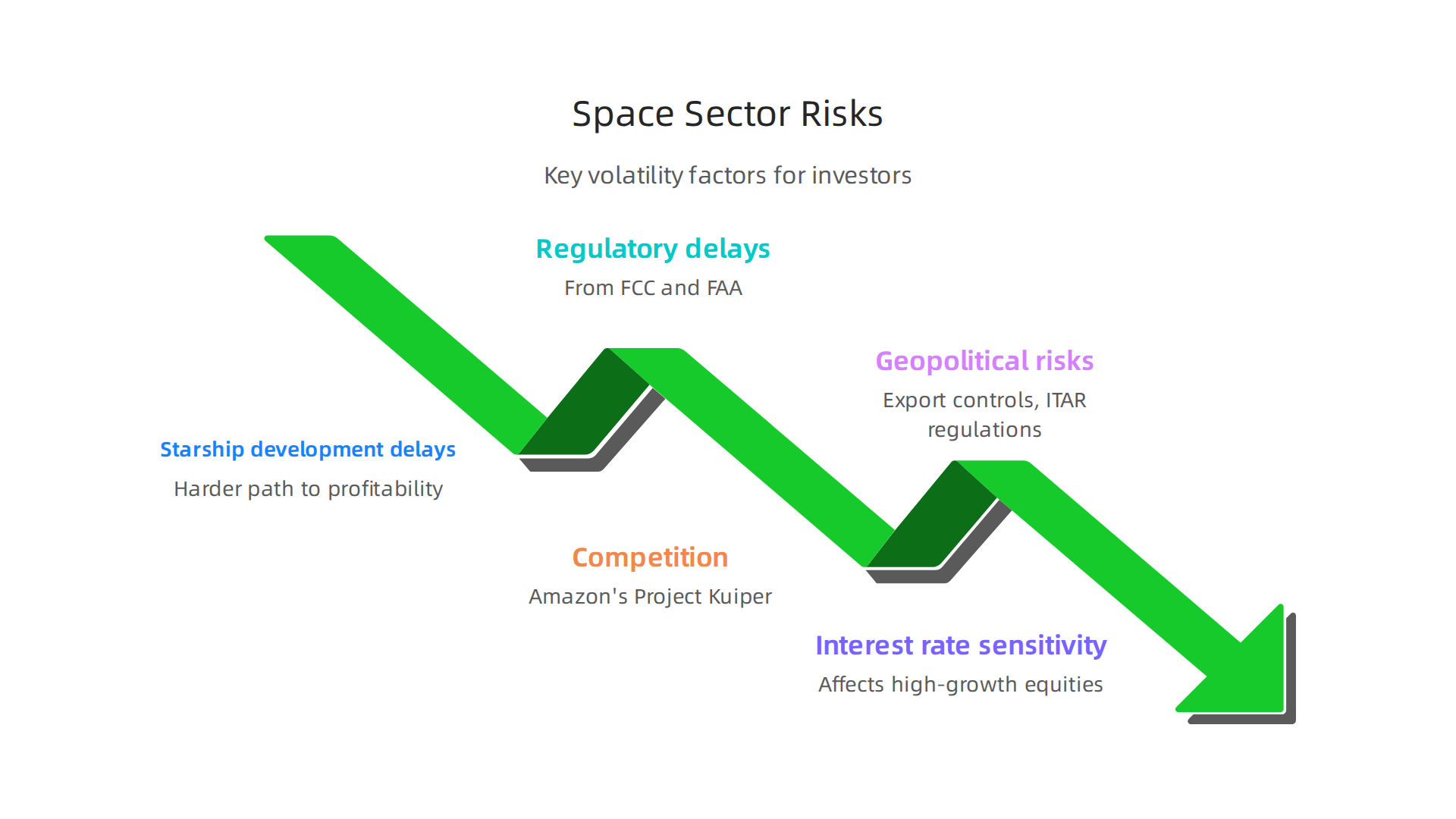
The company’s S-1 filing listed Starship development delays at the top of its risk factors. If Starship fails to reach a high launch cadence, the path to profitability gets much harder. The company also flagged potential regulatory delays from the FCC and FAA, as well as its significant debt load. According to the SpaceX IPO filing risk factors, these issues could materially affect business performance.
Another major risk is competition. Starlink currently dominates the satellite internet market, but Amazon’s Project Kuiper is actively launching its own constellation. If Kuiper catches up, Starlink’s subscriber growth and ARPU could take a hit. That matters because Starlink is the profit center that covers losses everywhere else.
Geopolitical risks also hang over the entire sector. Export controls and ITAR regulations can limit which countries SpaceX can sell to. Interest rate sensitivity affects all high-growth equities too. When rates rise, the present value of future cash flows drops, and a stock trading at 92 times revenue becomes harder to justify.
These same forces affect other high-growth tech names. For a deeper look at how market volatility plays out across big tech, check out our analysis on how the VIX index tracks big tech volatility.
The bottom line: spacex stock comes with enormous upside potential, but also real risks that can wipe out gains quickly. Any investor considering a position should size their bet accordingly and keep a close eye on Starship milestones and Starlink subscriber numbers.
Future Catalysts for SpaceX and the Space Industry
Here is the good news. Even with all those risks, spacex stock has some powerful catalysts on the horizon. These are the events and trends that could take the stock much higher.

The biggest one is Starship. If SpaceX can get Starship flying at a high cadence, everything changes. An uncrewed Mars mission is on the long-term roadmap. That kind of milestone grabs headlines and builds investor confidence. More importantly, Starship is needed to launch Starlink’s next-generation V3 satellites. Those satellites will give Starlink way more capacity to serve customers and boost average revenue per user. Without Starship, Starlink growth gets harder. But if it works, capacity soars.
SpaceX also has major contracts with NASA under the Artemis program to land astronauts on the Moon. Those lunar contracts are worth billions and provide a steady stream of government revenue. They also show SpaceX is a key partner in America’s space ambitions.
Starlink itself has a big catalyst coming: direct-to-cell service. SpaceX plans to enable Starlink to connect directly to standard smartphones, no special equipment needed. That opens up a huge market with telecom partners around the world. The recent Starlink user growth acceleration shows demand is strong across both developed and emerging markets.
There is also ongoing speculation that SpaceX might spin off Starlink as a separate public company. That could unlock enormous value for spacex stock holders, as Starlink is the profit engine inside SpaceX. A spin-off would let the market value Starlink on its own terms, potentially at a much higher multiple.
Regulatory changes could also help. FCC spectrum auctions and reforms to ITAR (International Traffic in Arms Regulations) could open new revenue streams. New government budget allocations for defense and space exploration would also boost SpaceX.
For investors, these catalysts are worth tracking closely. To stay on top of these developments and other big tech trends, consider getting clear daily AI updates from The Deep View Newsletter. It helps you cut through the noise and focus on what actually moves markets.
Summary
SpaceX’s June 12, 2026 IPO under ticker CX transformed access to a company that had been private for nearly 20 years, sending its market cap past $2 trillion and creating intense investor interest. This article explains what that valuation means in light of the company’s 2025 results—about $18 billion in revenue but a $4.9 billion GAAP loss—and lays out a practical framework for evaluating the business beyond headline multiples. You’ll learn the most useful metrics for space companies (revenue growth, backlog, gross margin, Starlink ARPU and launch cadence), the major risks (Starship delays, regulation, competition, liquidity), and the catalysts that could move the stock. For investors who don’t want to buy CX directly, it compares indirect options—space-focused ETFs (ARKX, SPACE, UFO, ROKT), supplier stocks, and pre-IPO/secondary platforms—and explains trade-offs like fees and liquidity. The guide also covers how to use pre-IPO funds and secondary markets safely, what to watch in quarterly updates, and how to size a high-risk, high-reward position. By the end you’ll have concrete steps to analyze SpaceX relative to peers, choose a suitable way to gain exposure, and monitor the key signals that matter most for investment decisions.