

Introduction
If you have been watching the stock market lately, you have probably noticed SoFi Technologies (NASDAQ: SOFI) appearing in your feed. Maybe you saw it while checking nasdaq futures or scrolling through yahoo news finance.
This fintech company has come a long way from its roots as a student lender. Today, SoFi is a full-service digital financial platform. It offers personal loans, investing, banking, credit cards, and more.
Investors looking at sofi technologies stock need a clear, data-driven picture.

The numbers tell a real story. In Q1 2026, SoFi reported record net revenue of $1.1 billion and net income of $167 million, according to the latest company’s quarterly results. That kind of growth deserves a closer look.
This article gives you a complete analysis of SoFi stock. We will break down the financials, market trends, competition, and outlook for the rest of 2026. You will get the facts you need to make a smarter decision.
If you want daily insights on the AI and tech trends that move these markets, you can cut through the noise with futures news for big tech to stay ahead. And for even deeper daily updates, check out The AI Newsletter Worth Reading.
Now let’s dive into what makes SoFi Technologies stock such an interesting story in 2026.
SoFi Technologies’ Business Model and Revenue Drivers
To understand sofi technologies stock today, you need to know how this company actually makes money. It is not just a digital bank. It is a three‑engine machine.
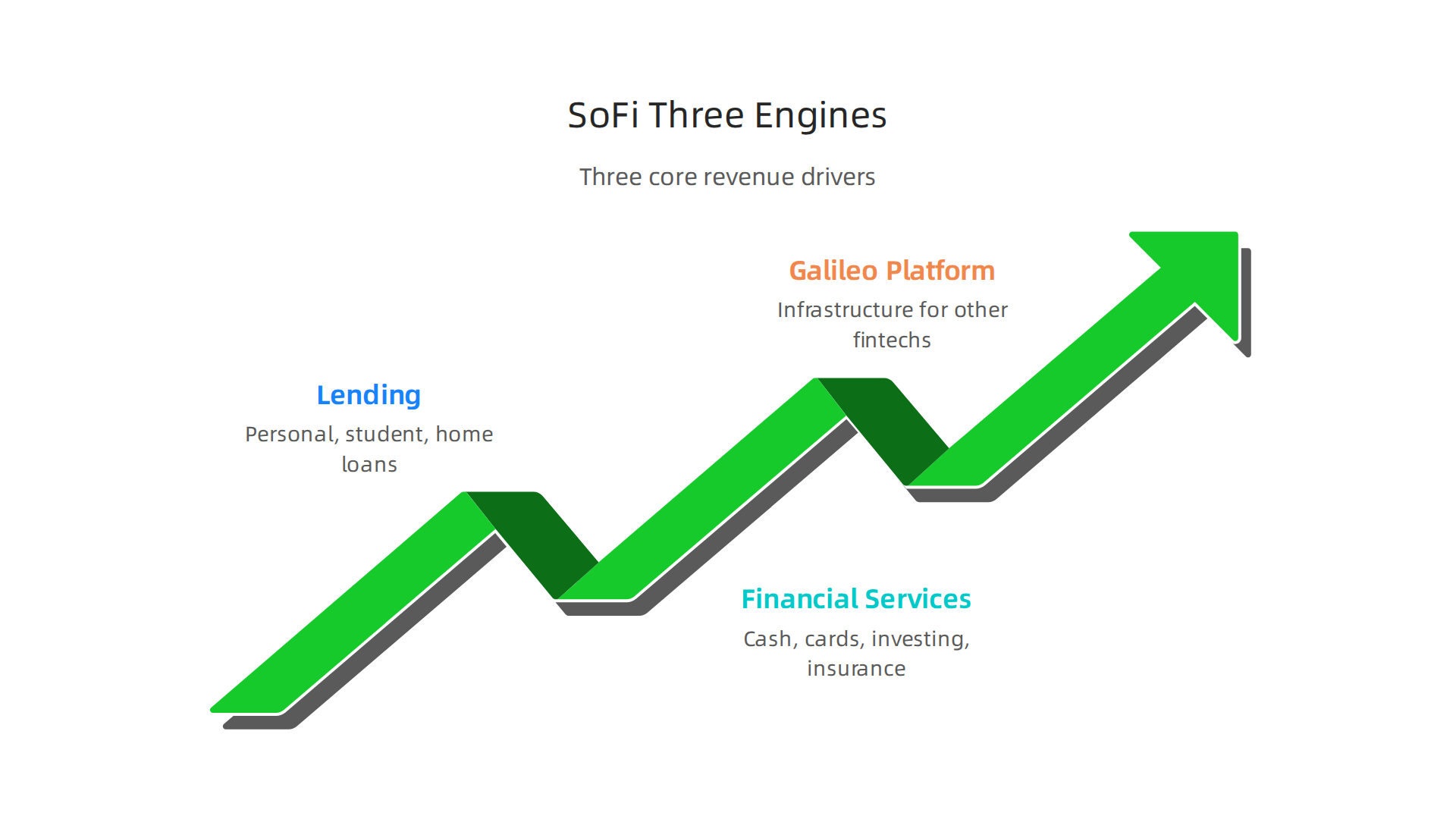
Engine one is lending. This is the biggest piece. SoFi originates personal loans, student loans, and home loans. In Q1 2026 alone, total loan originations hit a record $12.2 billion, according to the company’s first quarter earnings report. Personal loans made up the bulk at $8.3 billion. Student loans reached $2.6 billion and home loans added $1.2 billion. SoFi earns net interest income on the loans it keeps on its books. But it also sells some loans to partners through its Loan Platform Business, generating fee income without taking on credit risk.
Engine two is financial services. This includes cash management accounts, credit cards, investing, insurance, and the SoFi Money debit card. These services generate fee‑based revenue. Things like interchange fees, subscription fees for SoFi Plus, and commissions from the invest platform all add up. The more products a member uses, the more revenue SoFi collects per person. That is the cross‑selling magic. In Q1 2026, SoFi grew its total members to 14.7 million, up 35% year over year.
Engine three is the Galileo technology platform. This is the infrastructure that lets other companies build financial apps. Galileo processes transactions for clients and charges fees for each one. As more fintechs choose Galileo, this revenue stream grows without requiring SoFi to take on loan risk.
The beauty of this model is simple: once a customer joins for one product, SoFi can introduce them to others. A student loan borrower might open a checking account and later take out a personal loan. That drives better unit economics over time. For investors tracking sofi technologies stock, this cross‑sell engine is the key metric to watch.
If you want a repeatable framework for analyzing growth stocks like SoFi, check out the stock advisor top 10 picks for big tech investors in 2026. And for daily updates on the AI and tech trends that shape these markets, get clear daily AI insights from the Deep View Newsletter.
Membership and User Growth: The Foundation of the Flywheel
When you look at sofi technologies stock, member count might seem like a vanity metric. But here, it is the engine that powers everything. More members mean more chances to cross sell products. And cross selling is what makes each customer more valuable over time.
SoFi’s member growth has been strong. In Q1 2026, the company reported record member additions.

According to a Yahoo Finance article on the SoFi Technologies stock buy after strong Q1 2026 earnings, these new users directly feed the lending, financial services, and Galileo platforms. Each new member starts with one product. Then SoFi gently guides them toward others.
But not all members are equal. Acquisition costs matter. SoFi spends money on marketing and promotions to bring people in. If those new users only stay for one loan and leave, the cost is wasted. That is why retention and cross product adoption are so important. The longer a member stays and the more products they use, the better the return.
SoFi’s current numbers show the flywheel is working. The company added 14.7 million total members by end of Q1 2026, up 35% year over year. And those members are adopting an average of 1.6 products each (roughly). That number keeps climbing as SoFi adds more services.
For investors watching sofi technologies stock on platforms like nasdaq futures or yahoo news finance, the membership trend is a leading indicator. If growth stays high and cross sell rates keep rising, the stock has a strong foundation.
To cut through the noise when tracking these updates, you can filter Yahoo Finance news for clean insights and focus only on the metrics that matter.
Net Interest Income and Lending Performance
Membership growth is great, but lending is where SoFi actually makes most of its money. The company’s bread and butter comes from personal loans, student loans, and home loans. These products generate net interest income, which is the difference between what SoFi earns on loans and what it pays for funding.
For investors watching sofi technologies stock, two numbers matter most: net interest margin (NIM) and credit quality.

NIM tells you how profitable the loan book is. Credit quality, measured by charge-offs and delinquencies, tells you if borrowers are paying back.
In Q1 2026, SoFi reported record net revenue of $1.1 billion, according to the company’s Q1 2026 quarterly results. Lending was a big part of that. But NIM depends on the interest rate environment and how SoFi funds its loans. When rates stay high, SoFi can earn more on new loans. But higher rates also raise the cost of deposits and other funding sources.
Credit quality is another key factor. SoFi’s typical borrower has a strong credit profile, which helps keep defaults low. Still, rising delinquencies across the consumer lending space can squeeze profits. Investors track these trends closely on platforms like yahoo news finance and nasdaq futures.
If you want to compare SoFi’s lending model with another fintech lender, check out this Affirm stock financial performance and growth drivers analysis. It shows a different approach to consumer lending.
For now, SoFi’s lending engine remains healthy. As long as membership keeps growing and credit stays clean, net interest income should support the stock.
Fee-Based Revenue: Services and Galileo Platform
Lending brings in the biggest dollars at SoFi. But fee-based revenue is what makes the business model stronger. This income comes from accounts, cards, invest, insurance, and the Galileo technology platform. These segments carry higher margins and are less dependent on interest rates.
Galileo is a standout here. It operates as a technology-as-a-service business. Banks and fintechs pay SoFi to use Galileo’s card issuing and payment processing tools. That means recurring revenue that grows as new clients sign on. Over time, these fees become a larger slice of total sales. For investors watching sofi technologies stock, this diversification matters. It reduces overall risk.
A recent report on the company’s Q1 2026 performance highlighted how these non-lending segments are gaining ground. You can see the details in this SoFi Technologies stock analysis after Q1 2026 earnings. The article notes how fee-based revenue helps SoFi produce consistent results across different interest rate environments.
Investors looking for a repeatable way to evaluate stocks like SoFi might find this Track U stock framework useful. It applies a similar logic to other high-growth fintech names.
Here’s the thing. As SoFi adds more fee-based services, its profit engine becomes less dependent on borrowing and lending alone. That is a good sign for long-term holders. If you follow fox news markets or yahoo news finance, you have probably noticed coverage of this shift.
Want to stay ahead of trends like these in Big Tech? Get clear daily AI updates from The AI Newsletter Worth Reading. It cuts through the noise so you can focus on what actually moves markets.
Fintech Sector Market Trends Impacting SoFi Stock
Understanding where the broader fintech industry is heading helps you see why sofi technologies stock moves the way it does.
SoFi does not exist in a vacuum. The same trends that shape digital banking, lending, and payments affect its growth.
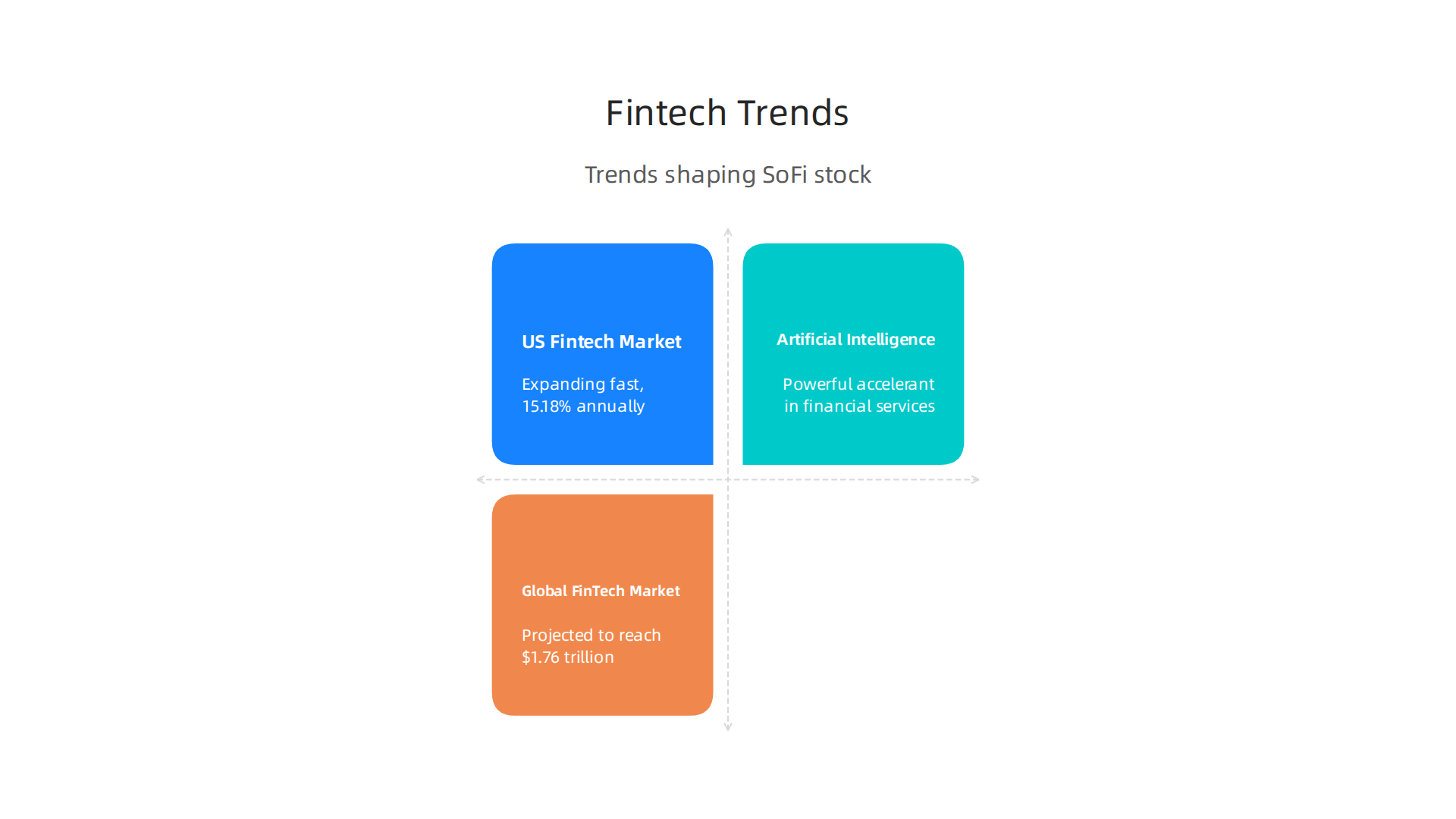
Here is the biggest one. The US fintech market is expanding fast. According to the US Fintech Market Trends analysis, the market was worth USD 66.82 billion in 2026. It is projected to grow at 15.18 percent annually through 2031. Neobanking is the fastest segment, growing at 21.05 percent CAGR. That directly benefits SoFi because its core business is digital banking without physical branches.
Artificial intelligence is another major force. McKinsey’s research on fintech industry trends for 2026 shows that AI is the single most powerful accelerant in financial services. Fintechs use AI to build products faster, serve customers that were too expensive to reach before, and cut costs. SoFi already uses AI for credit underwriting and customer recommendations. That gives it an edge over older banks with outdated systems.
The global picture supports this growth too. The FinTech Market overview from Fortune Business Insights projects the global market will reach USD 460.76 billion in 2026 and grow to USD 1.76 trillion by 2034. North America holds about 32 percent of that market. That is SoFi’s home turf.
Of course, there are headwinds. Interest rate volatility makes lending margins harder to predict. Competition from traditional banks and other neobanks is intense. And regulators are still figuring out how to oversee digital finance. But 2026 also brings favorable signals. A recent executive order directing federal regulators to review barriers for fintech firms could streamline rules and make partnerships easier. You can read about this executive order on fintech regulatory reform to understand the details.
If you follow yahoo news finance or check nasdaq futures regularly, you have probably noticed that fintech stocks often move together when sector-wide news breaks. That is why tracking industry trends helps you anticipate moves in sofi technologies stock before they happen.
For investors who want to compare SoFi with another high-growth fintech, this analysis of AFRM stock financial performance offers a useful look at how digital lenders stack up in 2026.
Competitive Landscape: SoFi vs. Incumbents and Challengers
SoFi does not just compete with old-school banks. It also goes head-to-head with other digital upstarts.
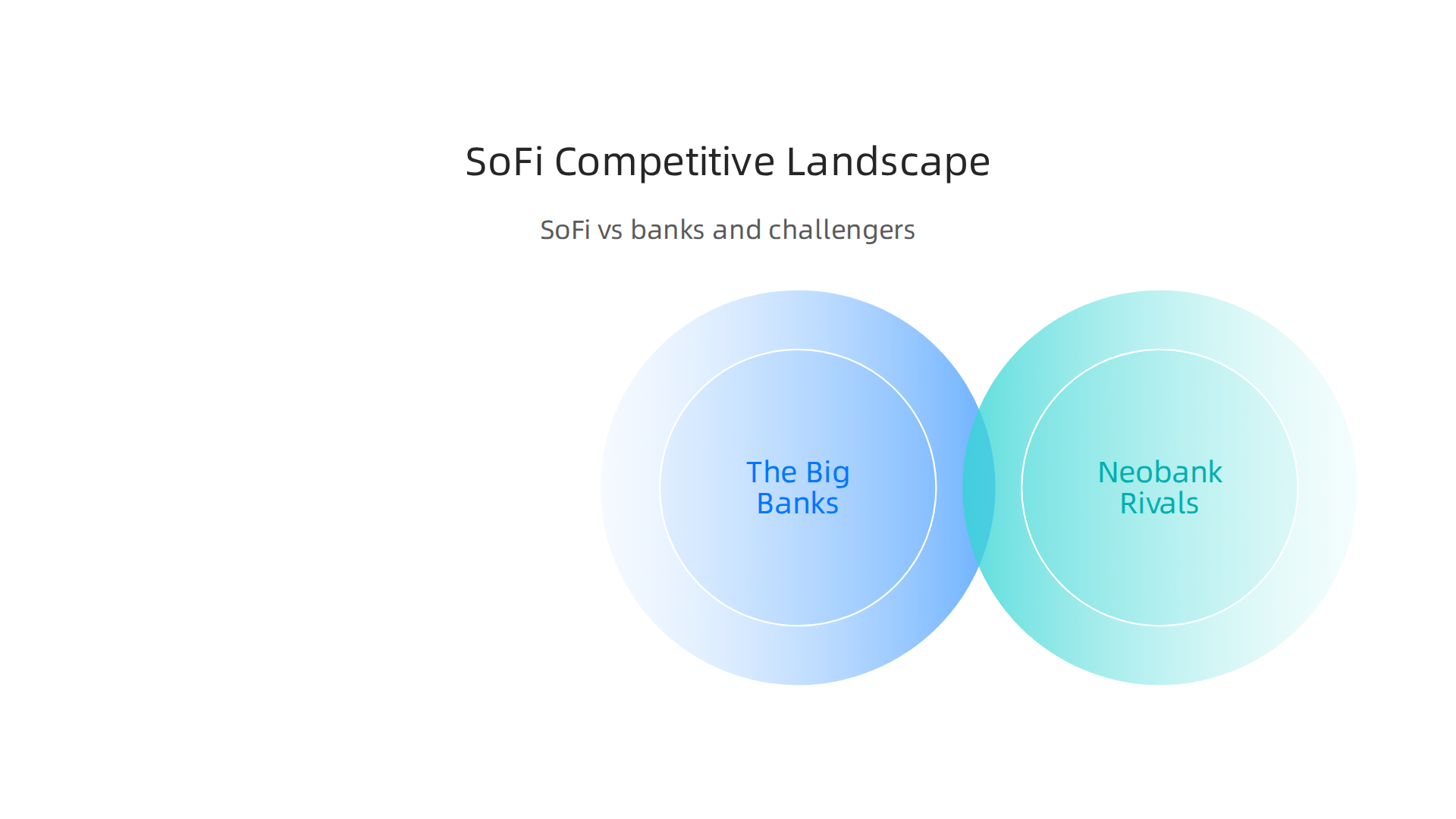
Understanding this competitive landscape helps you see what makes sofi technologies stock different and whether it can keep growing.
The Big Banks
JPMorgan Chase, Bank of America, and Wells Fargo have massive customer bases and deep pockets. But they also run on old technology. Their mobile apps often feel clunky. Their lending processes take days. SoFi uses its Galileo platform to move faster. That technology lets SoFi offer loans in hours, not days. The company also keeps costs low by having no physical branches.
The big banks still control most deposits. But SoFi is taking market share in key areas. Its record loan originations show that. In the first quarter of 2026, SoFi originated $12.2 billion in loans across personal, student, and home loans. You can see more details in the SoFi Q1 2026 earnings report. That marks a 68 percent jump from the same quarter last year. Traditional banks are not growing nearly that fast.
The Neobank Rivals
Other digital-first companies like Chime, Robinhood, and Dave also target younger customers. But they each focus on narrow products. Chime is mostly checking and savings. Robinhood is investing. Dave is cash advances.
SoFi’s big advantage is the one-stop-shop model. Members can get a checking account, a credit card, a personal loan, a mortgage, and even IPO access all in one app. This ecosystem keeps customers engaged and makes them less likely to leave. SoFi now has 14.7 million members, up 35 percent from last year.
In the personal loan space, SoFi stands out for its flexibility. The personal loans market analysis shows that fintech firms like SoFi are reshaping lending through data analytics. SoFi offers loans up to $100,000 with same-day funding. That makes it a top pick for borrowers.
Market Share Dynamics
SoFi is gaining ground across multiple product categories. Its personal loan originations hit a record $8.3 billion in Q1 2026. Student loans reached $2.6 billion, up over 2 times year over year. Home loans were $1.2 billion, up nearly 2.4 times.
The company also expanded its Loan Platform Business with over $3.6 billion in new partnerships. That lets SoFi originate loans and sell them to institutional investors without keeping all the risk. This model helps it grow faster than rivals that rely only on their own balance sheets.
So where does this leave you as an investor? Tracking how SoFi competes against both the incumbents and the challengers gives you real insight into its future performance. If the company keeps taking market share, sofi technologies stock could reflect that momentum.
For investors looking to build a broader tech portfolio alongside SoFi, you can check out these top stock picks for big tech investors in 2026. It offers a useful framework for identifying other high-growth opportunities.
Regulatory and Macroeconomic Factors Affecting SoFi
SoFi does not operate in a vacuum. Two big forces shape its future: government rules and the broader economy.

Understanding these helps you judge sofi technologies stock more clearly.
The Bank Charter Advantage
SoFi owns a national bank charter through SoFi Bank. That is a big deal. It means SoFi can take deposits and use them to fund loans at lower cost. Many fintech rivals must partner with outside banks. SoFi keeps everything in house. This gives it better margins and more control over lending rates. In 2026, this charter also gives SoFi a head start as regulators push for clearer rules around bank-fintech partnerships.
Regulatory Winds Are Shifting
The regulatory landscape is changing fast. In May 2026, the White House issued a recent executive order on fintech innovation that directs agencies like the SEC, CFPB, and FDIC to review rules that may block fintech growth. That could open the door for easier licensing and partnerships. For SoFi, this is mostly positive. But there are risks too. New rules around consumer lending, data privacy, and crypto could add costs. SoFi must stay agile to adapt.
Macroeconomic Pressure Points
Interest rates, employment, and inflation directly hit SoFi’s business. When rates are high, SoFi earns more on loans but borrowers may slow down. When rates drop, loan demand picks up but margins tighten. In early 2026, the job market stays strong, which keeps credit quality healthy. But any shift in inflation or a recession could spike defaults. SoFi’s record loan originations depend on consumers feeling confident enough to borrow.
For investors tracking these forces, it helps to follow market signals. You can use futures news for big tech to monitor how macro data affects tech stocks like SoFi.
Staying Ahead of the Curve
Regulatory and macro factors will keep shaping sofi technologies stock for years. If you want daily insights on how AI and regulation impact fintech, subscribe to The AI Newsletter Worth Reading for clear updates you can act on.
Analyst Outlook and Valuation: What Experts Are Saying
If you are trying to figure out whether to buy, hold, or sell sofi technologies stock, looking at what Wall Street analysts think can give you a solid starting point. The good news? There is plenty of data. The bad news? Experts do not agree.
The Consensus Rating: Hold
As of June 2026, the majority of analysts covering SoFi give it a Hold rating. According to the most recent SoFi Technologies stock forecast and price target 2026, 21 analysts have weighed in. The breakdown: 7 say Buy, 11 say Hold, and 3 say Sell.
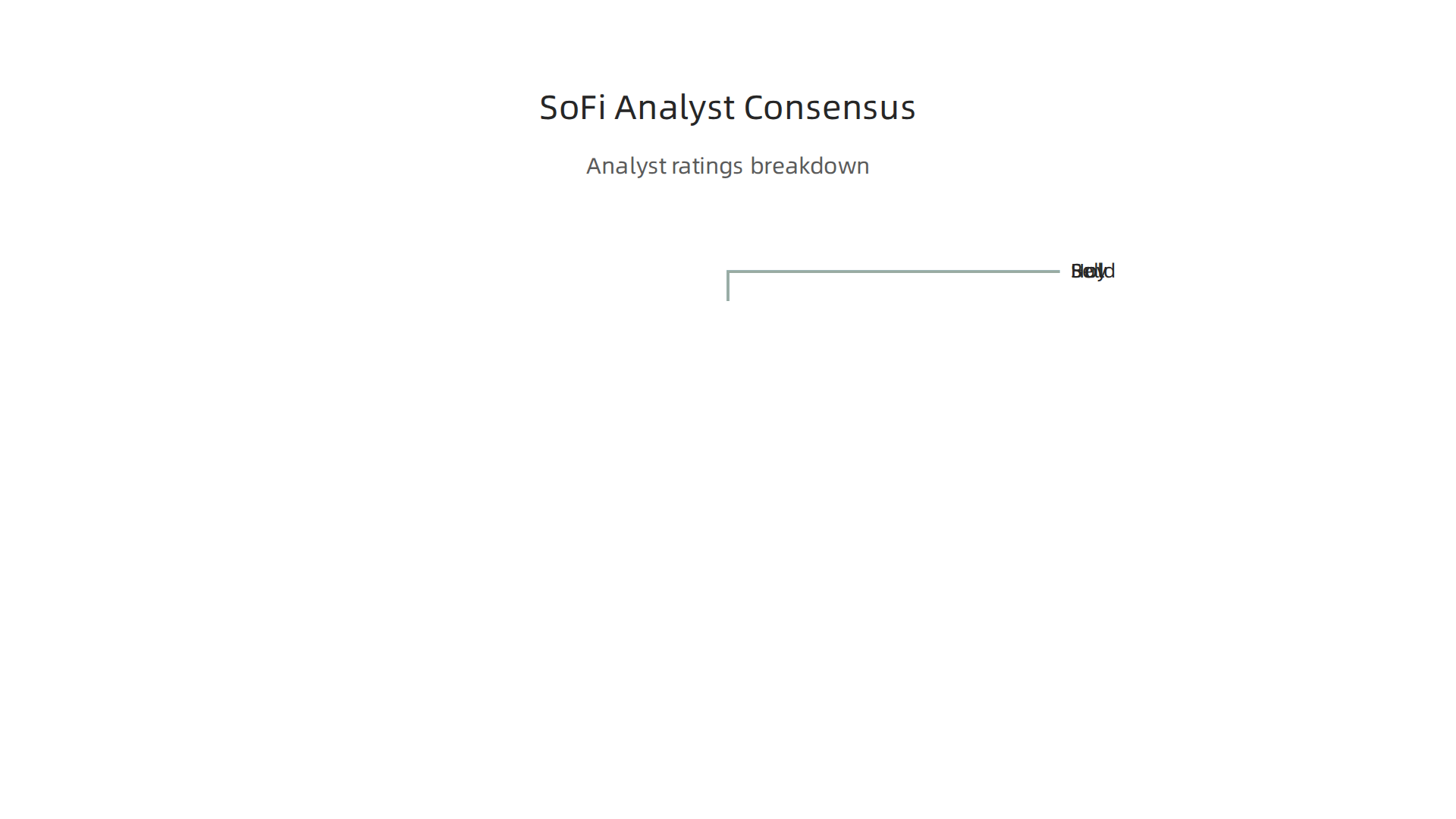
The average 12-month price target sits at $22.56. That is about 26% above the current price near $18, suggesting some upside but nothing dramatic.
Other sources tell a similar story. A separate SoFi Technologies stock forecast from 15 analysts gives a consensus Hold with an average price target of $22.40. The range is wide. Some analysts see the stock hitting $35. Others think it could fall to $12. That big spread tells you there is real uncertainty.
Bullish Arguments: Why Some Analysts Say Buy
The analysts who rate SoFi a Buy point to several strengths. First, SoFi is profitable now. It turned the corner in 2024 and has kept growing earnings. Members are joining fast, and the bank charter lets SoFi keep more of each dollar it earns on loans. One analyst from TIKR rated SoFi a Buy at $16 in early 2026, arguing the SoFi stock buy opportunity at $16 comes from strong revenue growth and falling interest rates later this year. If the Fed cuts rates, SoFi could see loan demand jump.
Bullish analysts also like that SoFi is building a full financial app. Customers who sign up for one product often add more. That lowers the cost to keep each customer and raises the lifetime value. With the recent executive order on fintech regulation, the tailwinds look favorable.
Bearish Arguments: Why Others Are Cautious
The Hold and Sell camp has reasons too. One big concern is valuation. SoFi trades at a high price-to-earnings multiple compared to traditional banks. If the stock loses its growth premium, the price could drop sharply. Competitors like traditional banks are also adding digital tools, so SoFi’s lead may shrink.
There is also macro risk. If the job market weakens or inflation returns, loan defaults could rise. SoFi’s record lending volumes depend on people feeling confident enough to borrow. A recession would hit hard. Some analysts believe the current price already reflects too much optimism.
How Does Valuation Stack Up?
SoFi’s price-to-sales ratio is higher than most bank stocks but lower than some other high-growth fintech companies. The PEG ratio, which factors in expected earnings growth, is about 1.0. That is fair for a company growing earnings near 50% per year. But if growth slows, the stock could become expensive fast.
For investors who want to compare SoFi to other big tech names, it helps to track valuation trends across the sector. You can get started with a stock advisor top 10 picks for big tech investors in 2026 to see how SoFi fits into a broader portfolio.
What This Means for You
Analyst ratings are a useful signal, but they are not the whole story. The wide range of price targets shows just how much uncertainty surrounds sofi technologies stock. If you believe the growth story, the upside could be strong. If you worry about valuation and macro risks, the downside is real. Your own risk tolerance and time horizon should guide your decision more than any single analyst’s opinion.
Summary
This article analyzes SoFi Technologies (SOFI) after its strong Q1 2026 showing, putting the company’s business model, numbers, and market context into one readable guide. It explains SoFi’s three revenue engines—lending, fee-based financial services, and the Galileo payments platform—and shows how cross-selling to a growing 14.7 million member base drives long-term economics. Key financials cited include record net revenue of $1.1 billion, net income of $167 million, and $12.2 billion in Q1 loan originations, with personal loans the largest slice. The piece walks through lending metrics to watch (NIM and credit quality), explains why fee income and Galileo matter, and places SoFi within broader fintech, AI, and regulatory trends. It compares competitive pressures from big banks and neobanks, outlines macro and regulatory risks, and summarizes analyst sentiment and valuation ranges. After reading, you’ll know the core drivers, risks, and practical metrics to track when deciding whether to buy, hold, or sell SOFI.