

Introduction
Have you ever wondered who really moves the needle on big tech stocks? It isn’t just day traders on Reddit or analysts scrolling Bloomberg Invest. In 2026, quantitative investment firms control a massive and growing share of trading volume in major tech names. These firms use math, models, and machine learning to make decisions faster than any human can.
One name stands above the rest: Renaissance Technologies. As one of the largest hedge funds by assets under management, Renaissance is famous for its secrecy and its stunning returns. The firm uses complex statistical models to spot patterns humans miss. So when Renaissance buys or sells a stock like INTC, the rest of Wall Street pays attention.
Understanding how Renaissance Technologies and its peers pick positions is critical for tech executives and investors.

Their moves often signal shifts in market sentiment before the headlines catch up. That’s why we put together this data-driven look at how quant giants choose, size, and exit their tech holdings. You’ll learn what the models see and how you can apply those insights.
For daily updates on how quant strategies and AI are reshaping the market, the The Deep View Newsletter delivers clear, actionable insights straight to your inbox.
The Rise of Quantitative Investing in Tech
Quantitative investing was not always the giant it is today. A few decades ago it was a niche corner of Wall Street where math PhDs ran experiments away from the spotlight. But in 2026 that story has changed completely. Quant firms now drive a massive share of trading in big tech stocks.
Firms like Renaissance Technologies are the rock stars of this world. They use complex math to find patterns that human traders simply miss. Think about a stock like INTC. It moves a lot on news like earnings reports or chip manufacturing updates. It trades in high volumes every single day. For a quant model all that movement looks like a feast. The model can spot a buy signal based on a combination of volume and options activity that no person could track in real time.
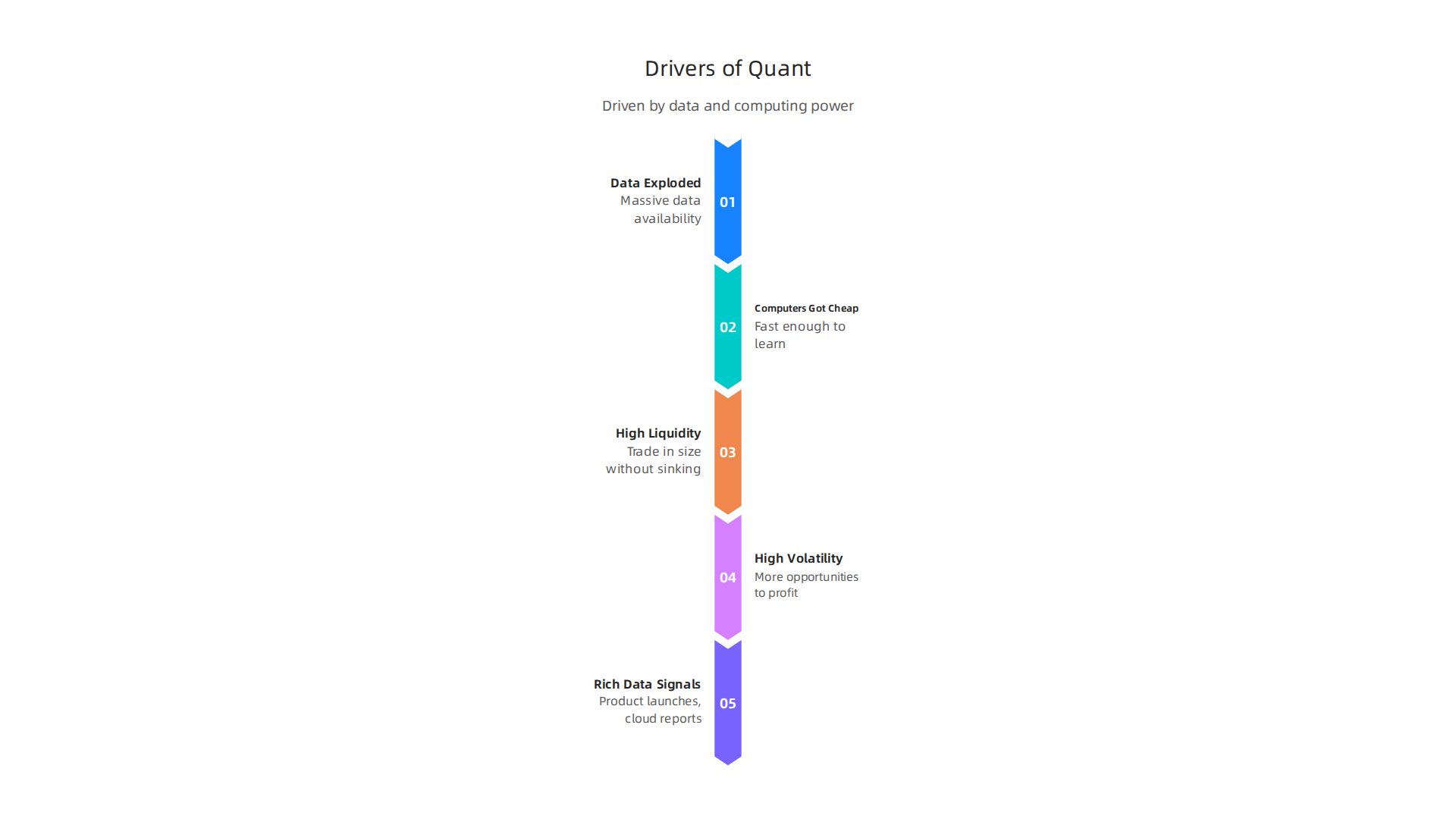
Two big things made this shift happen. First data exploded. Second computers got cheap and fast enough to actually learn from that data.
This approach is a world away from the sentiment driven world of Reddit investing. That is why we wrote a full guide on how retail sentiment moves markets compared to these number crunching strategies.
Tech stocks are a perfect playground for quants. They offer high liquidity so firms can trade in size without sinking the price. They offer high volatility which means more opportunities to profit. And they generate rich data signals from product launches to cloud revenue reports.
According to the Coalition Greenwich analysis of top market structure trends for 2026 AI enhanced trading venues and algorithmic strategies are now standard equipment. The edge no longer comes from having an algorithm. It comes from having a better one.
As the IMF notes AI driven trading can make markets faster and more efficient but it also adds volatility during stress events. For quants volatility is not a risk to avoid. It is an opportunity to exploit.
Keeping up with how these models work and what they mean for your portfolio takes real effort.

That is why many smart executives and investors rely on daily curated insights. If you want to cut through the noise and stay ahead of the curve the The Deep View Newsletter delivers clear actionable AI and market insights straight to your inbox every day.
Renaissance Technologies: The Pioneer and Its Tech Portfolio
No firm represents the rise of quantitative investing better than Renaissance Technologies. Founded by the late Jim Simons, this secretive hedge fund is the gold standard in systematic trading. Its Medallion Fund has produced returns that are almost unbelievable, often exceeding 60% per year. The firm keeps its models locked away, but its public stock holdings offer a rare window into its strategy.
Every quarter, Renaissance files a 13F report with the SEC, revealing its U.S. stock positions. As of March 31, 2026, the firm reported a portfolio value of $63.97 billion, according to Holdings Channel. Some top tech holdings include Apple Inc. (AAPL) and Palantir Technologies Inc. (PLTR), as shown in the Fintel filing. These are not random picks. They are signals from a machine that crunches billions of data points to find patterns.
What stands out is the concentration. The top 10 holdings make up about 11.2% of the portfolio, per WhaleWisdom. That is a tight cluster. For individual investors, watching these 13F moves can offer clues about where systematic capital is flowing. Tracking which big tech stocks Renaissance is buying or selling adds an edge to your own research.
If you want to follow the daily moves of these giant tech stocks more closely, our guide to the biggest movers today in big tech stocks for 2026 gives you a real-time view of the names that funds like Renaissance are watching.
Medallion Fund vs. External Funds: Different Strategies
Here is the thing about Renaissance Technologies: the fund that prints the unbelievable returns, Medallion, is completely closed to outside investors. You cannot buy into it. Medallion uses short-term, high-frequency strategies. It makes thousands of tiny trades every day, chasing small patterns that last only minutes or hours. Those models are a secret.
What outsiders can invest in are external funds like the Renaissance Institutional Equities Fund (RIEF). These funds use a different playbook. They rely on longer-term signals and are much more focused on big, liquid stocks like Apple, Microsoft, and Palantir. You can see these positions in the 13F filings because the rules require disclosure. The internal Medallion fund never shows up in those public reports.
Why does this split matter to you? Because when you read a 13F filing from Renaissance, you are only seeing the slower, longer-term bets. The real action, the high-speed wizardry of Medallion, stays hidden. Understanding this difference keeps you from misreading the signals.
If you want to stay ahead of the daily shifts in big tech stocks that funds like RIEF trade, check out our guide to the biggest movers today in big tech stocks for 2026. And for deeper daily insights into how AI is reshaping these strategies, you might like The Deep View Newsletter, a free resource that cuts through the noise.
Key Tech Holdings of Renaissance
So what does the public side of Renaissance Technologies actually look like? The 13F filings for early 2026 tell a clear story. The external funds are heavily loaded with mega-cap tech names. According to the latest filings, the top holdings include Apple, Microsoft, Nvidia, and Palantir Technologies source: Fintel. As of March 31, 2026, the total 13F portfolio value sat at about $63.97 billion, a slight dip from the prior quarter source: Holdings Channel.
Here is where it gets interesting for 2026. The quarter-over-quarter changes show some tactical pivots. The fund has been building positions in companies tied to AI infrastructure, like Micron Technology and Kinross Gold (a play on data center power needs) source: HedgeFundAlpha. At the same time, there are hints of trimming some big tech names, possibly to manage regulatory risk. This kind of shift is exactly what savvy investors on Reddit investing forums and Bloomberg Invest discussions love to dissect.
If you want to track these changes yourself and see which stocks are moving right now, check out our guide on the biggest movers today in big tech stocks for 2026. And to get daily AI and tech intelligence delivered straight to your inbox, consider The Deep View Newsletter it cuts through the noise so you don’t have to.
Other Top Quant Firms and Their Tech Bets
Renaissance Technologies gets a lot of attention, but it is not the only quant giant playing the tech game. Firms like Two Sigma, DE Shaw, and Citadel also run massive quantitative strategies, each with a slightly different flavor.
Two Sigma, for example, applies machine learning and data science to find signals in tech stocks. Its latest 13F filings show positions in companies ranging from semiconductors to software source: Fintel. Citadel, run by Ken Griffin, is known for huge, diversified tech bets that shift quickly based on market conditions source: HedgeFollow. DE Shaw often takes a more measured, factor-based approach, focusing on value and momentum across tech names.
What does this mean for you? When these top quant firms all buy or sell the same tech stock, it can signal a bigger trend. For instance, if Citadel and Two Sigma both trim positions in a big-name stock like INTC, that collective action gets noticed on Reddit investing forums and even Bloomberg Invest segments.
Understanding these moves can give you an edge. For a daily summary of what the smart money is doing in AI and big tech, the The Deep View Newsletter delivers clear insights straight to your inbox. And if you want to compare these quant bets with retail sentiment, read our guide on how WallStreetBets moves markets.
Two Sigma and DE Shaw: Data-Driven Approaches
Now that you have seen how Renaissance Technologies works, let us look at two other heavy hitters: Two Sigma and DE Shaw. Both firms use data to make their bets, but they do it in different ways.
Two Sigma leans hard on machine learning. Its team of scientists builds computer models that scan huge amounts of market data. According to its latest 13F filings on Fintel, Two Sigma often buys tech stocks with strong earnings momentum. That means it favors companies where profits are climbing fast. Cloud computing and AI stocks are common picks for its portfolio.
DE Shaw is known for a more traditional factor model approach. It looks at things like value, momentum, and quality. But in 2026, DE Shaw has been adding more AI related bets to its mix. The firm still follows a careful, research heavy process, but it sees real opportunity in the AI boom.
Both firms now hold significant positions in cloud and AI stocks. If you want to see which tech names are moving today, check out our guide on the biggest movers today in big tech stocks.
Citadel and Other Multi-Strategy Funds
Citadel takes a different approach from the firms you just read about. It uses a multi-manager setup with many independent quant pods running their own strategies.
What makes this interesting for regular investors? Citadel can shift money between tech subsectors very quickly. One pod might be betting on AI chips while another shortens cloud stocks. This creates a wide net of tech exposure that shows up in its holdings. Data from WhaleWisdom confirms Citadel consistently holds a broad basket of big tech names.
Other quant firms also use data to size up tech bets. AQR and Dimensional Fund Advisors run models that scan for value, momentum, and quality factors. They may not move as fast as Citadel, but their tech allocations still move markets.
If you want to track which tech names are catching big quant attention right now, our guide on the biggest movers today in big tech stocks can help you spot the action.
Want to stay ahead of these moves? Get clear AI and tech market insights delivered daily with The Deep View Newsletter.
How Quant Strategies Drive Tech Stock Selection
You might wonder how big quant funds like Renaissance Technologies pick their tech stocks. It’s not guesswork. They run mathematical models that scan for factors like momentum, value, quality, and volatility. These factors help screen which stocks to buy or sell.
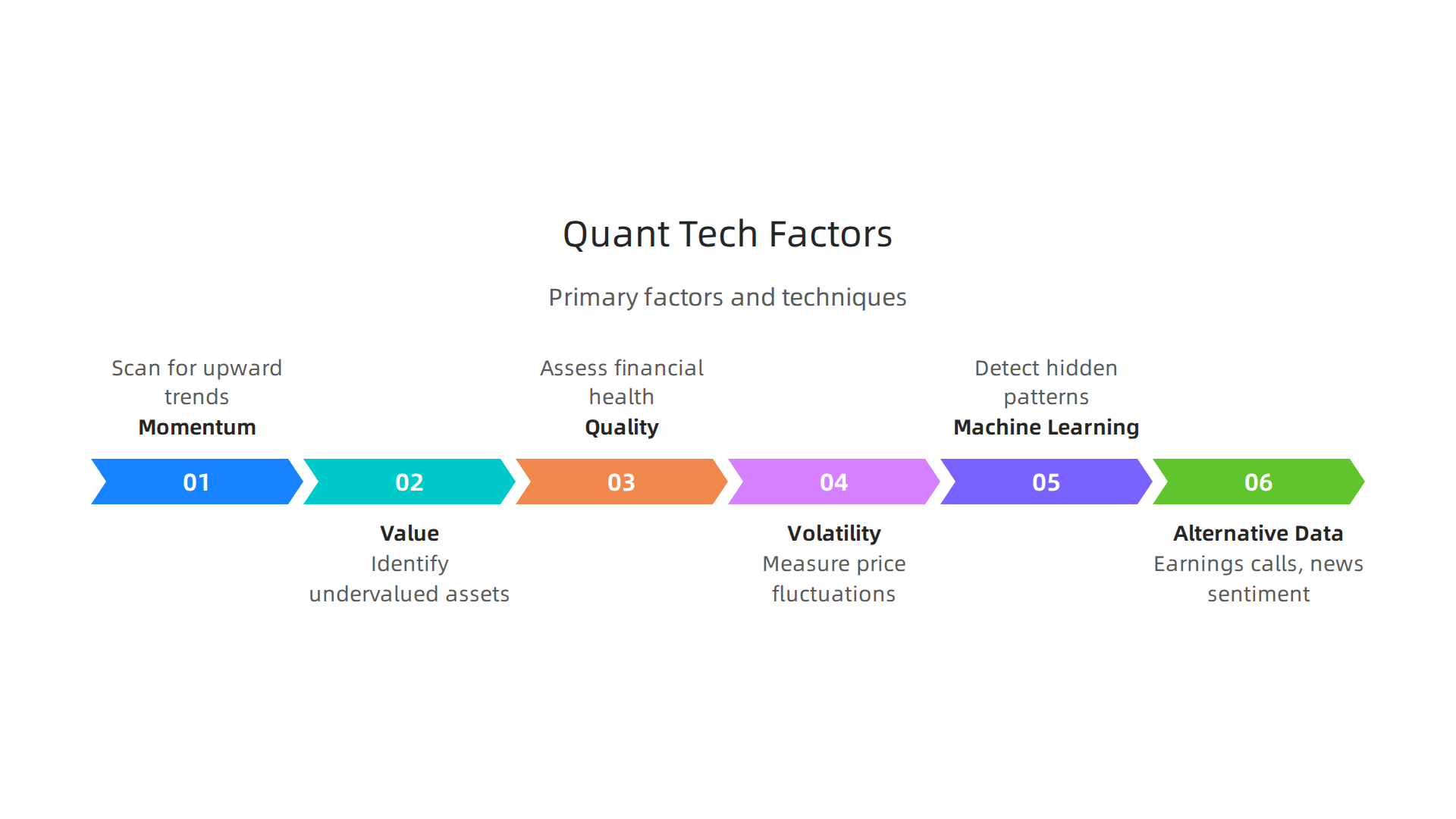
Machine learning takes it further. Algorithms can detect hidden patterns in earnings calls, news sentiment, and supply chain data. Research shows that using alternative data and machine learning gives quant funds an edge in spotting shifts before the crowd.
But here’s the catch: these signals decay fast. A pattern that worked last month may stop working tomorrow. That’s why quant funds retrain their models constantly and rebalance their portfolios. This dynamic process explains why you see rapid moves in stocks like INTC or other big tech names.
If you want to track which tech names are catching quant attention, our guide on the biggest movers today in big tech stocks can help you spot the action.
Want to stay ahead of these model-driven moves? Get clear daily AI and tech market insights delivered straight to your inbox with The Deep View Newsletter.
Factor Models and Signal Decay
Quant funds build factor models to find edges in tech stocks. Common factors include earnings surprise for momentum, revenue growth for quality, and R&D intensity for innovation potential. These models help funds like Renaissance Technologies sort through thousands of candidates quickly.
But here’s the thing: signals fade fast. Research shows that stock return predictability with machine learning depends heavily on time and market conditions. A factor that works this quarter may fail the next as more funds pile into the same strategy. That forces quant teams to constantly hunt for fresh signals and retrain their models.
This creates a tough balance. Funds must manage capacity constraints while still generating alpha. If a model gets too popular, its edge disappears.
To monitor how these signals shift in real time, check our guide on how to cut through the noise with futures news for big tech. It helps you track the factors driving daily market moves.
Want to stay ahead of signal decay? Get clear daily AI and tech market insights with The Deep View Newsletter.
Machine Learning and Alternative Data
So how do quant funds like Renaissance Technologies hunt for fresh signals when old ones go stale? They turn to machine learning and alternative data. Instead of just looking at stock prices, these funds now scan millions of data points you wouldn’t think of.
Natural language processing (NLP) lets them read earnings calls, news articles, and even social media posts for sentiment shifts. For example, a sudden drop in positive Reddit chatter about a stock might signal trouble before the market moves. If you follow retail sentiment closely, our guide on how WallStreetBets and Reddit move markets can help you spot those early clues.
Funds also buy alternative data like credit card transactions or app download numbers. That data can forecast a tech company’s revenue weeks before earnings are released. Plus, deep learning models can combine all these streams, finding patterns that simple factor models miss. In 2026, the funds that succeed are the ones that feed their models the most creative data.
Market Impact: Quant Trades and Tech Volatility
You might not notice it, but quant funds like Renaissance Technologies are behind a huge chunk of daily trades in big tech stocks. In 2026, quantitative strategies account for a massive share of volume in names like AAPL, MSFT, or even intc stock. That concentration can create sudden price swings.
Here’s what happens. When a quant model detects a signal, it acts instantly.

Algorithms from different firms often see the same patterns and trade in the same direction. That can amplify intraday volatility, sending a stock up fast or down hard. According to the IMF, AI-driven trading can lead to higher trading volumes and greater volatility during times of stress. One bad earnings report or a macro shock can trigger a wave of program selling.
Ever seen a stock drop 5% in minutes with no obvious news? That’s often quant unwinding. Flash crashes and sharp reversals happen when these models hit their risk limits and rush to exit positions. This is not random chaos; it’s predictable behavior once you understand the players. And the rise of AI-enhanced trading venues and algorithmic strategies only speeds things up.
So how can you use this? If you’re an executive planning a stock buyback or an investor timing an IPO, knowing when quant flows are most active helps you avoid bad timing. For example, many quants rebalance near the close or after major economic data. Avoiding those windows can save you money. Retail traders on reddit investing forums often catch these moves too, adding another layer of noise.
Keep an eye on the biggest movers in big tech to see how quant activity plays out in real time. And if you want to stay ahead of the AI wave that drives these models, consider subscribing to a resource that breaks it all down daily.
Get clear daily AI updates from The Deep View Newsletter
What Investors and Executives Can Learn from Quants
You don’t need a PhD in math to borrow ideas from the pros. The same principles that drive hedge funds like Renaissance Technologies can sharpen your own decisions. Let’s look at three ways to use quant thinking without writing a single line of code.
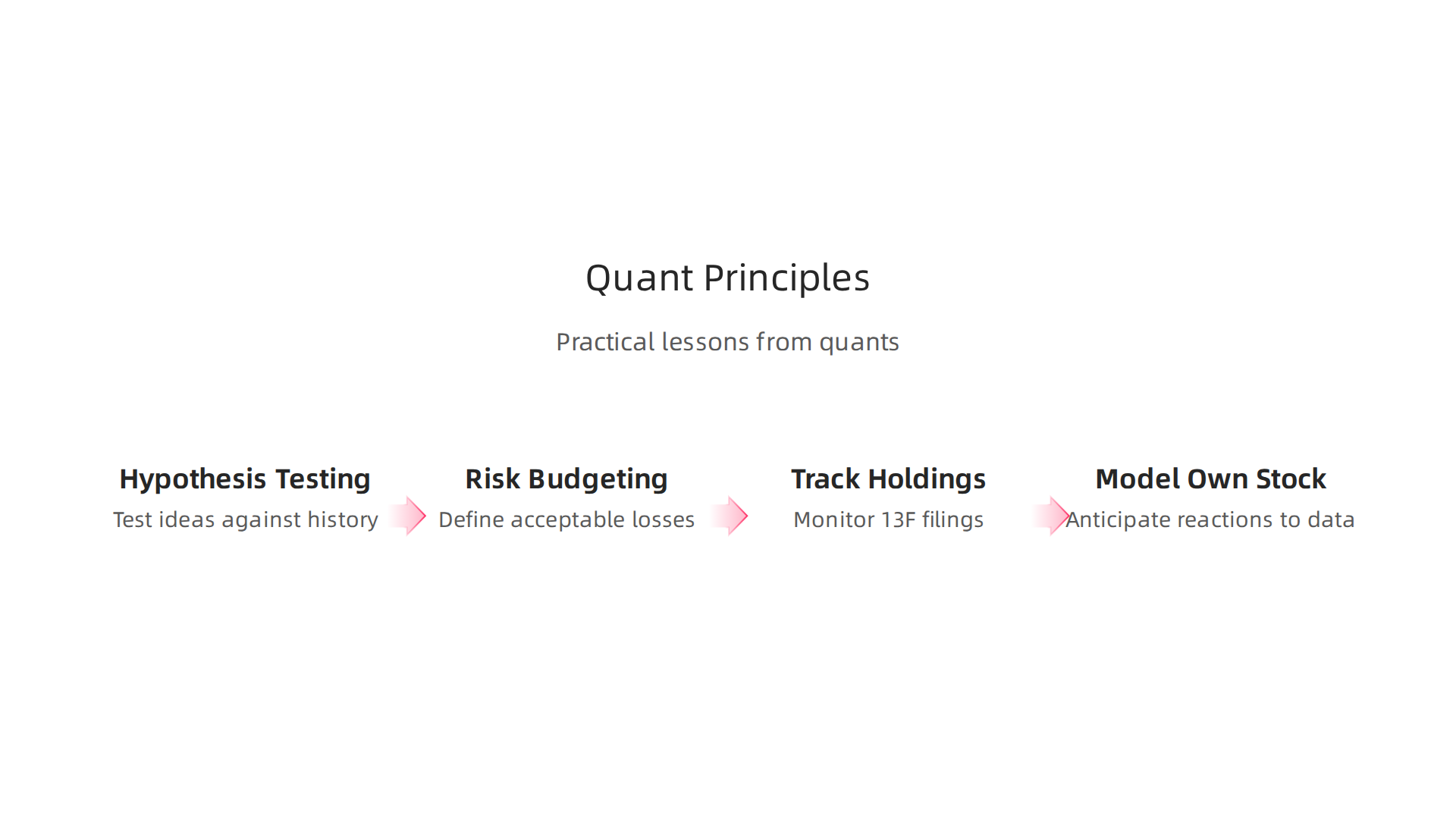
1. Use hypothesis testing and risk budgeting. Quants don’t guess. They test each idea against history, making sure it has statistical significance. The best quant strategies rely on factors that make intuitive sense. For example, value and momentum are proven factors over time. You can apply that same logic. Instead of buying a stock because it feels good, ask: “What’s my edge here? How much am I willing to lose?” That’s risk budgeting. The evolution of quantitative investing shows these methods have been refined for decades.
2. Track quant holdings through 13F filings. Every quarter, big funds like Renaissance Technologies file a 13F report with the SEC. It lists their stock positions. You can see exactly which tech stocks they bought or sold. That’s a powerful sentiment signal. If a quant fund loads up on Intel (intc stock) or dumps a big tech name, it tells you something about expected returns. Combine that with price action. For a real-time view, follow the biggest movers today in big tech stocks to see where smart money is flowing.
3. Model your own company’s stock like a quant. If you’re an executive planning a buyback or an IPO, think about factor exposure. Does your stock behave like growth or value? Is it sensitive to interest rates? Quants break down risk into factors. You can do the same to anticipate how your stock might react to earnings or macro data. This factor awareness can save you from selling at the wrong time. The art of quant investing emphasizes shifting focus from the model to real-world application.
The bottom line: quant methods give you a systematic edge. They turn emotion into process. If you want daily insight into the AI and data tools that power these strategies, get clear daily AI updates from The Deep View Newsletter.
The Future of Quant and Tech: AI, Regulation, and Data Wars
The same quant toolkit that turned Renaissance Technologies into a legend is getting a major upgrade. AI and advanced natural language processing now let computers read earnings calls, news headlines, and even social media chatter in real time. That creates powerful new signals. But it also creates a lot of noise. The biggest risk? Overfitting. When models learn from random patterns in data instead of real cause and effect, they fail as soon as the market shifts. The evolution of quantitative investing shows that signals still need to be tested for statistical significance.
Regulators are paying closer attention too. Algorithmic trading already moves billions every day. As AI models get more complex, scrutiny from bodies like the SEC could force quant funds to change how they trade tech stocks. Some of these rules might even limit the strategies behind funds like Renaissance Technologies. As seen in past quant sell-offs, the lesson is that complexity can backfire without proper controls.
Meanwhile, the arms race for alternative data is pushing quants deeper into opaque territory. They use satellite photos, credit card swipes, and even Reddit sentiment to gain an edge. But that data is expensive, unregulated, and hard to verify. Anyone tracking stocks like INTC needs to separate real signals from the noise. If you want to cut through the noise with futures news for big tech, that can help you stay grounded.
The bottom line: AI and data wars make quant investing more powerful and more dangerous at the same time. You need a clear lens to understand how these tools really shape markets.

Get clear daily AI updates from the The Deep View Newsletter to keep your edge sharp.
Summary
This article explains how quantitative hedge funds—led by Renaissance Technologies and peers like Two Sigma, DE Shaw, and Citadel—have come to dominate trading in major tech stocks by using advanced math, machine learning, and alternative data. It walks through what public 13F filings reveal about the external funds’ top tech holdings, clarifies the difference between the secretive, high-frequency Medallion fund and Renaissance’s public vehicles, and shows how factor models, signal decay, and retraining shape stock selection. The piece also describes the market impact of quant activity—why algorithms can amplify intraday volatility and trigger fast moves—and outlines practical lessons executives and investors can borrow from quant methods, such as hypothesis testing, risk budgeting, and tracking filings. Finally, it discusses the future landscape: AI upgrades, regulatory scrutiny, and the costly race for alternative data, and points readers to tools and daily updates for staying ahead of quant-driven tech flows.