

Introduction: The Challenge of Tracking Tech Stocks in a Hyper‑Dynamic Market
Trying to keep up with a stock like U stock (Unity Software) in 2026 can feel like drinking from a fire hose. One day the headlines scream about a new AI rival. The next day a regulation shakes the whole sector. Then earnings come out and the stock moves 10% before you have time to blink.
You are not alone if you feel stuck. Big Tech companies now dominate the major market indices. But they also face a special kind of volatility. Think about it: artificial intelligence is rewriting the rules almost monthly. Regulators in the US and Europe are tightening their grip. And competition between giants like Microsoft, Google, and Meta creates constant shocks.
According to a 2026 survey of institutional investors, nearly 8 in 10 expect a market correction this year, with valuations and concentration named as top risks. That same report highlights how AI disruption and geopolitical tensions top the risk radar for professionals managing billions. If the pros struggle, individual investors definitely need a better game plan.
The real problem is information overload. You might see ten conflicting headlines about U stock before lunch.
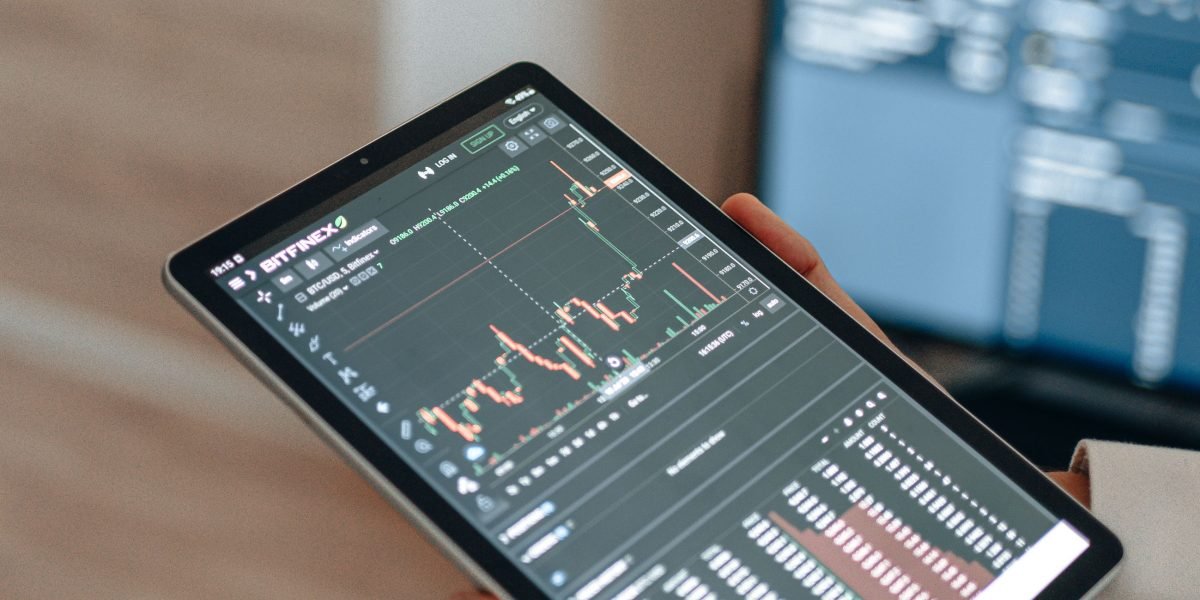
One analyst says buy. Another says sell. Meanwhile, the broader tech sector moves on macro news about interest rates or chip supply chains. It is easy to get lost.
That is where this article comes in. We are going to build a repeatable framework for tracking individual stocks like U (Unity Software) and the wider tech landscape. No more guessing. No more chasing every tweet. Instead, you will get a structured way to cut through the noise and focus on what actually matters.
If you want a sense of how volatility itself has become a Big Tech story, check out our breakdown of how the VIX index became a tech volatility gauge. Understanding that context helps you read market fear levels more clearly.
And since AI is the biggest wild card for every tech stock in 2026, staying informed daily is essential. That is why we recommend The AI Newsletter Worth Reading for clear daily AI updates that cut the hype and give you the facts.

2026 Big Tech Landscape: Key Players and Performance Trends
To track u stock (Unity Software) effectively, you first need to understand the bigger playing field. In 2026, the tech landscape is not a level ground. The megacap giants continue to dominate, but the market is splitting into clear winners and losers.
The usual suspects remain at the top. Apple, Microsoft, Nvidia, Meta, Alphabet, and Amazon still drive a huge share of market returns. But inside that group, performance has become uneven. Nvidia keeps soaring thanks to its AI chip dominance. Meanwhile, Meta, Google, and Microsoft face more questions about their massive AI spending and when it will pay off. According to J.P. Morgan’s May 2026 market review, investors have grown more selective within the “Magnificent Seven.” Nvidia stands out, but sentiment toward the others is more muted. That pattern tells you something important: AI is reshaping the pecking order, and not every giant benefits equally.
The real action, however, is happening outside the megacap names. As the Forbes analysis of the biggest winners and losers of 2026 so far shows, memory chip and AI server companies have exploded higher, while many software firms have struggled. Unity Software, as a mid-cap tech stock with exposure to gaming, digital twins, and the metaverse, sits in a very different category from the FAANG giants. It does not have the same hardware tailwinds, but it also does not face the same direct AI disruption risk as some enterprise software companies. That makes u stock an interesting contrast to the megacap narrative.
Adding to the complexity, regulatory scrutiny and shifting interest rates add extra layers to every stock decision. When the Fed moves, it hits growth stocks like U harder than value stocks. And when regulators in the US or Europe target Big Tech, it can drag down the whole sector. To see how volatility itself has become a major story for tech stocks, check out our coverage of the biggest movers today in big tech stocks for 2026. Understanding which names are moving and why helps you spot patterns before the crowd does.

The bottom line for 2026: AI winners are separating from the pack, megacap performance is diverging, and mid-cap stocks like Unity occupy a unique middle ground. Keeping all these forces in mind will help you make smarter decisions about u stock and the broader tech market.
Deep Dive on U Stock (Unity Software): Fundamentals and Catalysts
Unity Software runs the engine behind most mobile games. More than 70% of all mobile games use Unity tools. That sounds like a great business. But the company faces real challenges.
Apple’s privacy changes hurt Unity’s ad business. When Apple made it harder to track users, advertisers spent less. That hit Unity’s Grow Solutions segment hard. At the same time, Unreal Engine wins more high-end game developers. Unity stays king of mobile and indie games, but competition keeps growing.
Now for the numbers. In Q1 2026, Unity reported $508 million in revenue. That is up 17% from the same quarter last year. Strategic revenue grew even faster at 35% year over year. The new AI-powered ad platform called Vector is gaining speed. According to the Unity first quarter 2026 earnings report, adjusted EBITDA hit $138 million with a 27% margin. That is a big jump from 19% a year ago.
Here is the catch though. Unity still loses money under standard accounting rules. The net loss for Q1 2026 was $347 million. Some of that comes from restructuring and shutting down the old IronSource ad network. But the company now expects to reach GAAP profitability by Q4 2026. That would be earlier than most analysts expected.
Free cash flow tells a more hopeful story. Unity generated $66 million in free cash flow in Q1 2026. Compare that to just $7 million in Q1 2025. That is a massive improvement. The company also holds $2.15 billion in cash. That gives it room to keep investing.
So what could drive u stock higher from here? Three catalysts stand out.
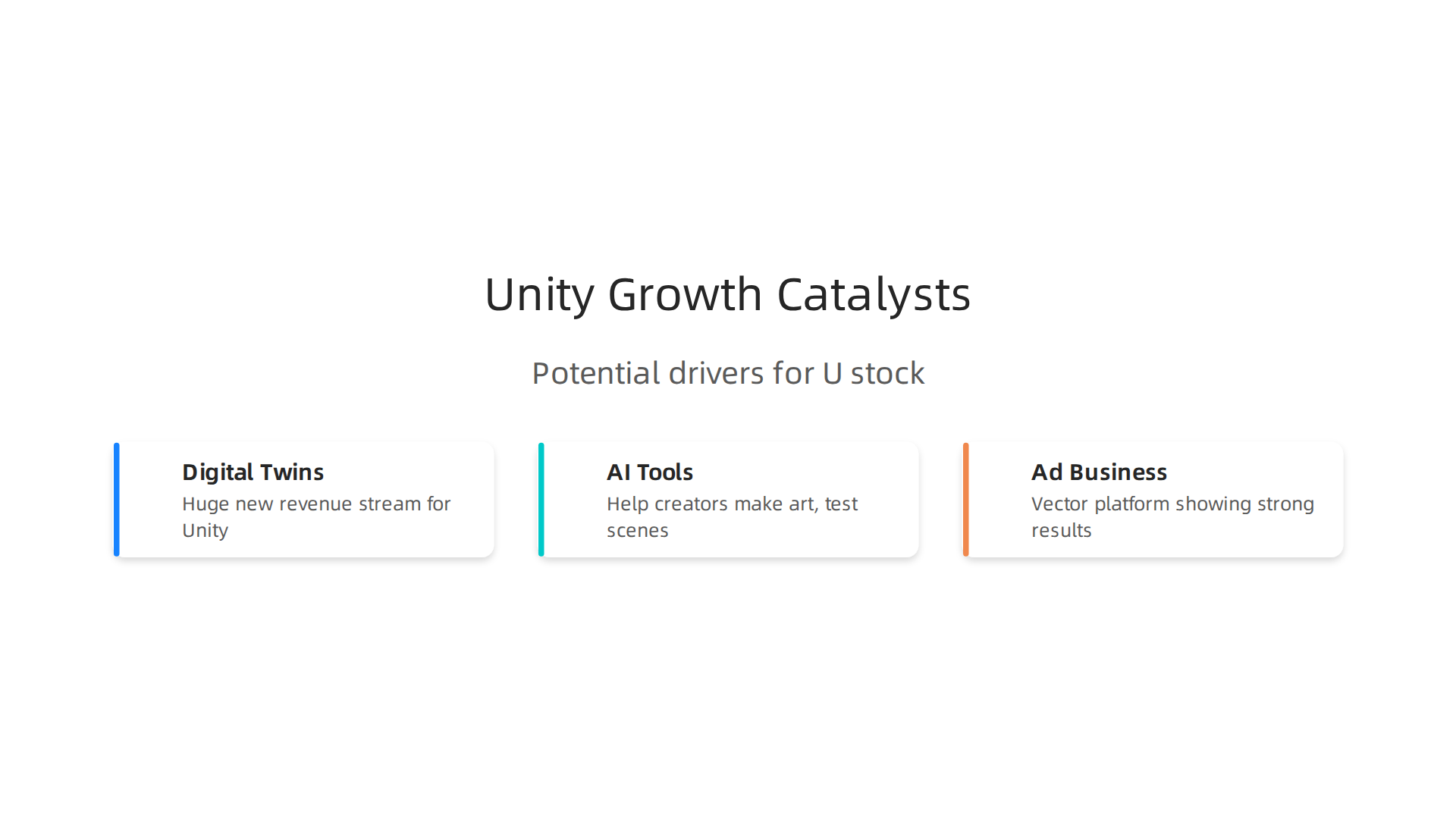
First, digital twins. Unity’s engine is not just for games anymore. Car makers, factories, and city planners use Unity to build digital copies of real systems. The global digital twin market is projected to grow from $33.97 billion in 2026 to $384.79 billion by 2034. This could be a huge new revenue stream for Unity.
Second, AI tools for developers. Unity launched its own AI assistant in open beta. It helps creators make placeholder art, test scenes, and fix bugs faster. If Unity makes game development quicker and cheaper, more developers will stay on the platform. That protects its biggest advantage: the developer community.
Third, the ad business is turning around. Vector, the AI ad platform, is showing strong results. Unity expects strategic Grow revenue to grow 50% to 52% year over year in Q2 2026. If this keeps up, the ad business could surprise investors.
For anyone following u stock, these fundamentals matter. But you also need to see how Unity fits into the bigger picture. For a broader look at the best options this year, check out the stock advisor top 10 picks for big tech investors.
Essential Metrics for Evaluating Tech Stocks: Beyond P/E
You now know Unity’s fundamentals and catalysts. But how do you actually tell if a stock like this is cheap or expensive? The standard P/E ratio does not work well here. Unity still reports net losses. Many high growth tech companies do the same. You need different tools to judge their real value.
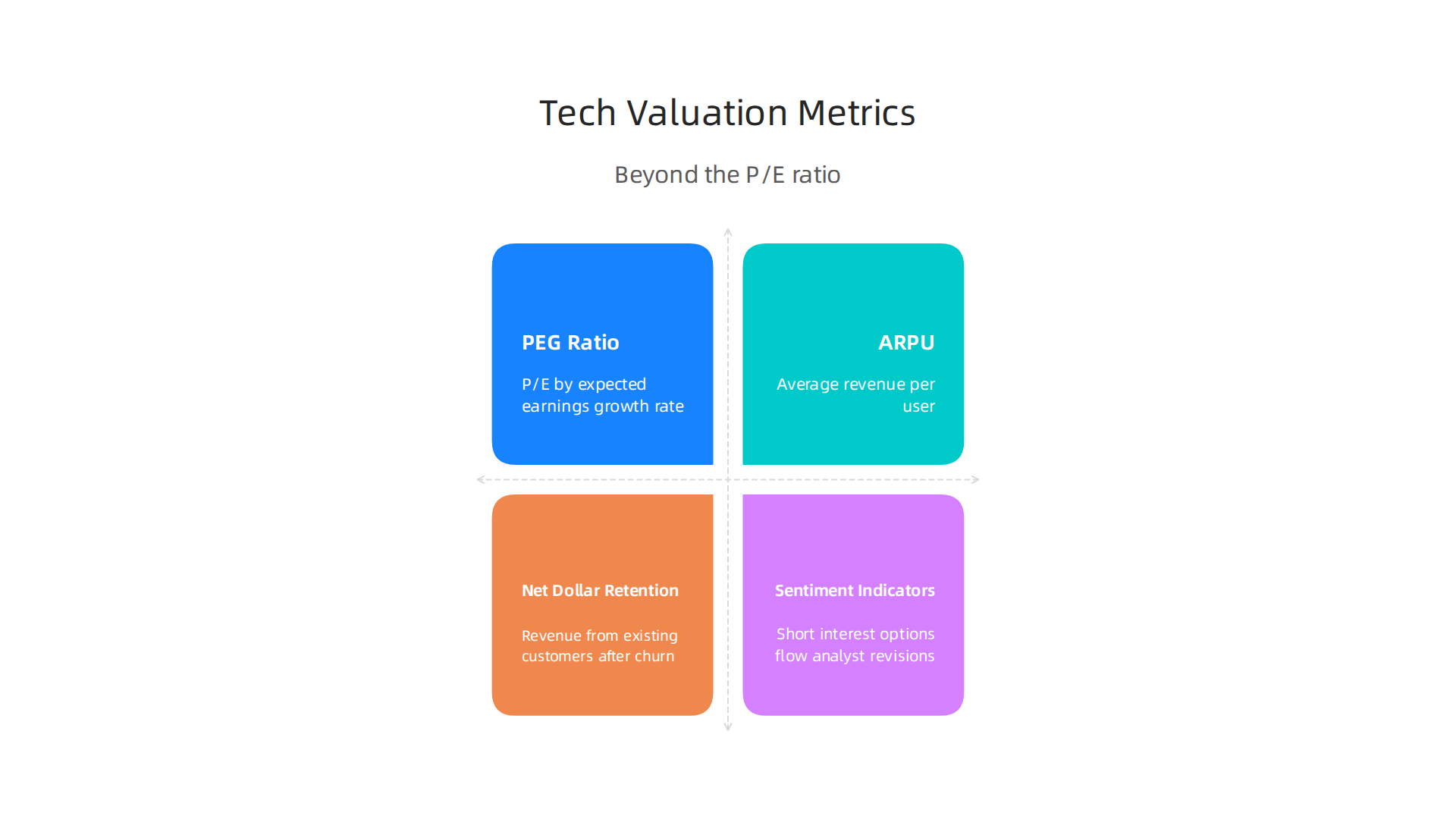
The PEG ratio is a much better starting point. It divides the P/E by the expected earnings growth rate. Peter Lynch famously favored this metric. A PEG below 1.0 often signals a stock that is cheap relative to its growth. A PEG above 2.0 means you are paying a premium that growth might not justify. The Unity Q1 2026 earnings call transcript shows an adjusted EPS of $0.23 with strong revenue growth. To get a fair PEG, you would look at forward earnings estimates and divide by that growth rate. This gives you a clearer picture than just looking at the P/E alone.
For subscription based businesses like Unity, customer metrics matter even more. Two of the most important are ARPU and net dollar retention. ARPU stands for average revenue per user. When ARPU rises, it means existing customers are spending more. That is a powerful signal. Net dollar retention tells you how much revenue you keep from existing customers after accounting for churn and upgrades. A number above 100% means your customer base is growing its spend even without new signups. Unity’s Create Solutions segment benefits from high retention because game developers stick with the engine they know. You can find more detail on how SaaS companies are valued in the latest SaaS valuation multiples report from Aventis Advisors.
Sentiment indicators add a tactical layer to your research. Short interest tells you how many investors are betting against the stock. High short interest can lead to sharp rallies when news surprises to the upside. Options flow shows where big money is placing bets. Analyst revisions also matter. When multiple analysts raise their price targets in a short window, it often precedes further upside. For Unity, several analysts revised earnings upward after the strong Q1 2026 results.
Combining these three lenses gives you a much better handle on u stock than traditional multiples alone. For a broader look at how other top tech companies measure up in 2026, check out this guide to deciphering Tesla stock through fundamental analysis. It applies similar thinking to a different high growth name.
Top Tools and Platforms for Tracking Tech Stocks and News in 2026
Now that you know how to evaluate a stock like u stock using growth metrics and customer data, you need the right tools to put that knowledge into action. The best stock market tracking apps bring real-time prices, news, and analysis together in one place. They help you watch u stock, exxon stock, zim stock, mcdonalds stock, or any other ticker without drowning in noise.
TradingView is the most popular charting platform for a reason. It offers customizable charts, technical indicators, and even Pine Script for backtesting strategies.
If you want to see how u stock’s price reacts to earnings, TradingView gives you a clean, fast view. The 2026 comparison of best stock tracking apps ranks it as the best overall tool for technical analysis and charting across all asset classes.
Finviz and Benzinga Pro are two solid options for cutting through the noise. Finviz gives you a fast stock screener with interactive heatmaps.
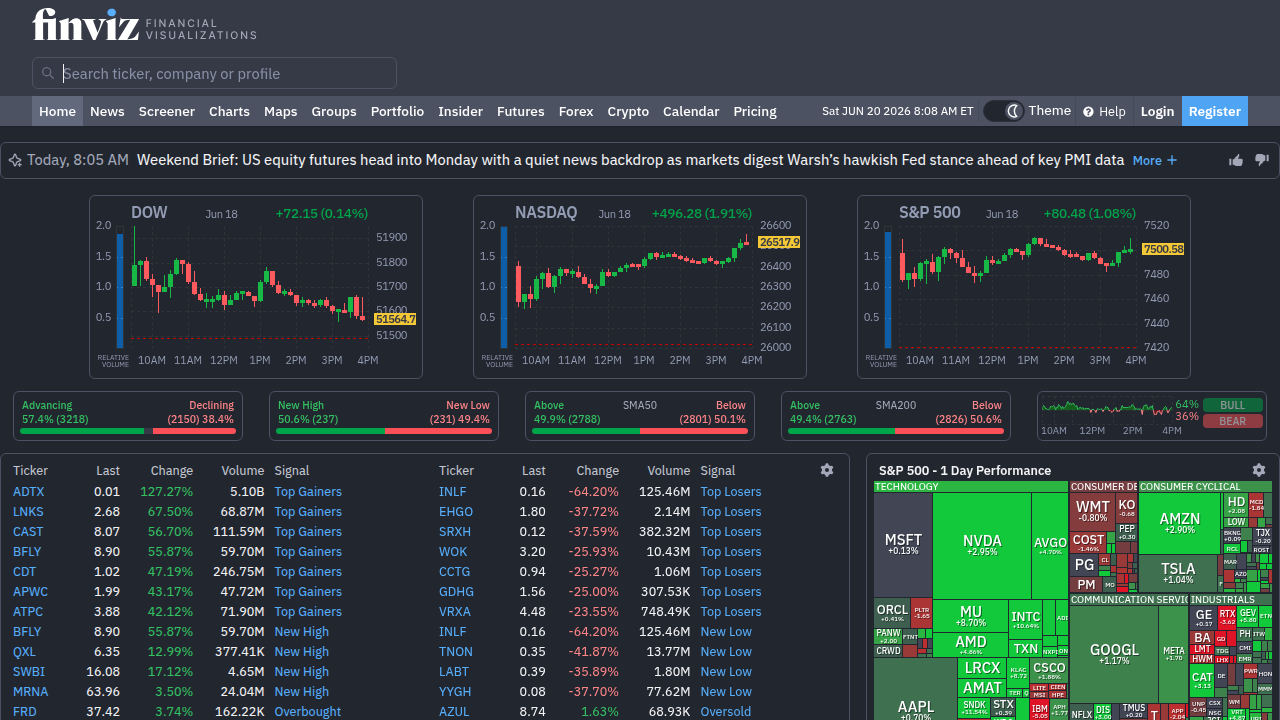
You can filter u stock by fundamentals or technicals in seconds. Benzinga Pro delivers real-time news alerts and market-moving events. Both tools help you spot catalysts early, whether it’s a surprise earnings beat for exxon stock or a regulatory change for zim stock.
AI-powered dashboards take things a step further. Platforms like WallStreetZen assign every stock a letter grade based on 115 factors and track 3,000+ Wall Street analysts.
Koyfin acts like a Bloomberg Terminal for retail investors, giving you macro data and equity research in one dashboard. These services learn your portfolio and prioritize news that matters most to your holdings.
If you want to filter your own news feeds more effectively, check out this guide on how to filter Yahoo Finance news for big tech market insights without the noise. It shows you how to clean up your watchlist and get only actionable headlines.
Staying on top of the tech stock market also means keeping up with the broader AI and tech landscape. That is where daily curated updates help. The AI Newsletter Worth Reading delivers clear daily AI insights straight to your inbox. It saves you hours of sifting through articles so you can focus on your portfolio decisions.
With the right tools, tracking u stock and other tech names becomes a repeatable process.

You get data when you need it, news that matters, and alerts that keep you ahead of the market.
Navigating Information Overload: Building a Curated Daily Briefing
If you track stocks like u stock, exxon stock, or zim stock, you know the feeling of drowning in headlines. Every day brings a flood of news, analyst notes, and price moves. Without a system, you end up wasting time on noise. The smartest investors in 2026 do not try to read everything. They build a curated daily briefing that filters the signal from the noise.
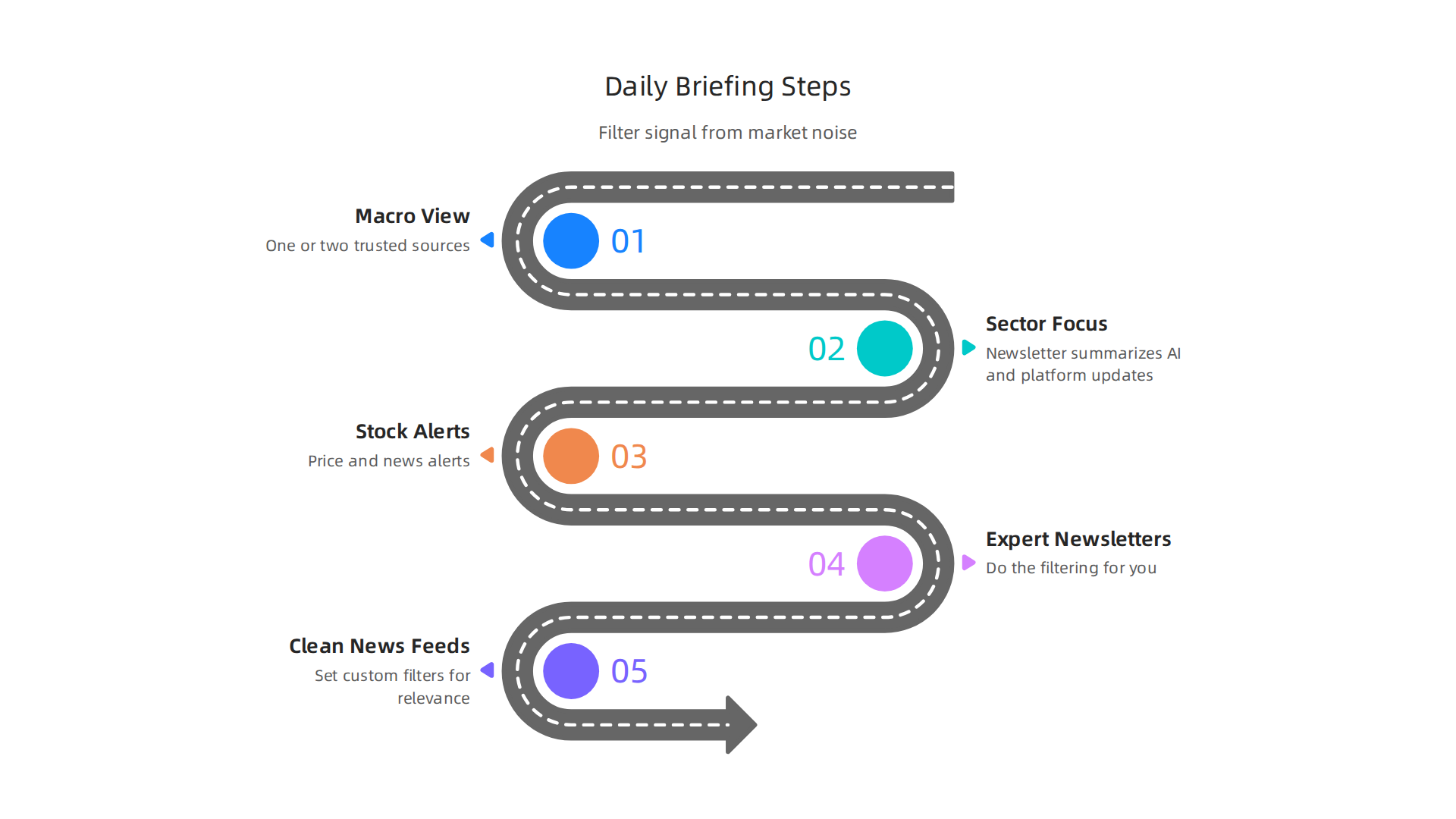
Start with a tiered system. First, get a macro-level view. Read one or two trusted sources that cover the big picture. For example, the Forbes article on Top 10 Investment Themes for 2026 gives you a high-level look at what moves markets. Second, zoom into your sector. If you follow tech, subscribe to a newsletter that summarizes the most important AI and platform updates each day. Third, set alerts for the individual stocks you care about most. That is where u stock comes in.
Set up price alerts and news alerts for u stock using your tool of choice. Many platforms let you get push notifications when a stock moves more than a certain percentage. You can also save screeners that show u stock only on days when volume spikes or earnings are released. This way you catch material events without refreshing your watchlist every hour.
To make the system stick, use expert newsletters that do the filtering for you. Dedicated tech and AI briefings save hours each day. For instance, you can Get clear daily AI updates from The Deep View Newsletter. It delivers the most important AI news straight to your inbox so you do not have to hunt for it.
Finally, learn how to clean up your news feeds. Check out this guide on filter Yahoo Finance news for big tech market insights without the noise. It shows you exactly how to set custom filters so only relevant headlines for u stock and similar tickers pop up.
Building a daily briefing takes a few minutes to set up. But once it is running, you stay informed without the stress. You get the macro context, the sector trends, and the specific stock alerts you need. And you never miss what matters for u stock.
Expert Perspectives: What Analysts Are Saying About U Stock and Tech in 2026
So you have your daily briefing set up for u stock. Now the real question: what do the people who study this full time actually think? Wall Street is split right down the middle on Unity Software.
And depending on which analyst you ask, you either hear about huge AI opportunities or a slowing game market.
The bulls point to one thing: AI integration. Unity’s new Vector ad platform is showing strong early results. The company’s first quarter 2026 earnings call revealed that strategic revenue grew 35% year over year, hitting $432 million. Adjusted EBITDA jumped to $138 million, up from $84 million a year before. Analysts at BTIG upgraded the stock and set a price target of $60, which at the time implied about 33% upside. You can read the full details in the earnings call transcript for Unity Software Q1 2026.
On the other side, the bears say the game market is still struggling. Unity’s GAAP net loss widened to $347 million in Q1 2026, partly due to restructuring costs. And there is real concern that AI tools from competitors could eat into Unity’s developer base. One detailed analyst piece on what triggered Unity Software’s recent stock bloodshed explains how fears about AI competition caused the stock to drop roughly 60% from its January high. That same article points out that despite the panic, 26 analysts still rate Unity as a Buy, with 19 saying Buy and 7 saying Hold. Not a single Sell rating.
The consensus 12-month price target for u stock reflects a cautious recovery scenario. Most analysts expect the stock to trade higher if two things happen: the Vector platform keeps gaining traction, and digital twin adoption accelerates. The global digital twin market is projected to grow from $33.97 billion in 2026 to $384.79 billion by 2034, according to a digital twin market report from Fortune Business Insights. Unity’s 3D engine is a natural fit for building these virtual models of real world systems. That is the big upside catalyst that bulls keep referencing.
Now zoom out to the broader tech sector in 2026. Mega cap AI companies like Nvidia continue to dominate. The market review for May 2026 from J.P. Morgan Asset Management shows technology was the top performing sector, up 15.6% for the month. But BlackRock says that mega-cap tech is still a buy, noting the sector has return on equity above 30%, well above historical averages. Mid-cap names like Unity offer a different kind of opportunity. They carry more risk, but also more potential reward if their AI bets pay off.
If you want to see how Unity fits into a larger basket of analyst picks, check out our list of top 10 stock picks for big tech investors in 2026. It includes several names that pair well with u stock for diversification.
At the end of the day, the analyst view on u stock comes down to this: can Unity execute on its AI pivot fast enough? If Vector becomes a billion dollar revenue stream by late 2026 as management expects, the stock could have serious upside. If the game market stays weak and AI competition heats up, the road gets tougher. Either way, the risk/reward profile is clearly asymmetric. And that is exactly the kind of setup patient investors look for.
Summary
This article offers a practical, repeatable framework for tracking Unity (U) stock and other fast-moving tech names in 2026 by cutting through headline noise and focusing on what drives long-term returns. It explains the broader tech landscape—where AI winners and megacap divergence shape market behavior—and dives into Unity’s Q1 2026 results (revenue $508M, adjusted EBITDA $138M, GAAP net loss $347M, free cash flow $66M, cash $2.15B) plus management’s path to GAAP profitability by Q4 2026. You’ll learn the three main upside catalysts (digital twins, developer AI tools, and the Vector ad platform), the right metrics to use when P/E is meaningless (PEG, ARPU, net dollar retention, cash flow), and how sentiment signals (short interest, options flow, analyst revisions) inform timing. The piece also recommends best-in-class tools—TradingView, Finviz, Benzinga Pro, AI dashboards—and shows how to build a tiered daily briefing and alerts to avoid information overload. After reading, you’ll be able to evaluate Unity’s risk/reward, monitor it efficiently with the right metrics and tools, and spot material events without chasing every headline.