

If you have followed the world of buy now, pay later services, you have heard of Affirm. The company trades under the ticker AFRM and has become a major player in how people pay for everything from furniture to plane tickets. But where does afrm stock fit into the bigger story of big tech and modern fintech? That is exactly what this article explores.
AFRM stock is not just about one company’s numbers. It sits at the crossover point of payments, online lending, and consumer technology. To understand its potential, investors need to see how it compares with other big names. For example, if you track ma stock for the credit card giant Mastercard or comcast stock for media and telecom, AFRM offers a different kind of growth story. Some investors also watch aur stock in autonomous driving or rdw stock in space tech, but fintech remains one of the most fast moving corners of the market today.
This analysis gives you a balanced, evidence based look at AFRM’s fundamentals, valuation, risks, and growth drivers. The goal is to help you make a clearer decision about this popular but often debated stock.

According to the Affirm Holdings company profile on Wikipedia, the firm generates revenue by charging merchants a service fee and collecting interest from borrowers, all without ever hitting customers with late fees.
That model has drawn attention from investors who want a modern alternative to traditional credit.
For a broader view on how different stocks are moving in the current environment, check out our guide to top 10 stock picks for big tech investors.
If you want to stay ahead of the trends driving companies like Affirm, get clear daily AI updates from the Deep View Newsletter. We recommend signing up for The AI Newsletter Worth Reading to make sense of how technology is reshaping the investment landscape.
Understanding AFRM: Affirm’s Business Model and Revenue Streams
To understand what drives afrm stock, you first need to see how Affirm actually makes its money.
The company runs a two-sided platform. On one side, it offers shoppers a way to pay for purchases in installments. On the other side, it charges merchants a fee for helping them close more sales. Think of it like a modern twist on a credit card network. But Affirm does things differently.
Affirm’s revenue comes from several clear sources.
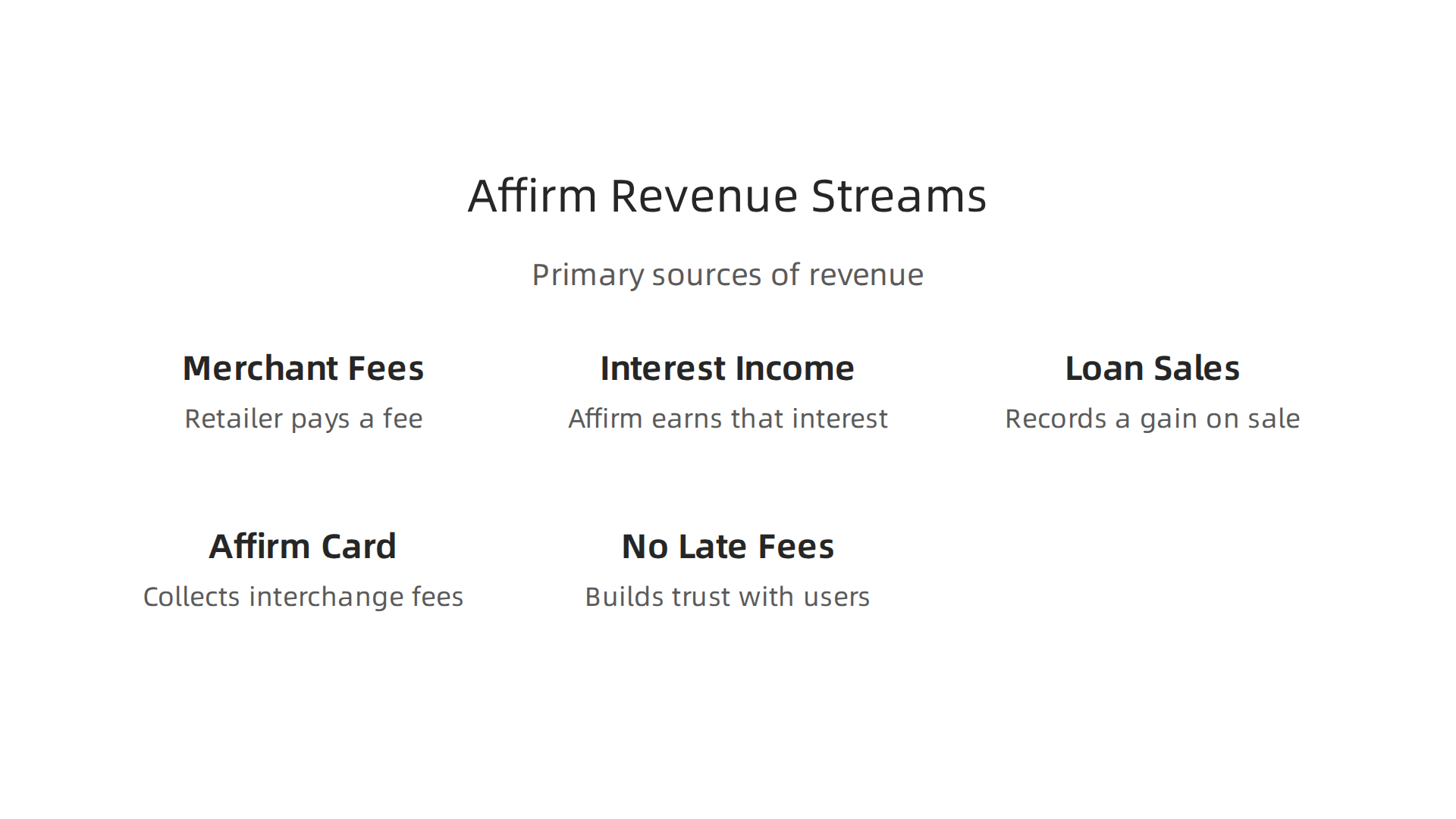
The biggest chunk is merchant fees. Every time a customer chooses Affirm at checkout, the retailer pays a fee. These fees typically range from 2% to 6% of the transaction, though they can go higher for special financing offers. A deep dive into how Affirm makes money in 5 ways explains that merchant fees are just one part of the picture. Another major source is interest income. When a borrower chooses a plan with interest, Affirm earns that interest. Annual percentage rates can run from 10% to 36% depending on the loan terms and the borrower’s credit.
Affirm also sells some of its loans to outside investors. When it sells those loans for more than their face value, it records a gain on sale. That adds another layer of revenue. Then there is the Affirm Card. When customers use it, Affirm collects interchange fees from the card networks, just like a traditional bank would.
What really sets Affirm apart is its promise of no late fees. Most credit cards hit you with penalties if you miss a payment. Affirm does not. It has stated on its investor page that it never charges late fees, hidden fees, or other junk charges. That honesty builds trust with users and merchants alike.
All these pieces fit together into a business model that is part payments network and part lending company. Roughly half of Affirm’s revenue comes from merchant fees and card related income, and the other half comes from interest and loan sales. Understanding this split helps you see where growth could come from next.
If you want to compare how other high growth tech companies build their revenue, check out this guide on SpaceX stock valuation risks and investment options. It shows a different kind of business model but uses the same kind of financial analysis that matters for stock research.
Financial Performance: Revenue, Earnings, and Key Metrics
Now that you understand how Affirm makes its money, the big question is how afrm stock has actually performed. The numbers from the last year tell a clear story of strong growth and a major turning point.
Affirm’s revenue has been climbing fast. In fiscal year 2025, the company reported total revenue of $3.2 billion. That is a 38.8% jump from the year before. These detailed AFRM financials show that the main driver was Gross Merchandise Volume, or GMV.
More shoppers used Affirm at checkout, and more merchants added it as a payment option. GMV grew 35% to $10.1 billion in the second quarter of fiscal 2025 alone.
The bigger story is that Affirm finally crossed into profitability. For years, investors in afrm stock waited for the company to turn a profit. In fiscal 2025, it happened.

Affirm reported a net income of $52.2 million for the full year. That was a massive swing from the losses in previous years. The company earned $0.15 per diluted share.
Fast forward to 2026, and the trend keeps getting stronger. In the second fiscal quarter of 2026, Affirm’s revenue hit $1.12 billion, up 30% from the same quarter in 2025. Net income reached $129.6 million. Earnings per share came in at $0.39, beating analyst estimates. Looking at Affirm’s past earnings performance, the net profit margin has now expanded to 9.63%.
Affirm is also generating strong cash flow. Operating cash flow for the trailing 12 months hit $786 million. Free cash flow stood at $613 million. Having positive free cash flow gives the company room to invest in new products and partnerships without needing outside funding.
When you compare afrm stock to other high growth opportunities, it helps to see how different business models scale. For example, this breakdown of how RZLV stock revenue surpassed full year 2025 targets shows another company executing a strong growth plan.
Keeping up with earnings and key metrics for companies like Affirm is just one part of smart investing. To understand how bigger technology trends are shaping the market, you need clear, daily updates on AI and fintech. That is exactly why you should subscribe to The AI Newsletter Worth Reading. It delivers the most important tech news straight to your inbox, helping you connect the dots between innovation and business performance. Whether you are watching afrm stock, aur stock, or ma stock, staying informed on the numbers that matter is the best way to make confident decisions.
Valuation Analysis: Is AFRM Overvalued or Undervalued?
Now that you have seen the strong financial performance, the big question for any investor in afrm stock is whether the current price makes sense. Valuation helps you decide if a stock is priced too high or if there is still room to grow.

The most common way to value a high-growth company like Affirm is the price-to-sales ratio, or P/S. Around mid-2025, Affirm was trading at about 5.6 times sales. This Affirm price-to-sales ratio analysis shows how that multiple compares to other growth names. Traditional banks often trade at 2 to 4 times sales, but they grow much slower. For a company growing revenue above 30% per year, 5.6 times is not extreme.
Since Affirm now has positive earnings, the price-to-earnings ratio, or P/E, also comes into play. As of early 2026, Affirm’s forward P/E sits near 38.6 times future earnings. That sounds high at first. But many fintech peers trade at similar or higher multiples. Block, which owns Afterpay, carries a higher P/E. PayPal with its Pay in 4 product is part of a larger company with a lower overall multiple. The latest AFRM current valuation data tracks these metrics in real time.
Analysts have been updating their fair value targets since the company turned profitable. Some estimates now place Affirm’s fair value above $90 per share, suggesting a 9% upside from current prices. This Affirm’s estimated fair value after profitability analysis explains how the shift to net income changed the valuation picture.
Compare that to a mature stock like ma stock, which trades at a much lower P/E because its growth is slower. Affirm’s premium reflects its higher growth and market share gains in the buy now, pay later space. But it also carries more risk. If growth slows, the multiple could shrink quickly.
To sum it up, afrm stock is not cheap by traditional measures, but it is reasonable for a fintech company with strong growth and a clear path to higher profits. The key is whether Affirm can keep growing GMV and revenue at 30% or faster in the years ahead.
For investors who want to understand how to value other high-growth stocks, this guide to valuation risks and investment options offers a helpful framework. Learning to spot overvalued and undervalued opportunities is a skill that pays off over time.
Competitive Landscape: Affirm vs. Klarna, Afterpay, and PayPal
The buy now, pay later market is a fierce battlefield. Affirm competes directly with Klarna, PayPal, and Afterpay, and each player brings a different set of strengths. Understanding this competitive landscape helps you see where afrm stock fits and what risks it faces.
Let’s look at the numbers first. A 2024 survey of BNPL users in the United States showed that PayPal leads the pack by a wide margin, with 68.1% of shoppers having used its Pay in 4 service.
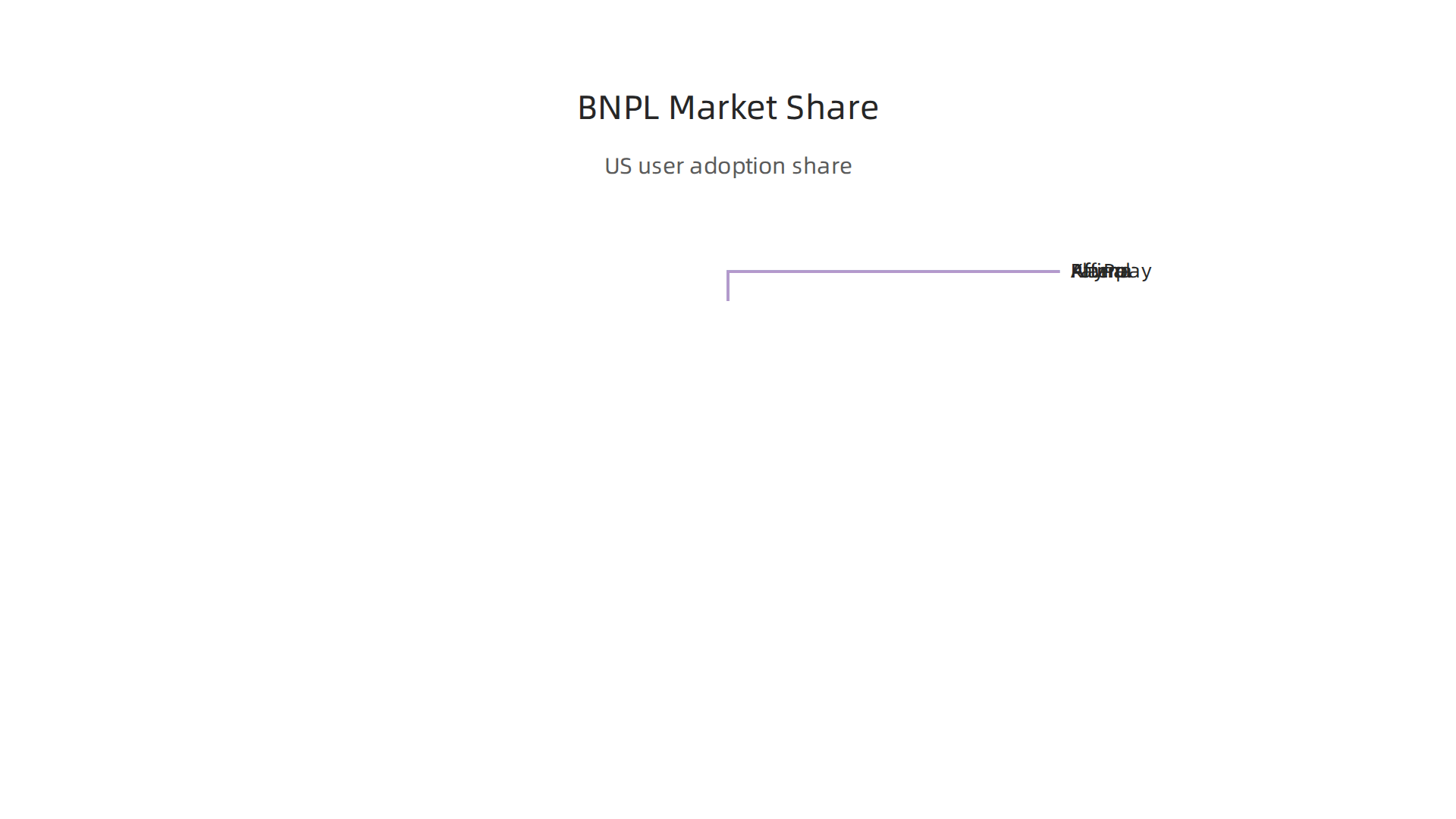
Afterpay came in second at 25.9%, followed by Affirm at 21.9% and Klarna at 21.5%. This BNPL market share by usage in the USA shows that Affirm has a solid position but trails the dominant player by a lot.
Affirm’s biggest advantage is its customer-friendly policies. The company charges zero late fees, which is rare in the BNPL world. It also integrates seamlessly with Apple Pay, giving it access to a huge base of iPhone users. These features help build trust and loyalty.
On the other hand, Affirm’s market share is smaller than PayPal’s massive reach. PayPal has over 400 million active users globally, and its Pay in 4 product is built right into the checkout experience millions of people already use. That is a huge barrier for Affirm to overcome.
Klarna remains the global BNPL leader by volume. In 2025, Klarna reported $127.9 billion in gross merchandise volume and went public on the New York Stock Exchange in September. This global BNPL market leader update shows how Klarna’s scale dwarfs most of its peers. Still, Klarna has a smaller foothold in the U.S. compared to Affirm or Afterpay.
Afterpay, now owned by Block (the company behind Square and Cash App), is working to integrate deeper into the Cash App ecosystem. That gives it access to millions of younger users who already use Cash App for payments. Afterpay contributed $1.04 billion in revenue in 2024, up 28% year over year.
PayPal continues to disrupt the space. Its BNPL volume hit over $33 billion in 2024 and is expected to crack $40 billion in 2025. This PayPal BNPL growth and market impact explains how its rewards program and sheer user base make it a tough competitor.
Affirm’s key challenge is staying relevant as these larger rivals grab more merchants and consumers. Its focus on no late fees and responsible lending is a differentiator, but it also limits revenue from fees that competitors collect.
When you compare afrm stock to slower-growing financial stocks like ma stock, Affirm looks expensive. But the BNPL race is all about capturing a piece of the $258 billion U.S. market projected by 2031. Similar to other high-growth names like aur stock and rdw stock, Affirm’s future value depends on how much market share it can secure.
To see how other tech stocks are positioned in fast-moving markets, you can read this stock advisor top picks for big tech investors guide. And if you want to stay ahead of trends that affect companies like Affirm, consider subscribing to The AI Newsletter Worth Reading for clear daily updates on the technology sector.
Growth Drivers: AI, BNPL Market Expansion, and Strategic Partnerships
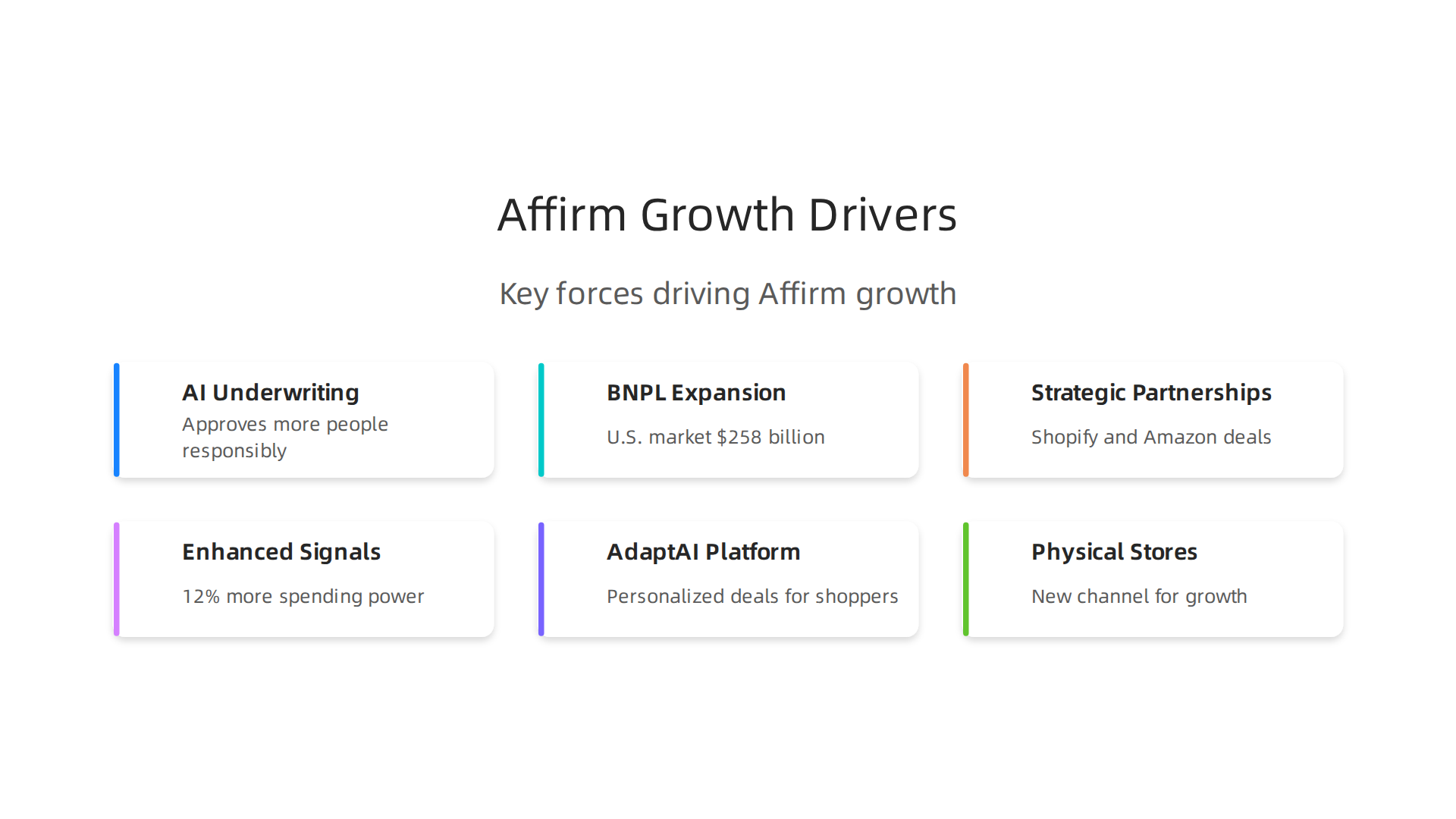
So what actually makes afrm stock worth watching in 2026? Three big forces are pushing Affirm forward.
Understanding them helps you see the story behind the ticker.
AI Gives Affirm a Real Edge
Affirm has been an AI company from the start. The Affirm’s underwriting approach and advantage explains something important. Affirm looks at each purchase individually. It checks your credit history, past payments with Affirm, and even details about what you are buying right now. That is very different from giving everyone a one size fits all loan.
In early 2026, Affirm added even smarter signals to its system. It now looks at real time bank account balances and cash flow trends. This Affirm update on underwriting with enhanced signals shows that early results are promising. People who get approved see about 12% more spending power on average. That means Affirm can approve more shoppers without taking on extra risk.
Affirm also launched a tool called AdaptAI. This Affirm AdaptAI platform announcement lets merchants offer special deals like lower APR rates or cash savings to specific shoppers. It makes buying more personal and helps merchants sell more.
Fraud detection matters too. Affirm uses machine learning to spot suspicious transactions in real time. The system learns from past warning signs and gets better over time. This Affirm Holdings Wikipedia overview notes that Affirm says its AI driven system predicts fraud better than older methods. Less fraud means lower costs for Affirm.
All of this AI work gives Affirm a clear advantage over older lenders. It can say yes to more people while still staying safe. That is a powerful mix.
BNPL Keeps Growing Fast
BNPL is no longer just for cheap clothes and gadgets. It is moving everywhere. People now use it for travel bookings, car repairs, medical bills, and even furniture. The total U.S. BNPL market is projected to hit $258 billion by 2031. That is a huge pie, and Affirm wants a big slice.
Affirm also offers longer terms, up to 60 months for purchases as high as $30,000. This lets people use BNPL for bigger items like electronics or home renovations. Most competitors only offer short Pay in 4 plans. That difference helps Affirm stand out.
The company is also expanding into physical stores. More retailers are offering Affirm at the register, not just online. That opens up a whole new channel for growth.
Strategic Partnerships Keep Building
Affirm has signed some big deals that give it staying power. Its partnership with Shopify is now global. In February 2025, the two companies extended their deal beyond the United States. Shop Pay Installments launched in Canada, and more countries like the U.K., Australia, France, and Germany are coming next.
The Amazon partnership is another huge win. Affirm was Amazon’s exclusive BNPL partner in the U.S. through 2023, and it still has a strong relationship with the retail giant. Amazon brings millions of shoppers who might try Affirm for the first time.
Affirm also works with Stripe to reach smaller merchants. And in early 2025, it partnered with FIS to offer BNPL services to banks and their customers. These deals keep Affirm’s network growing.
If you want to see how other companies use smart technology to grow, check out this analysis of AI infrastructure driving earnings growth. The same kind of strategic thinking applies to Affirm.
The bottom line is simple. AI makes Affirm smarter. BNPL expansion gives it room to run. And partnerships keep its name in front of millions of shoppers. Those three forces together are what make afrm stock an interesting story in 2026.
Risks and Headwinds: Regulation, Interest Rates, and Competition
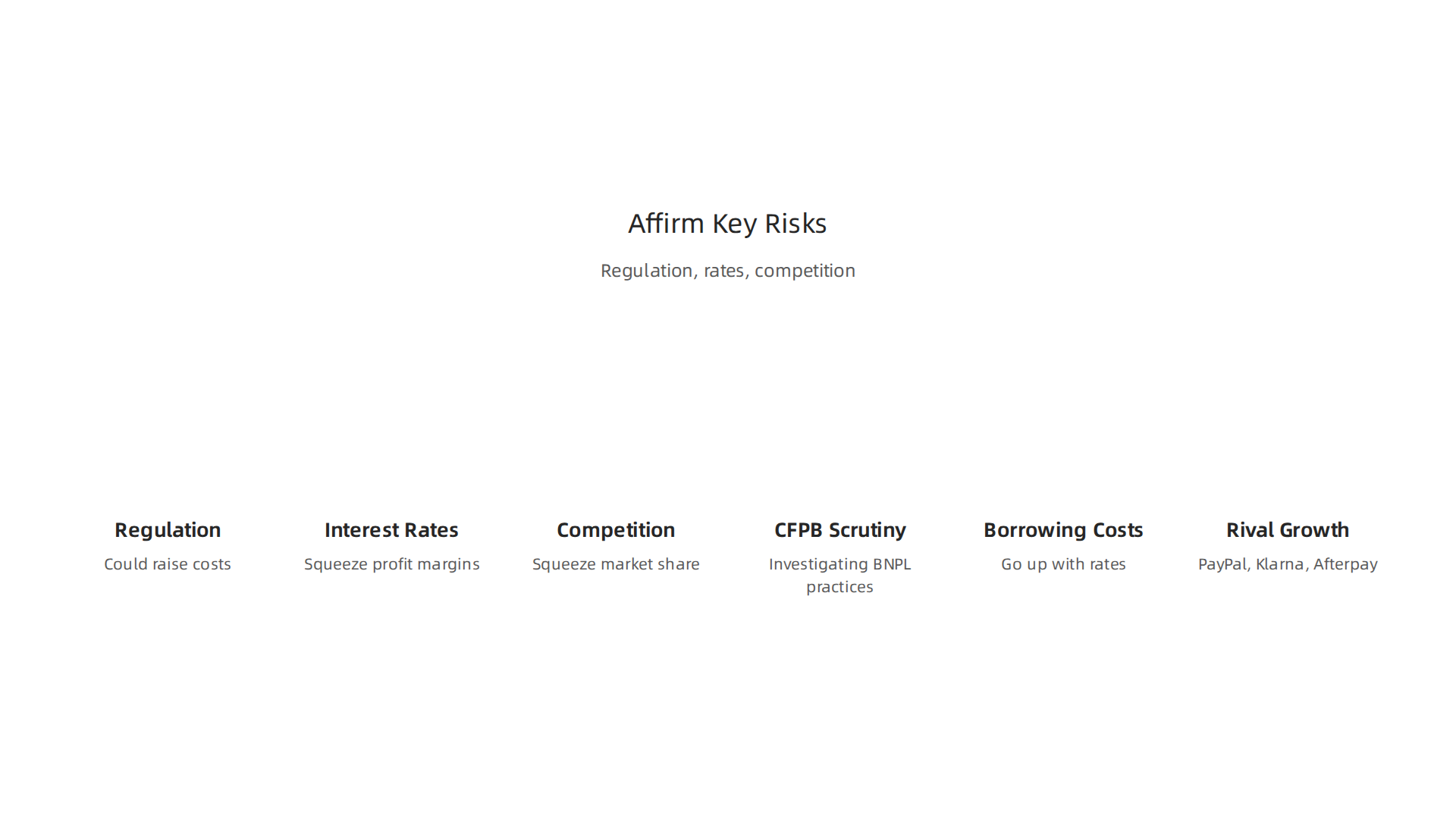
But every investment story has two sides. The same forces that make afrm stock exciting in 2026 also come with real risks. Let’s look at the biggest ones.
Regulation Is Catching Up to BNPL
The buy now, pay later industry has grown so fast that regulators are paying close attention. The Consumer Financial Protection Bureau has been investigating BNPL practices since 2021. In early 2025, the CFPB proposed a rule that would require BNPL lenders to give consumers the same protections as credit card users, like refund rights and dispute processes.
This matters for afrm stock because new rules could raise costs. Affirm might need to change how it handles returns and complaints. The company could also face higher legal and compliance expenses.
A detailed breakdown of the BNPL regulatory landscape from Payments Dive explains that the Truth in Lending Act currently applies to longer interest-bearing loans but not to short Pay in 4 plans. If the CFPB closes that gap, it could change how BNPL companies operate. The article also notes that "BNPL is here to stay, but it’s likely to become a more regulated, consolidated industry."
Higher regulation is not the end of the world for Affirm. The company already offers longer term interest-bearing loans with clear disclosures. But it does add uncertainty that investors need to watch.
Rising Interest Rates Squeeze Margins
Affirm makes money by lending to shoppers. It raises money from capital markets and then charges interest to borrowers. When interest rates go up, Affirm’s borrowing costs go up too.
In a high rate environment, the company has two choices. It can raise rates on shoppers, which might slow demand. Or it can keep rates low and accept thinner profit margins. Either way, higher rates create a headwind for growth.
The same Payments Dive article points out that "given higher interest rates and increased costs to fund loans, BNPL companies may increasingly make interest-bearing loans more of a standard in the industry because they’re more profitable." That shift could help protect margins, but it also makes BNPL look more like traditional credit, which might attract more regulation.
Competition Is Getting More Intense
Affirm faces a growing crowd of rivals. PayPal has become the biggest BNPL provider in the U.S. by user share, according to recent data from eMarketer. PayPal’s Pay Later service is now used by 56% of U.S. BNPL customers, outpacing both Affirm and Afterpay. With over 400 million global users and existing relationships with merchants, PayPal is a formidable competitor.
Klarna, which went public in 2025, is another strong rival. It reported $3.5 billion in revenue in 2025 and serves 118 million active consumers. Afterpay, owned by Block, also remains a major player. And traditional banks like JPMorgan Chase and Citigroup are adding their own installment options.
All this competition can squeeze Affirm’s market share and push down the fees it charges merchants. That means slower growth and tighter margins for afrm stock.
What This Means for Investors
These risks do not cancel out the growth story. But they do mean Affirm’s path is not a straight line upward. Regulation, interest rates, and competition are real headwinds that could slow the company at any time.
Smart investors keep their eyes on both sides of the story. To stay informed about how these forces play out across the tech sector, check out this look at the volatility index for big tech stocks. And to get clear daily updates on the news that moves markets, The AI Newsletter Worth Reading delivers the insights you need.
Technical Analysis and Market Sentiment: Reading AFRM’s Stock Price Action
You can learn a lot about afrm stock by looking at where the price has been and how traders feel about it. After falling from a high near $89 in November 2025, the stock has spent eight weeks trading between $42 and $52. That sideways pattern is the first real sign of stability in months.
Key Support and Resistance Levels
According to a detailed technical analysis from Options Cafe, the $42 level has been tested multiple times and held. That makes it a strong support zone. If the stock breaks below $42, the next major floor sits around $30 to $35. On the upside, $52 is the top of the current range. Breaking above that with volume would be a bullish signal. The next target is the 50-day moving average at $55.13, then the 200-day moving average near $68.78. The MACD histogram, which measures momentum, has turned positive for the first time since October 2025. That is what technicians call a crossover forming. It does not guarantee a rally, but it is the first constructive sign in five months.
Sentiment Indicators Tell a Mixed Story
Short interest remains elevated, meaning many traders still bet against the stock. But options flow tells a different story. Recent unusual options activity showed 10 straight call trades, suggesting big money sees upside potential. Analysts are also turning more optimistic. Morgan Stanley named Affirm a top pick in April 2026 with a $76 price target, as noted in an analyst breakdown from Intellectia. The stock is currently trading well below that target, leaving room to run if the company delivers on growth.
How AFRM Tracks with Broader Tech Trends
Like most high-growth stocks, afrm stock moves with the broader market. When the Nasdaq dips, Affirm tends to fall harder. When tech rebounds, it rallies faster. That makes it a high-beta play. To understand how retail sentiment can shift a stock’s direction, check out this data-driven guide to retail sentiment from WallStreetBets activity. It shows how fast crowd psychology can change the game for stocks like Affirm.
Future Outlook: Strategic Initiatives and Long-Term Thesis
So where is afrm stock headed over the long haul? The answer depends on three big things: new high-value markets, international growth, and the path to consistent profitability.

AI Underwriting Is the Core Advantage
Affirm has always used machine learning to decide who gets a loan and at what terms. But in 2026, the company is doubling down on AI. Its underwriting system now looks at real-time signals like bank account balances and cash flow trends. This gives a much clearer picture of someone’s finances at checkout. According to Affirm’s official explanation of its underwriting approach, this system lets the company approve more people responsibly. In fact, early data shows that purchasing power rises by about 12% when these enhanced signals are used, as shared in Affirm’s update on underwriting with enhanced signals.
The company also launched a platform called AdaptAI that uses AI to offer personalized deals like lower APR rates or cash savings. This helps merchants sell more while keeping credit risk tight.
Expanding Into New Verticals and Markets
Most of Affirm’s business today comes from retail and travel. But the real opportunity lies in bigger purchases. Think healthcare bills, car repairs, or home improvement projects. These are huge markets where installment payments make a lot of sense. If Affirm can crack healthcare and auto, the addressable market grows by billions.
International expansion is also on the table. Affirm already partnered with Shopify to offer pay-over-time in Canada, with plans for the U.K., Australia, and other countries, as noted on Affirm’s Wikipedia page. Moving into new regions is tricky because of local rules and strong competitors, but the company is taking careful steps.
The Road to Profitability
The biggest question for afrm stock is when Affirm will consistently earn more than it spends. The key is scale. As the company processes more loans, the cost of each transaction drops. Better AI also means fewer defaults. For comparison, established payment networks like ma stock (Mastercard) already have high margins, but Affirm’s faster growth offers a different kind of opportunity. If Affirm can keep growing without taking on too much risk, it should reach profitability. For investors looking for other big tech opportunities, check out top big tech stock picks for 2026 as a starting point.
To stay ahead of how AI is reshaping finance and tech, get clear daily AI updates from The Deep View Newsletter. It delivers the most important AI news straight to your inbox.
That covers the long-term thesis. Combine that with the technical picture we just looked at, and you have a clearer view of where afrm stock could go from here.
Summary
This article analyzes AFRM stock by walking through Affirm’s business model, recent financial performance, valuation, competitive position, growth catalysts and key risks. It explains how Affirm earns revenue from merchant fees, interest income, loan sales and card interchange, and highlights the company’s shift to profitability in fiscal 2025 with improving cash flows. The piece reviews valuation metrics (P/S and forward P/E), compares Affirm to BNPL rivals like PayPal, Klarna and Afterpay, and describes AI-driven underwriting, merchant partnerships and market expansion as the main growth engines. It also lays out the primary headwinds — regulatory scrutiny, rising funding costs and stiff competition — and summarizes the technical picture with support and resistance levels traders watch. Overall, readers will gain a balanced, evidence-based framework to evaluate AFRM, know which numbers to track, and understand the scenarios that could change the stock’s outlook.