
Why the ‘picture on artificial intelligence’ matters for decision-makers
In 2026, artificial intelligence, or AI, is everywhere. We see stories about it, hear news reports, and often, we see pictures of artificial intelligence. These images are very powerful. They can make us feel excited, worried, or even confused about what AI really is. How AI looks in a picture can greatly change what people think about it, from everyday folks to important decision-makers.
Think about it. When you see a picture of artificial intelligence, do you see shining robots or smart brains made of light? The way AI is shown in visuals helps shape how we understand its role in our world. This is not just about cool graphics. It is about how these "artificial intelligence images" affect big choices in business, new products, and even laws. For example, how AI is shown in video communications can change how people use new tools for work and daily life, as seen in trends for 2026, which are set to transform communication in many ways 8 AI Trends Transforming Video Communication in 2026.
This article will help you understand the ‘pic of artificial intelligence’ you see. We will give you simple ways to think about these images, tools to look at them closely, and important ideas for leaders in technology. We will explore how the visual side of AI is not just a side note, but a key part of how AI moves forward. Understanding how images create meaning, especially with tools like Text to Video Artificial Intelligence Drives Future Content Creation, is more important than ever.
To stay updated on the latest AI advancements and their real-world impact, make sure you don’t miss out. Get clear daily AI updates from The AI Newsletter Worth Reading.
Defining the ‘picture on artificial intelligence’: types and origins
Now that we know how important the picture on artificial intelligence is, let’s look at the different kinds you might see. Not all artificial intelligence images are the same. Just like there are many kinds of cars, there are many kinds of images for AI, and each tells a different story. Knowing these types helps us understand what we are truly looking at.
Here are the main types of images related to AI:
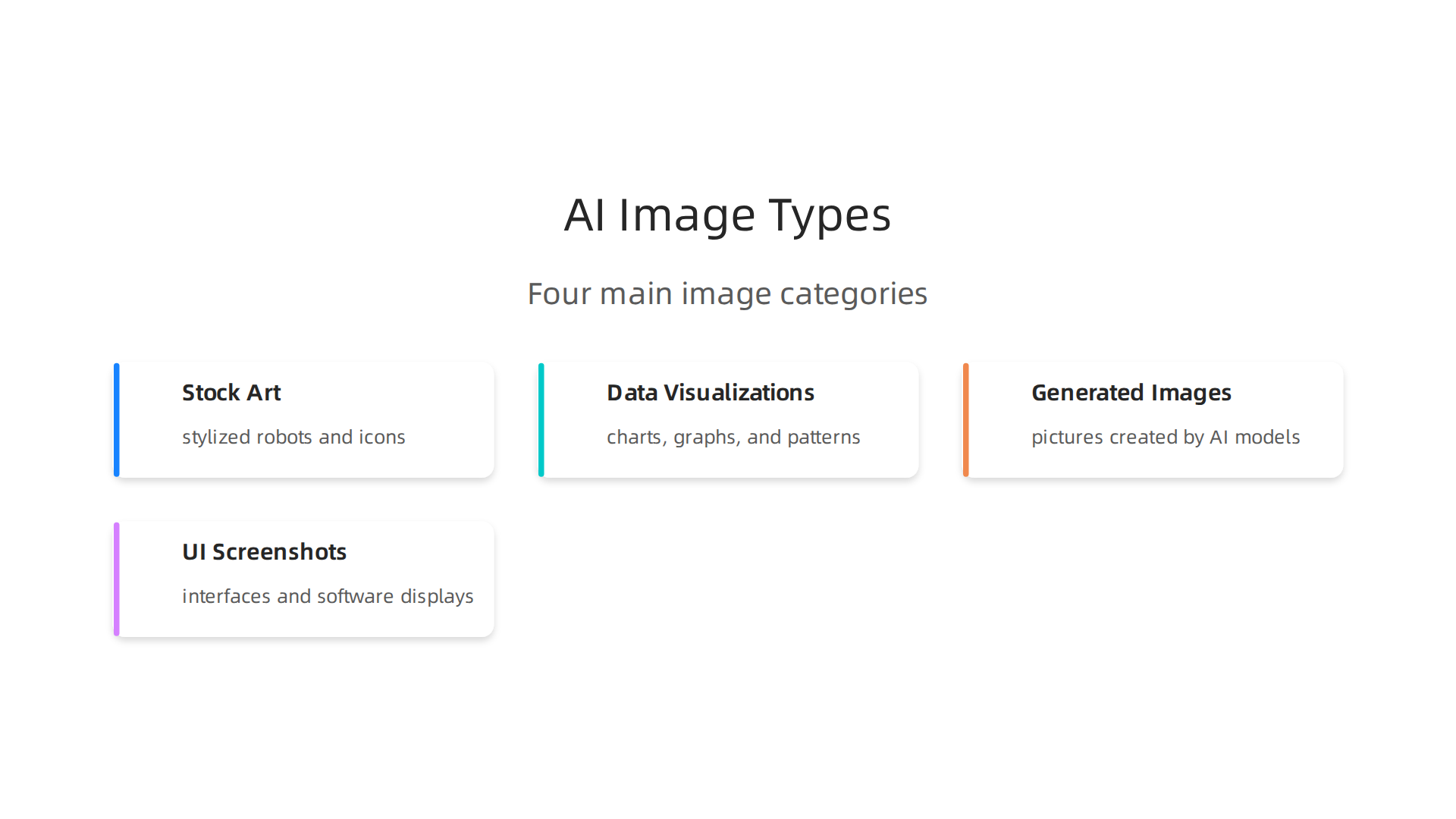
- Illustrative Stock Art: These are often the pictures you see first. They might show shiny robots, brains made of light, or glowing lines of code. These
artificial intelligence imagesare made by human artists to give a general idea or feeling about AI, like a futuristic world or a smart machine. They are often meant to catch your eye and make you think about what AI could be. - Data Visualizations: Sometimes, the
picture of artificial intelligenceis not a robot at all. It might be a graph, a chart, or a colorful pattern. These pictures show what AI does with numbers and information. For example, a chart might show how an AI program found a pattern in a lot of data. These visuals help us see the results of AI’s work, not just its imagined look. Many businesses use AI to help them understand complex data, which can lead to steady growth, as seen with companies embracing AI and cloud changes IBM Stock in 2026 Shows Steady Growth Through AI and Cloud Transformation. - Model-Generated Images: This type is really interesting. These are images that AI itself creates. An AI program can be told to make a picture of a cat, a landscape, or even a brand new fantasy scene. These images show the creative power of AI and how it can produce new content. Experts in 2026 are already looking at how AI will change news and media by generating content How will AI reshape the news in 2026? Forecasts by 17 experts from ….
- User Interface (UI) Screenshots: These images show what AI software looks like when someone is using it. Think of a picture of an app screen where you type a question, and an AI answers. These screenshots are real glimpses into how people work with AI programs every day. They show the practical side of AI, rather than a fantasy idea.
Why Knowing Where a ‘Pic of Artificial Intelligence’ Comes From Matters
Knowing the "provenance" of a pic of artificial intelligence means knowing its origin story. Where did the image come from? Who made it? Was it a person, a computer program, or something else?
This matters a lot for how we understand and trust the image.
- If a picture of artificial intelligence is an artist’s drawing, it tells us about how people imagine AI. It’s a creative idea.
- If it’s a chart showing real data that AI processed, it tells us about AI’s actual work. It’s a factual result.
- If it’s a picture made by an AI, it shows what AI is capable of creating. It’s an example of AI’s output.
- If it’s a screenshot of an AI program, it shows how people use AI in real life. It’s a practical view.
Understanding these differences helps decision-makers, students, and everyone else look beyond just the surface. It helps us ask better questions, like "Is this a real example of AI, or just someone’s idea of it?" or "What is this image trying to tell me about AI?" Knowing the source makes us smarter readers of artificial intelligence images.
Knowing where a pic of artificial intelligence comes from helps us understand its true meaning. But how do these pictures get made in the first place? Let’s look at the smart computer programs that create artificial intelligence images.
AI uses special kinds of computer models to make pictures. Think of these models as different recipes for baking a cake. Each recipe might use different ingredients and steps, but they all aim to make something delicious. For AI images, the main "recipes" are called Generative Adversarial Networks (GANs) and Diffusion Models. These are the big players in 2026 for making a compelling picture on artificial intelligence.
Generative Adversarial Networks (GANs)
Imagine two artists. One artist, let’s call them the "Generator," tries to draw a fake picture. The other artist, the "Discriminator," looks at the drawing and tries to tell if it’s real or fake. They keep practicing. The Generator gets better at making fake pictures that look real, and the Discriminator gets better at spotting the fakes. Over time, the Generator becomes very good at creating new, believable artificial intelligence images.
GANs are known for creating pictures fairly quickly. However, sometimes if they aren’t trained perfectly, the picture of artificial intelligence they make might have small strange parts or look a bit repetitive. Despite these quirks, GANs have played a big role in AI image creation for many years, helping to push the field forward The Deep Learning Era of AI Image Generation: From GANs to Diffusion Models.
Diffusion Models
Now, think of a different way to make art. Start with a canvas full of random colorful dots, like TV static. Then, slowly, step by step, you remove the static and add details until a clear, beautiful picture appears. That’s a bit like how diffusion models work. They start with random noise and gradually transform it into a clear, high-quality image. This process is like "denoising" the picture until it’s perfect.
Diffusion models are really popular now because they often create very detailed and lifelike artificial intelligence images. These models have become super powerful and are behind many of the amazing image creators we see today, like those that can even turn text into video content Text to Video Artificial Intelligence Drives Future Content Creation. They usually take a bit more time to make a picture than GANs, but the quality is often worth it A Comprehensive Survey of Generative AI: Architectures, Evolution ….
Spotting the Signatures: What to Look For
When you see a picture on artificial intelligence, how can you tell if it came from a GAN or a diffusion model?
- GANs: Sometimes, if you look closely at older or less refined GAN-generated images, you might spot odd details, blurry edges, or strange repetitions in patterns. For example, a picture of a person might have an extra finger or an ear that looks a bit off.
- Diffusion Models: Generally, pictures made by diffusion models look very smooth, natural, and realistic. They are known for having fewer of those odd "artifacts" or mistakes. The lighting and textures often appear very consistent.
As AI gets better, these differences become harder to spot. Both types of models are always improving, creating more and more amazing artificial intelligence images that are hard to tell from real ones. To stay ahead of the curve and understand the rapidly changing world of AI, you need reliable information.
Get clear daily AI updates from The Deep View Newsletter.
As AI gets better, these differences become harder to spot. Both types of models are always improving, creating more and more amazing artificial intelligence images that are hard to tell from real ones. To stay ahead of the curve and understand the rapidly changing world of AI, you need reliable information.
Understanding how AI models make those stunning artificial intelligence images is one thing. But what if we want to know why an AI made a certain decision or created a specific picture on artificial intelligence? This is where representational methods come in. These are special ways to show us what’s going on inside the AI’s "brain." It’s like having a window into how the AI thinks, using visual tools to explain complex ideas.
How We See Inside AI’s Brain
Just like we use X-rays to see inside a body, we use special tools to see inside an AI model.
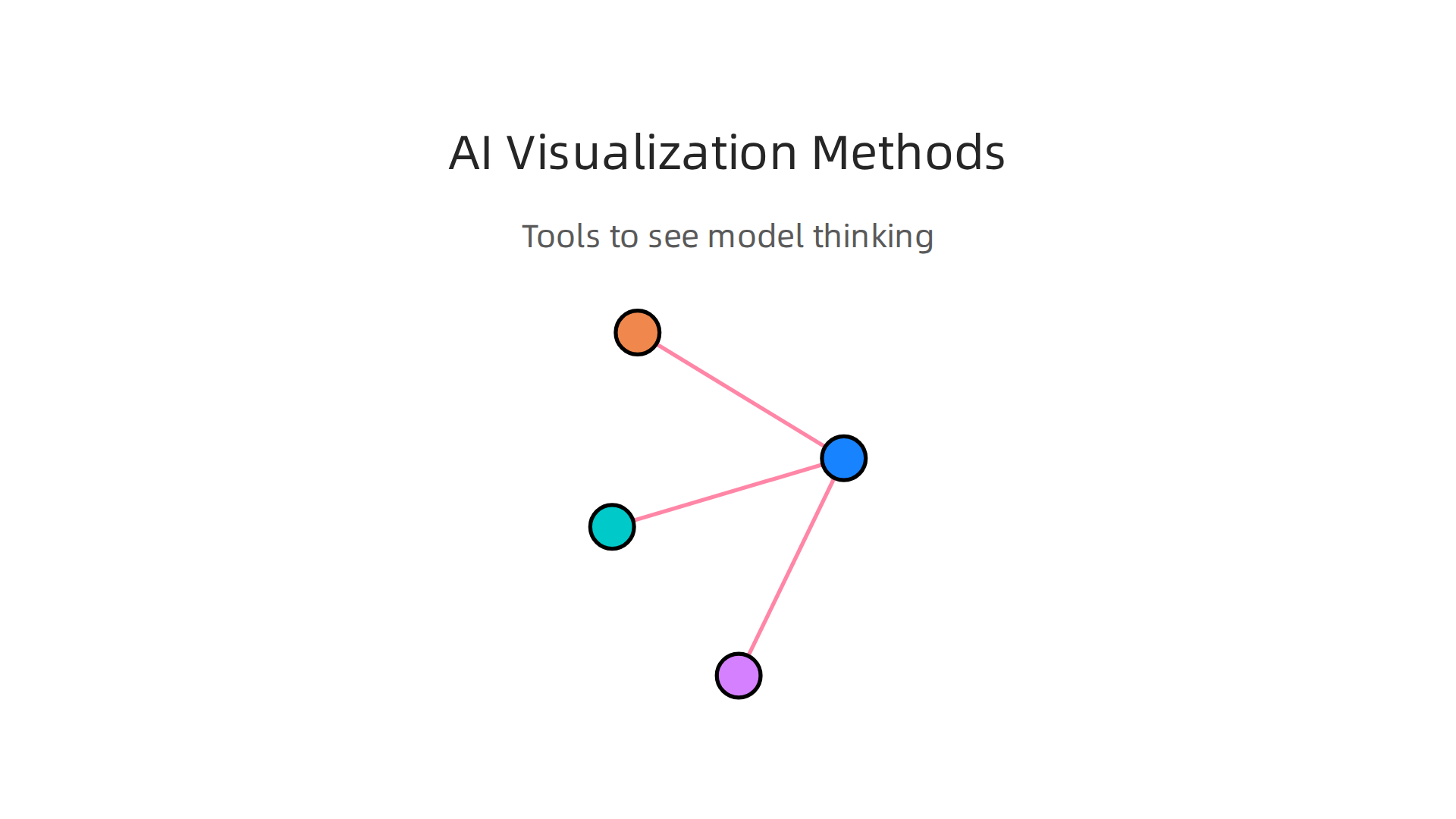
These tools help us understand what parts of a picture of artificial intelligence the AI pays attention to, or how it groups different kinds of information.
-
Saliency Maps or Heatmaps: Imagine you’re looking at a photo, and a bright red glow highlights the most important parts. That’s what saliency maps do for AI. When an AI looks at an
artificial intelligence image, a saliency map will show us which pixels or areas were most important for the AI’s decision. For example, if an AI is identifying a cat, the map might glow brightest around the cat’s eyes and whiskers. These visual explanations often use a "heatmap" to show where the algorithm focused its decision Explainable AI: current status and future potential – PMC. They are among the most common ways to see what an AI cares about Explainable Artificial Intelligence: A Survey of Needs, Techniques …. -
Activation Atlases: Think of an activation atlas as a gallery of an AI’s favorite things. Every time an AI "learns" something new, it creates a pattern. Activation atlases help us see all these patterns or features that the AI has learned. This could be anything from detecting edges and corners to recognizing whole objects like cars or faces within a
picture on artificial intelligence. -
Synthetic Examples: Sometimes, the best way to understand what an AI knows is to ask it to show you. Synthetic examples are pictures the AI creates from scratch to represent a certain idea. If you ask an AI, "What does a perfect dog look like?" it might generate a new
pic of artificial intelligencethat shows its ideal dog. This helps us see what specific features the AI associates with certain ideas. -
t-SNE and UMAP Plots: These sound complex, but they’re just ways to organize a lot of information in an easy-to-see way. Imagine you have thousands of photos, and you want to see how an AI groups them. These plots take all that complex data and squish it down into a simple 2D map. You can then see clusters of similar
artificial intelligence imagesthat the AI considers alike, even if they look different to us. This helps us understand its categories.
The Good and The Tricky Parts
These visual methods are great because they help us trust AI more. We can see why an AI made a decision, not just what the decision was. This is super important when AI helps in big decisions, like in healthcare or self-driving cars.
However, there’s a tricky part. These explanations are like summaries, and sometimes summaries can leave out details or be misunderstood. A saliency map might highlight a specific area, but the AI might have also considered other subtle things not shown. It’s like seeing only one piece of a puzzle. We have to be careful not to jump to conclusions and remember that these are tools to help us understand, not the full story of the AI’s mind. The goal is clarity, but misinterpretation is always a risk if we don’t look closely at how these artificial intelligence images and visualizations are made.
We have to be careful not to jump to conclusions and remember that these are tools to help us understand, not the full story of the AI’s mind. The goal is clarity, but misinterpretation is always a risk if we don’t look closely at how these artificial intelligence images and visualizations are made.
Design, bias, and ethics: when images mislead or reinforce harms
Understanding what an AI "sees" is one thing, but we also need to think about what the AI shows us. This is where topics like design, bias, and ethics come in.

These ideas are very important because the way AI makes a picture on artificial intelligence can sometimes be unfair or even harmful.
A big problem comes from the data that AI models learn from. Imagine an AI is taught using millions of pictures from the internet. If most of those pictures show certain types of people doing certain jobs, or if they only show one view of the world, the AI will learn those biases. For example, if the training data mainly shows men in leadership roles, then when the AI creates a pic of artificial intelligence of a leader, it might mostly show men. This is called "dataset bias," and it happens because the real world isn’t always fair, and our data often reflects that unfairness identifying and managing bias in artificial intelligence. The way data is labeled also matters. If someone incorrectly labels images, the AI learns those mistakes too.
These biases lead to some big ethical questions. When AI systems create artificial intelligence images that unfairly show certain groups of people, it can cause real problems. It can make harmful stereotypes stronger and even affect public opinion. For example, some facial recognition tools, which rely on analyzing pictures of people, have shown problems with fairness across different groups. Experts say it’s important to consider fairness when designing AI systems to avoid these issues bias and fairness in machine learning.
The way an AI creates a picture of artificial intelligence can have a ripple effect. If AI tools used in hiring or law enforcement are biased, they could lead to unfair decisions. This is why many groups are pushing for "algorithmic fairness audits," which are like checks to make sure AI systems are fair and don’t discriminate algorithmic fairness audits. Some even talk about the civil rights implications of facial recognition technology when used by governments. As AI gets better at creating images and even videos, like with Text to Video Artificial Intelligence Drives Future Content Creation, it becomes even more vital to ensure these powerful tools are used responsibly and ethically.
Staying informed about these fast-moving changes in AI is key. Get clear daily AI updates to help you understand the impact of these technologies. You can subscribe to The AI Newsletter Worth Reading.
As we continue to understand more about how AI works and what it shows us, leaders in any field need good ways to check the picture on artificial intelligence they encounter. It’s not enough to just know that AI creates images. We also need practical tools and steps to make sure those artificial intelligence images are safe and reliable.
Think about it: AI image generators are becoming super common. In 2026, the market for AI image generator software is big and still growing fast, with many new tools appearing regularly Top AI Image Generator Tools in 2026. This means leaders are more likely to see pic of artificial intelligence in reports, presentations, and media. So, how can you check them?
Checking the Picture: Tools and Steps for Leaders
To make sure an artificial intelligence image is good to use, you need to know a few things about it. Here are some ways leaders can inspect these images:
- Look for Provenance: This means finding out where the image came from. Did a human make it, or an AI? Some tools are being developed to help tell the difference. They can look for digital "watermarks" or other signs that an image was created by AI.
- Check the Metadata: Metadata is like hidden information inside an image file. It can tell you things like when the image was made, what software was used, and sometimes even the original prompts or words that an AI used to create the
picture on artificial intelligence. - Understand Model Prompts: The "prompt" is the text command given to the AI to make the image. Knowing the prompt helps you understand what the AI was asked to create. If an AI was asked to make a
picture of artificial intelligencethat shows something unfair, knowing the prompt would be a big clue.
Many AI platforms that create images are starting to include features that help with these checks. They might automatically add details about the image’s origin or allow you to see the prompts used.
A Simple Checklist for Leaders
For leaders who need a quick way to vet images, here’s a lightweight checklist:
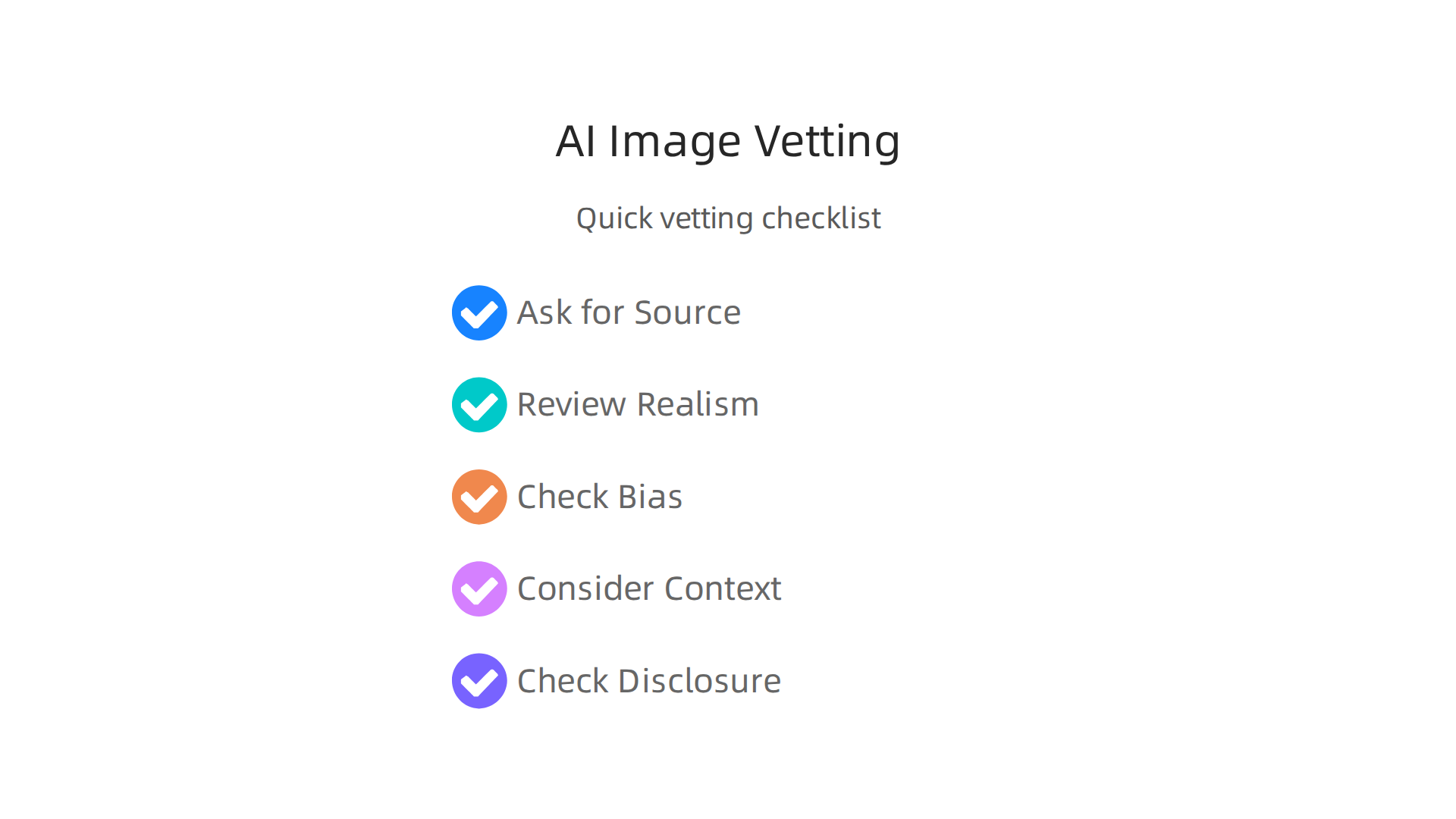
- Ask for the Source: Always ask who or what created the image. If it’s AI-generated, ask which tool was used.
- Review for Realism (and Too Much Realism): Does the
pic of artificial intelligencelook too perfect, or have strange details that don’t quite make sense? Sometimes AI images can be so flawless they look fake, or they might have small errors like extra fingers or odd shadows. - Check for Bias: Does the
artificial intelligence imageshow a fair and diverse view? Or does it seem to favor certain groups or ideas, like we talked about before? If you see apicture on artificial intelligencethat looks biased, it’s a warning sign. - Consider the Context: Where is this image going to be used? In a formal report, a public statement, or just an internal draft? The more important the use, the more carefully it needs to be checked.
- Look for Disclosure: Ideally, any AI-generated image should be clearly labeled as such. If it’s not, you should ask why.
By using these simple steps, leaders can better understand and trust the picture of artificial intelligence they use. Being careful about AI images is part of being a responsible leader in 2026. The overall artificial intelligence market is very large, expected to reach trillions of dollars by 2034, showing just how important these tools will become in every part of business and life Artificial Intelligence Market Size & Industry Report 2034.
Being careful about AI images is part of being a responsible leader in 2026. The overall artificial intelligence market is very large, expected to reach trillions of dollars by 2034, showing just how important these tools will become in every part of business and life. But what does this really mean for how businesses operate and communicate?
Strategic implications: risk, opportunity, and communications strategy
The rise of AI-generated visuals brings both new dangers and exciting chances for leaders.
If a company doesn’t handle a picture on artificial intelligence correctly, it can face big problems.
First, there are risks.
- Regulatory Risks: Governments are starting to make rules about AI. If you use an
artificial intelligence imagethat isn’t properly checked for bias or if it spreads wrong information, your company could face legal trouble. Some reports discuss the challenges of managing bias in AI systems to help prevent these issues Towards a Standard for Identifying and Managing Bias in Artificial Intelligence. The use of AI systems, especially those that process visual data, also raises concerns about civil rights implications Civil Rights Implications of Facial Recognition Technology. - Reputational Risks: Imagine a
pic of artificial intelligenceused in your marketing that accidentally shows something harmful or unfair. This can really hurt how people view your company. Customers might lose trust, and your brand’s good name could suffer. Understanding and reducing AI adoption risks across different industries is key to avoiding these problems Cross-Sector Analysis of AI Adoption Risks. - Competitive Risks: If competitors are using AI images thoughtfully and effectively, and your company isn’t, you might fall behind. Or, worse, if your images are found to be misleading, you could lose your edge.
However, there are also many opportunities.
- Product Teams: AI images can help product designers create mock-ups and visualize new ideas much faster. This speeds up how new products are made and tested.
- Marketing Teams: Marketers can create endless unique visuals for campaigns, social media, and ads. This can make campaigns more personal and engaging. The market for AI image generators is growing quickly, showing how much potential there is for creative content AI Image Generator Market Report 2026. Imagine creating dynamic visuals for a new campaign quickly with AI.
- Innovation: Companies can explore entirely new ways to tell stories and present information, leading to more creative content options, like using text to video artificial intelligence drives future content creation.
To manage these, leaders need a clear communications strategy. This means talking openly about how AI images are used.
Framework for Integrating Visual-Inspection into Board-Level Briefings and Investor Materials
Leaders must make sure that checking AI visuals becomes a normal part of important company meetings. Here’s a simple framework:
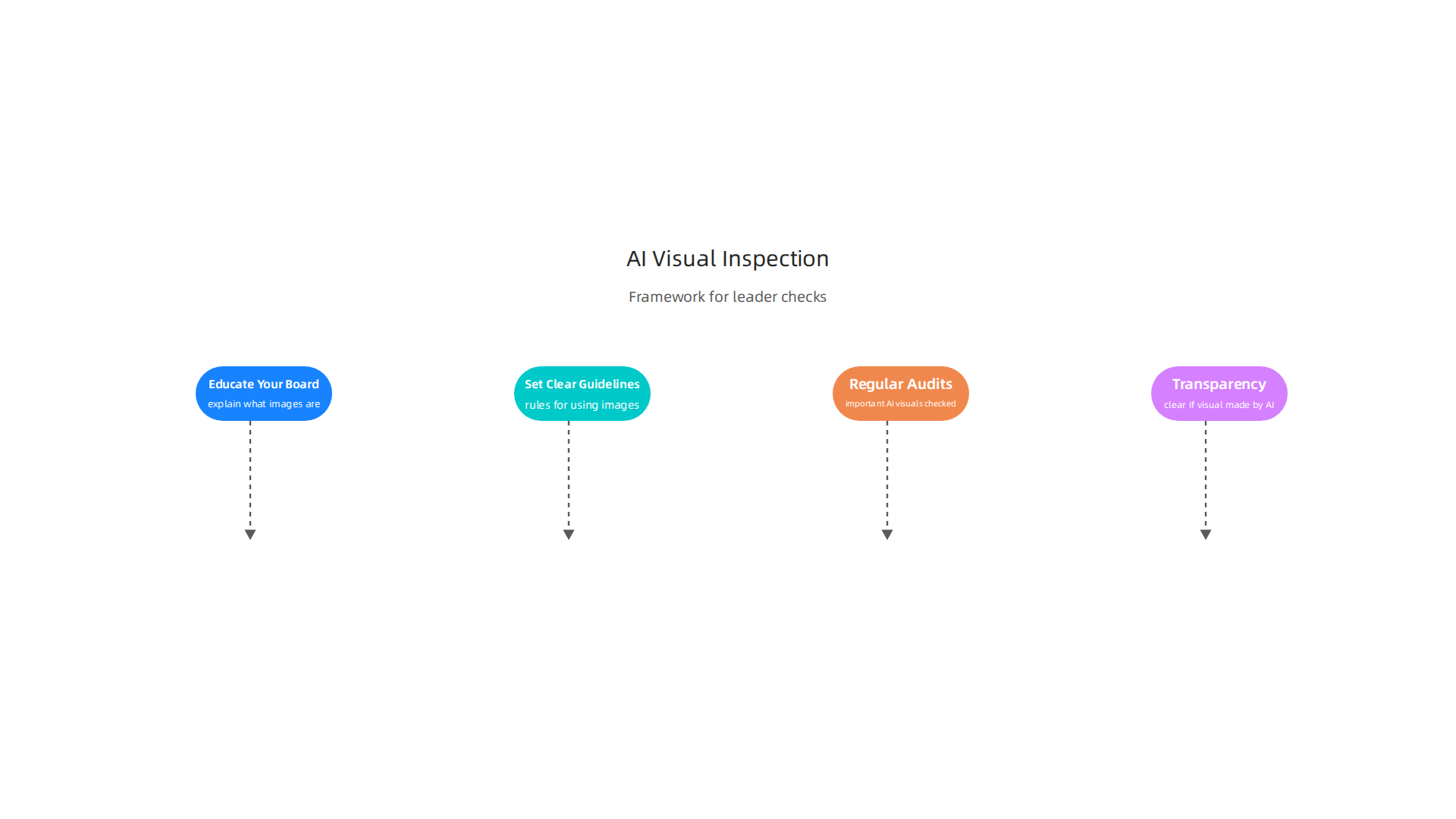
- Educate Your Board and Investors: Explain what
artificial intelligence imagesare, how they’re made, and the possible risks and rewards. Show them why careful checking is needed. - Set Clear Guidelines: Create rules for using any
picture of artificial intelligencein official documents. Who checks it? What standards must it meet? This helps everyone be on the same page. - Regular Audits: Just like financial reports, important AI visuals should be checked regularly. This helps catch any problems before they become bigger issues.
- Transparency: When presenting to the board or investors, always be clear if a visual was made by AI. Explain why it was used and how it was checked. Being open builds trust. This kind of responsible innovation is a key prediction for businesses in 2026 PwC’s 2026 AI Business Predictions.
By following these steps, leaders can wisely use the power of AI images while keeping their company safe and strong.
To stay on top of daily developments in AI and technology, consider subscribing.
The AI Newsletter Worth Reading
Summary
This article explains why the way artificial intelligence is pictured matters for leaders, communicators, and everyday users. It defines the main types of AI visuals—from illustrative stock art and data visualizations to model-generated images and UI screenshots—and shows how each origin shapes interpretation and trust. The piece compares the main generation techniques (GANs and diffusion models), explains visual tools for understanding model behavior (saliency maps, activation atlases, t-SNE/UMAP), and highlights how design choices and biased training data can mislead or reinforce harms. Practical guidance follows: provenance checks, metadata review, prompt inspection, and a short checklist leaders can use before publishing visuals. The article closes with strategic implications for risk management, communications, and board-level reporting so organizations can seize AI’s creative benefits while avoiding regulatory, reputational, and ethical pitfalls.