

Introduction
Tracking big tech stocks in 2026 feels like trying to drink from a fire hose. You have AI announcements coming every week, regulatory pressure shifting constantly, and macroeconomic signals that change direction overnight. For professionals who need to make smart decisions about where to put their attention or their capital, separating the real signal from all the noise is brutally hard.

One stock stands out as a particularly interesting case right now: IBM.
The company has been quietly reshaping itself for years, and the numbers suggest it might be working. In Q2 2025, IBM delivered revenue of $17.0 billion, up 8% year over year, beating Wall Street expectations with double-digit profit growth driven largely by its generative AI business. And the momentum carried into 2026. According to IBM’s first quarter results, revenue hit $15.9 billion, up 9% from the prior year.
That kind of growth in a legacy tech giant is worth paying attention to.
IBM is more than just one company’s turnaround story. It serves as a bellwether for how older tech firms can navigate the AI era. Understanding what’s really happening with IBM stock means looking past the headlines and digging into the data, the strategy, and the market forces at play.
That’s exactly what this article does. We will break down IBM’s recent performance, its positioning in AI and cloud, and what it all means for investors and industry watchers alike.
If you want to stay ahead of the biggest moves in Big Tech without drowning in daily noise, you can subscribe to The Deep View Newsletter for clear, daily AI updates delivered straight to your inbox.
The State of IBM Stock: A 2026 Financial Performance Overview
The numbers back up the story. IBM has been quietly putting up some of the best growth numbers in its recent history. In Q2 2025, revenue hit $17.0 billion, up 8% year-over-year with double-digit profit growth driven by generative AI source: Futurum Group. That momentum carried straight into 2026. In Q1 2026, IBM reported $15.9 billion in revenue, up 9% from the prior year (6% at constant currency) source: IBM Newsroom.
Gross profit margin also improved to 56.2%, a solid gain of 100 basis points.
On the stock side, IBM shares have been trending higher in 2026, supported by stronger earnings per share and healthy free cash flow. The company’s dividend yield remains above 3%, which still appeals to income-focused investors. Valuation multiples have expanded slightly, but not to crazy levels compared to other big tech names. You can track the full earnings history on the Nasdaq IBM earnings page.
What is driving this performance? Three catalysts stand out.
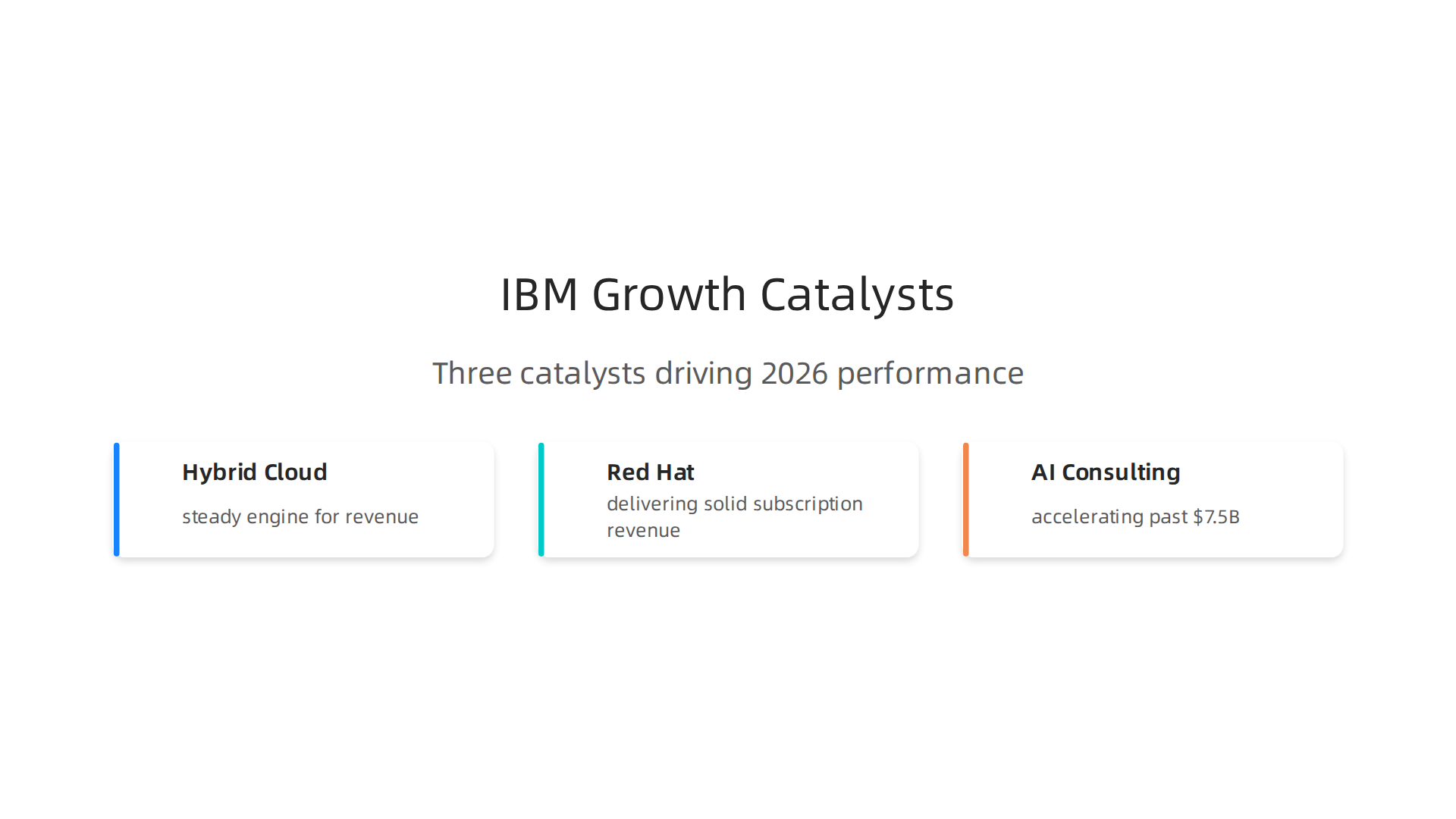
First, hybrid cloud growth continues to be a steady engine. Second, Red Hat keeps delivering solid subscription revenue as more companies standardize on its platform. Third, AI consulting revenue is accelerating fast, with IBM’s generative AI book of business now past $7.5 billion. These three pillars give IBM stock a more balanced and less volatile profile than some of the higher-risk names in the sector.
If you want to keep tracking IBM and other big tech movers without digging through dozens of news sites each day, there is an easier way.
Revenue Breakdown by Segment
IBM splits its revenue into four parts: Software, Consulting, Infrastructure, and Financing.
The big news for ibm stock investors is that the mix is shifting toward higher margin areas.
Software is the engine. Led by Red Hat and AI platforms, it grew 11% in Q1 2026 source: IBM Newsroom. This segment has the best margins and recurring subscription revenue.
Consulting is the second growth driver, especially generative AI work. IBM’s AI book of business has passed $7.5 billion source: Futurum Group. Hybrid cloud consulting keeps customers locked in for years.
Infrastructure and Financing are shrinking. That is actually a good sign. IBM is moving away from low margin hardware into software and services. This shift helped push gross margins to 56.2% in Q1 2026.
This balanced segment mix sets IBM apart from stocks that depend on one hit product, like rivian stock or nio stock. IBM gets steady revenue from many sources. That stability shows up in its 3% dividend and consistent earnings.
Want to track how big tech shifts affect your portfolio? Subscribe Free to The Deep View Newsletter for clear daily AI and tech analysis.
Earnings Growth and Profitability Trends
IBM’s earnings are getting stronger.

In Q1 2026, the company reported GAAP earnings per share (EPS) of $2.85, up from $2.44 a year earlier source: IBM Newsroom. Non-GAAP EPS came in at $3.50, beating analyst expectations. The margin story is also good. Gross margin hit 56.2%, up 100 basis points. That shows IBM’s shift to software is paying off.
Free cash flow is another bright spot. IBM generated over $2 billion in free cash in Q1 2026. This cash supports the 3% dividend and share buybacks. Many tech companies with big AI promises, like some talked about on nebius stock reddit, don’t have this kind of cash generation. IBM’s profitability looks better compared to past years. In 2021, margins were below 50%. Now they are consistently above 56%.
Compared to rivian stock, which is still losing money, or nio stock, which burns cash, IBM’s steady profit is a big difference. Even baba stock faces more uncertainty from regulation. IBM offers reliable earnings growth.
For investors who want to track these trends without the noise, getting a clear daily summary helps. Get Free Updates from The Deep View Newsletter for simple daily AI insights.
Broader Tech Market Trends: How IBM Fits Into the Big Picture
The S&P 500 Information Technology sector has been on a strong run in 2026. The index recently traded around 6,662 source: S&P Dow Jones Indices. Over the past 12 months, it has jumped by about 48.7% source: Investing.com. That is a huge gain.
But here is the catch: the sector now trades at a P/E ratio of roughly 35.82 source: WorldPE Ratio.
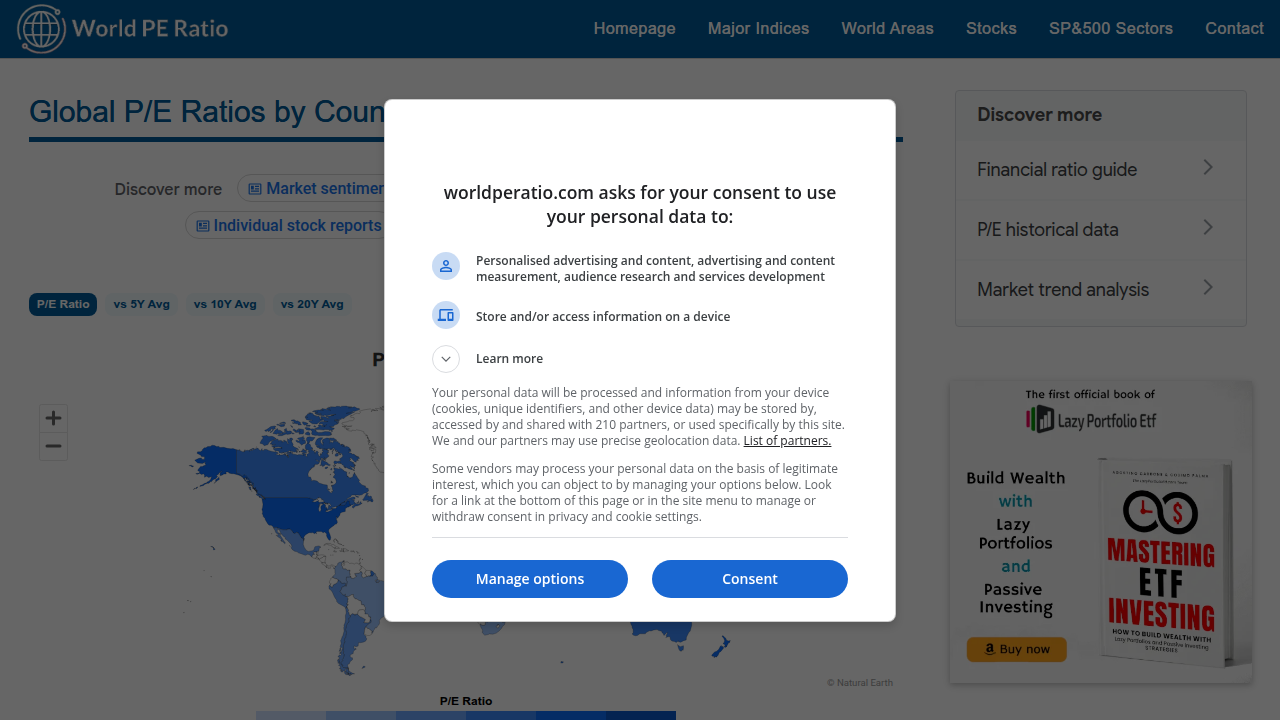
That is expensive. It means investors are paying a big premium for growth. Some of the best performers so far in 2026 include Sandisk and Texas Pacific Land source: Barchart, not the legacy tech giants.
This creates a rotation pattern. Money is moving between growth and value. High-growth names like those discussed on nebius stock reddit are risky. Meanwhile, rivian stock, nio stock, and baba stock all face their own headwinds. That is why some investors look for steadier options.
IBM stock fits here as a legacy enterprise value play. It does not have the hype of AI startups. But it has real earnings, a 3% dividend, and a growing software business. In a market where the tech sector is priced for perfection, IBM offers a cheaper, safer alternative.
To track these market shifts without the noise, Get Free Updates from The Deep View Newsletter for simple daily AI and tech insights.
Sub-Sector Spotlight: Cloud, AI, and Enterprise Software
Let us look at a key area where ibm stock really stands out from the crowd. The cloud and AI sectors have been driving most of the tech market’s gains. Stocks tied to these trends often trade at very high prices. Right now, the S&P 500 Information Technology sector trades at a P/E ratio near 36 source: WorldPE Ratio. That is expensive by any measure.
This creates a clear split between two types of companies. On one side, you have the high growth names. Think of the buzz you see around nebius stock reddit or the ups and downs of rivian stock, nio stock, and baba stock. These can shoot up fast, but they can drop just as quickly.
On the other side, you have IBM. Instead of chasing that same hype, IBM takes a different path. The company focuses on hybrid cloud and enterprise AI. It helps large organizations run their operations smoothly across multiple clouds and inside their own data centers. This approach is less flashy than a pure AI startup. But it creates stable, long term contracts and predictable cash flow.
That steady revenue is exactly why IBM can offer a solid 3% dividend. In a market where so many tech sub-sectors are priced for perfection, IBM gives you a grounded way to invest in cloud and AI trends without taking on extreme risk.
Want to track these important sub-sector shifts and make smarter decisions? Subscribe to Big Tech News Today for daily analysis delivered straight to your inbox.
AI and Cloud Computing: The Engines Behind IBM’s Transformation
So how does IBM actually make money from all this? The answer lies in two connected parts: AI and cloud computing.
On the AI side, IBM built Watsonx, its own platform for enterprise AI.
This includes the Granite family of large language models. These models are designed to be more efficient and trustworthy than general purpose AI tools. The goal is not to compete with consumer chatbots. It is to help businesses deploy AI safely inside their own operations.
AI adoption is spreading faster than ever. The 2026 AI Index Report from Stanford HAI shows that generative AI has already reached 53% of consumers. Companies are now racing to use AI to cut costs and boost productivity. IBM positions its tools exactly for this corporate demand.
The second piece is cloud growth. IBM Cloud and Red Hat OpenShift act as the foundation for running AI workloads. Most big companies do not run everything on one public cloud. They use a mix of private data centers and multiple cloud providers. OpenShift lets them manage all of that from one place. That makes it a natural home for running Watsonx and Granite models.
Here is the honest truth about ibm stock in 2026. The market has massive expectations for AI related spending. BlackRock expects another $5 to 8 trillion in AI capex through 2030. But investors have also been punishing stocks that do not show immediate AI revenue. Morgan Stanley recently noted that fears about AI disruption are overblown for many software companies. IBM sits right in the middle. Its AI revenue is growing, but it is still a small piece of the total pie compared to cloud services and consulting.
For investors, this means ibm stock offers a way to bet on the AI boom without betting on a pure hype stock like nebius stock reddit or baba stock. The transformation is real, but it takes time.
Want to keep up with how AI and cloud trends affect your portfolio? Get Free Updates from The Deep View Newsletter for simple daily AI insights.
AI Monetization: From Hype to Revenue
The big question every investor asks about ibm stock is simple. Is the AI revenue real or just more hype?
Let us compare. Microsoft pushes Copilot into every Office product. Amazon sells Bedrock to AWS customers. Both have massive scale. But here is what separates IBM. Its AI is built for the boring stuff. Data governance. Security. Regulatory compliance.
That matters more than you think. A bank cannot just plug a chatbot into its customer database. It needs control over where data lives and who sees it. IBM’s Watsonx and Granite models give enterprises exactly that. The PwC 2026 AI Predictions show that focused, responsible AI strategies are driving real business value. IBM fits that trend perfectly.
Skeptics say IBM’s AI growth is just a short-term catalyst. They point to companies like baba stock or nio stock that also talk big about AI. But Morgan Stanley recently noted that fears about AI disruption are overblown for many software companies. The key difference is IBM’s existing relationships. Thousands of banks, hospitals, and governments already trust IBM. Selling them AI is much easier than finding new customers.
For investors watching rivian stock or nebius stock reddit for AI exposure, remember this. IBM’s AI monetization is slower but steadier. The hype cycle will fade. Relationships and compliance will not.
Want clear daily AI insights without the noise? Subscribe Free to The Deep View Newsletter.
Regulatory and Macroeconomic Headwinds Affecting Tech Stocks
So what could slow down the AI money train in 2026? Regulators are the biggest wild card.

Think about the pressure piling up. The EU is enforcing the Digital Markets Act. The US is pushing multiple antitrust cases against Big Tech. According to the 2026 Antitrust Year in Preview from Wilson Sonsini, the pace of these cases is only speeding up. The FTC is relying on Section 2 of the Sherman Act to go after monopolies, as covered in this analysis of transatlantic antitrust scrutiny.
Here is where ibm stock stands out. IBM is not a social media giant or an ad platform. The new antitrust tools being developed for algorithmic markets, as discussed in this law review on algorithmic antitrust, hit companies like Meta and Google much harder. IBM’s main regulatory challenge is data privacy, not monopoly accusations.
Now factor in the interest rate environment. High rates hurt high growth stocks like nio stock or rivian stock because their future profits are worth less today. But IBM pays a solid dividend and has steady cash flow. That makes it more of a value play. When rates stay elevated, value tends to win.
Trade risks add another layer. New chip bans and tariffs hit hardware heavy companies. The Global Antitrust Enforcement Outlook 2026 from Hogan Lovells shows that broader policy goals are now baked into enforcement. That means more supply chain headaches for companies like baba stock that rely on cross border tech trade.
For investors watching nebius stock reddit threads for AI plays, remember this. Regulations may actually help IBM. Banks and governments need compliant AI. IBM already fits the bill.
Want to stay ahead of these regulatory shifts? Get Free Updates from The Deep View Newsletter.
Antitrust and Data Privacy Landscape
Specific legal battles are reshaping how investors value big tech in 2026. The FTC is pushing multiple antitrust cases against Google and Meta. According to the 2026 Antitrust Year in Preview from Wilson Sonsini, the pressure on these companies is only increasing.

This creates heavy uncertainty for their stocks.
But ibm stock sits in a different lane. IBM does not dominate a consumer market. The new antitrust tools targeting algorithms, discussed in this law review analysis, simply do not apply well to enterprise hardware and services. While buzz on Reddit communities focuses on volatile AI plays like Nebius stock, IBM offers the compliant AI infrastructure that banks and governments actually need.
New data privacy laws also play to IBM’s strengths. Compliance costs are soaring. IBM’s consulting arm helps businesses navigate these very regulations. That is a clear advantage in 2026.
Want to stay ahead of these regulatory shifts? Get Free Updates from The Deep View Newsletter.
Interest Rates and Inflation: Valuation Effects
You might be watching interest rates climb and wondering how that hits your portfolio. Here is the simple truth for ibm stock.
High growth stocks like some names you might see on Reddit or hear about in the AI hype cycle get crushed when rates rise. This includes speculative plays people compare to nebius stock reddit chatter or even growing automakers like rivian stock and nio stock. Their future earnings get heavily discounted. But IBM is a different story.
IBM is a value stock with steady cash flow. It pays a solid dividend. When rates go up, value stocks like IBM often hold up better. Investors start looking for safety and income.
Now, let us talk about the two big concerns.
IBM’s debt profile is manageable. The company has a large amount of long-term debt. But a big chunk of it is at fixed rates. This means IBM does not get slammed every time the Fed moves. The interest expense stays mostly predictable.
Inflation cuts both ways for IBM.
Higher inflation does raise IBM’s labor costs for its consulting arm. That is real. But here is the key. IBM has strong pricing power. Businesses urgently need help with cloud migration and AI compliance. So IBM can pass those higher costs along.
This makes IBM a more resilient play compared to the volatile swings of something like baba stock or other high beta names.
Want to track these macro trends and their impact on the biggest tech players? Subscribe Free to The Deep View Newsletter.
Expert Analyst Outlooks: Where Is IBM Stock Headed?
So what do the experts actually think about ibm stock in 2026? The consensus is surprisingly positive for a company people sometimes call boring.
As of May 2026, Wall Street sentiment leans bullish. According to a survey of 12 analysts on WallStreetZen, the consensus rating is Buy, with 25% of analysts issuing a Strong Buy recommendation. The average one year price target sits around $286.67. MarketBeat reports a slightly higher average target of $294.41, with some firms like RBC Capital setting a target as high as $300.00 after a strong Q1 beat in 2026.
The bullish case for IBM in 2026
Analysts point to three main drivers here.
First, the hybrid cloud and AI services are sticky. Companies that have already built their infrastructure on IBM’s Red Hat platform are unlikely to switch. This gives IBM recurring revenue that keeps growing.
Second, the dividend is safe and growing. IBM has raised its dividend for over 25 consecutive years. That attracts income focused investors when markets get shaky.
Third, margins are expanding. IBM is cutting lower margin businesses and focusing on high margin software and consulting. This should lead to better profitability over time.
The bearish case for IBM
Not everyone is convinced.
Some analysts worry about slow revenue growth. IBM is not a high flyer like rivian stock or other speculative names. Its top line grows at a modest pace compared to pure cloud players like AWS or Azure.
Competitive pressure is real. IBM faces fierce competition from Microsoft, Google, and Amazon in cloud and AI. And while consulting margins are improving, they remain lower than software margins.
Macro sensitivity also matters. If the economy slows, businesses might delay large consulting contracts. That would hit IBM’s revenue harder than a pure software company.
Overall, the experts see IBM as a steady ship rather than a rocketship. That fits the current market mood where safety often wins over hype.
Want to track how these analyst outlooks shift with real time market data? Subscribe Free to The Deep View Newsletter for daily analysis.
Bullish vs. Bearish: A Balanced View
After looking at the analyst targets, you might wonder which side makes more sense. Both have real points worth weighing.
The bull case starts with quality. IBM is a Dividend Aristocrat with over 25 straight years of dividend increases. Its free cash flow is strong and growing. That cash helps fund the dividend and also fuels AI investments. On valuation, ibm stock trades at a reasonable multiple compared to high growth names like rivian stock or speculative plays you might see in nebius stock reddit threads. The AI tailwind is real too. IBM’s watsonx platform is finding paying customers in healthcare and finance.
The bear case is just as real. IBM carries a legacy drag from older businesses that still hold back growth. The company faces brutal competition from hyperscalers like Amazon, Microsoft, and Google. Each of these giants spends more on AI in a quarter than IBM does in a year. That raises questions about AI spending ROI. Can IBM really keep up? Risk factors like currency fluctuations, pension obligations, and a slow growth ceiling all add weight to the bear argument.
In short, ibm stock offers safety and income, not speed and hype. That makes it a different kind of bet than nio stock or baba stock. It might be the right fit for investors who value consistency over moonshots.
Want to see how these competing views play out with real market data? Subscribe Free to The Deep View Newsletter for daily AI and tech analysis.
IBM vs. Peers: A Comparative Performance Analysis
How does IBM actually measure up against its biggest rivals like Microsoft, Amazon, Google, and Oracle? The numbers help clear things up.
IBM’s operating profit margin jumped to 17.50% in 2025, a real sign of better efficiency (Stock Analysis on Net). Its free cash flow reached $14.73 billion that year, giving it a strong 21.8% margin (TIKR). That cash supports both the dividend and AI spending. Still, growth is slower. For 2026, analysts expect just 5% revenue growth and 8% EPS growth (Investing.com). That is far behind the double digit growth of hyperscale cloud players.
On valuation, IBM trades at roughly 20 times forward earnings if it hits 7% long-term EPS growth (Barchart). That is cheaper than Microsoft or Amazon but reflects slower growth. Strategically, IBM focuses on hybrid cloud and AI for regulated industries. It does not fight for consumer cloud dollars. Instead, it positions itself as a trusted partner for big enterprises.
For investors, ibm stock offers a mix of income and value. It is not a high growth story, but for steady dividends and reasonable pricing, it holds its own. Stay on top of how these tech giants compare by grabbing quick daily updates. Subscribe Free to The Deep View Newsletter.
Peer Metrics at a Glance
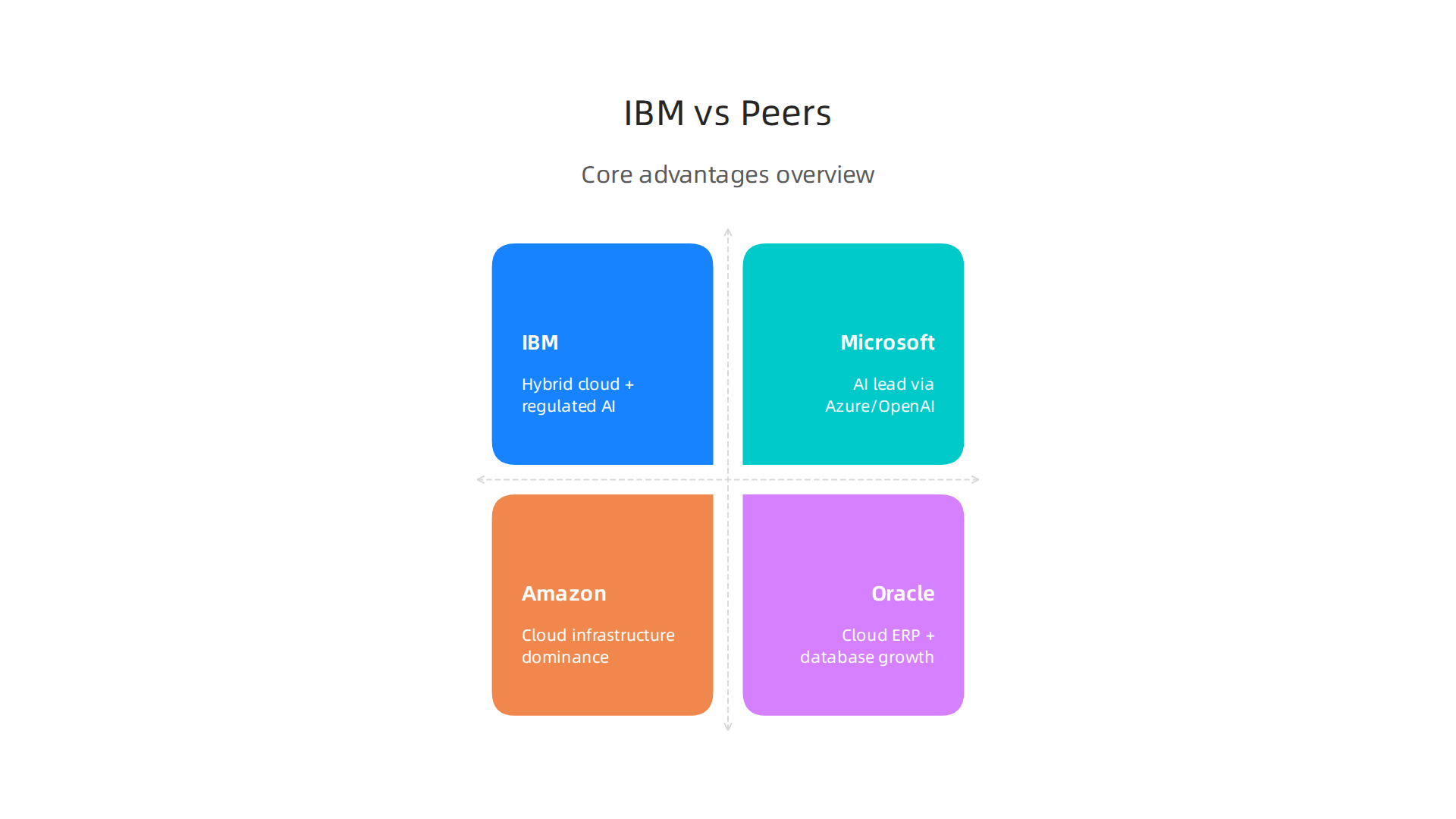
How does IBM stack up against its biggest rivals? Here is a quick look at the key differences.
| Metric | IBM | Microsoft | Amazon | Oracle |
|---|---|---|---|---|
| 2026E Revenue Growth | 5% | 15%+ | 12%+ | 10%+ |
| Core Advantage | Hybrid cloud + regulated AI | AI lead via Azure/OpenAI | Cloud infrastructure dominance | Cloud ERP + database growth |
| Forward P/E | ~20x | ~30x+ | ~35x+ | ~25x+ |
| FCF Margin | 21.8% | ~35% | ~20% | ~25% |
Here is the takeaway. Microsoft leads in AI, with Azure eating up enterprise share. Amazon owns the cloud infrastructure market. Oracle has found new life with cloud database growth (TradingView). IBM, meanwhile, offers a cheaper valuation at roughly 20 times forward earnings (Barchart).
The risk? Slower growth. IBM is not going to double your money overnight. But the value is in stability, strong free cash flow, and a dividend you can count on.
Want to track how these giants compare every day without the noise? Get Free Updates from The Deep View Newsletter.
Summary
This article examines IBM stock in 2026, showing how a legacy tech company has staged a quiet turnaround by shifting into higher‑margin software, hybrid cloud, and enterprise AI services. It reviews recent financial results—strong revenue and margin improvements, rising EPS, and solid free cash flow—while explaining the three main growth pillars: software (led by Red Hat), consulting (AI projects), and hybrid cloud infrastructure. The piece balances the bullish case (sticky enterprise contracts, expanding margins, a 3% dividend) against bearish pressures (slower top‑line growth, competition from hyperscalers, and macro/regulatory risks). It clarifies how IBM monetizes AI via Watsonx and Granite models for regulated industries, why that matters for customers, and how investors should weigh valuation versus growth. Readers will come away able to compare IBM with Microsoft/Amazon, judge key risks, and decide whether IBM fits a value‑oriented portfolio focused on income and steady AI exposure.