

Introduction: The Noise Before the Signal
The stock market feels louder than ever in 2026. A single Big Tech earnings report can send the vix stock spiking in seconds. A surprise regulatory ruling or a sudden wave of reddit stock chatter can swing mood overnight. If you are only watching the traditional "fear gauge" without understanding the new drivers, you might be missing the real story.
The VIX measures the market’s expectation of volatility over the next 30 days. It is derived from S&P 500 index options. As explained in a detailed 2026 guide, a reading of 20 means traders expect a 20% annualized swing in the S&P 500. But here is the truth: in 2026, the S&P 500 is heavily dominated by a handful of mega-cap tech firms. This means sharp movements in the vix stock often reflect tech-specific uncertainty just as much as general market fear.
Whether it is a huge regulatory fine, a surprise AI launch, or shifts in emerging sectors (like smr stock or areas influenced by michael saylor news), the connection is powerful. Understanding this link is the first step to navigating your portfolio with confidence.

This article unpacks the VIX-Big Tech correlation so you can spot the difference between real risk and transitory noise.
To make smart moves, you need tools that clear the fog. Learning how to cut through the noise with the right market signals is essential for staying ahead.
Staying informed daily builds this skill. A clear, concise briefing on AI and Big Tech helps you see the real signals before the crowd reacts. Get clear daily AI updates from The Deep View Newsletter for insights that matter.
Decoding the VIX: Beyond the ‘Fear Gauge’ Label
You hear "VIX" thrown around on financial news all the time. Usually it gets called the "fear gauge." But what does that really mean? And more importantly, does it still mean the same thing in 2026?
Let us strip it down. The VIX is a volatility index derived from S&P 500 index options. It measures the market’s expectation of how much the S&P 500 will swing over the next 30 days. As one 2026 guide explains, a VIX reading of 20 means traders expect a 20% annualized change in the index. That number comes from the prices of put and call options. The higher the demand for protection, the higher the VIX goes.
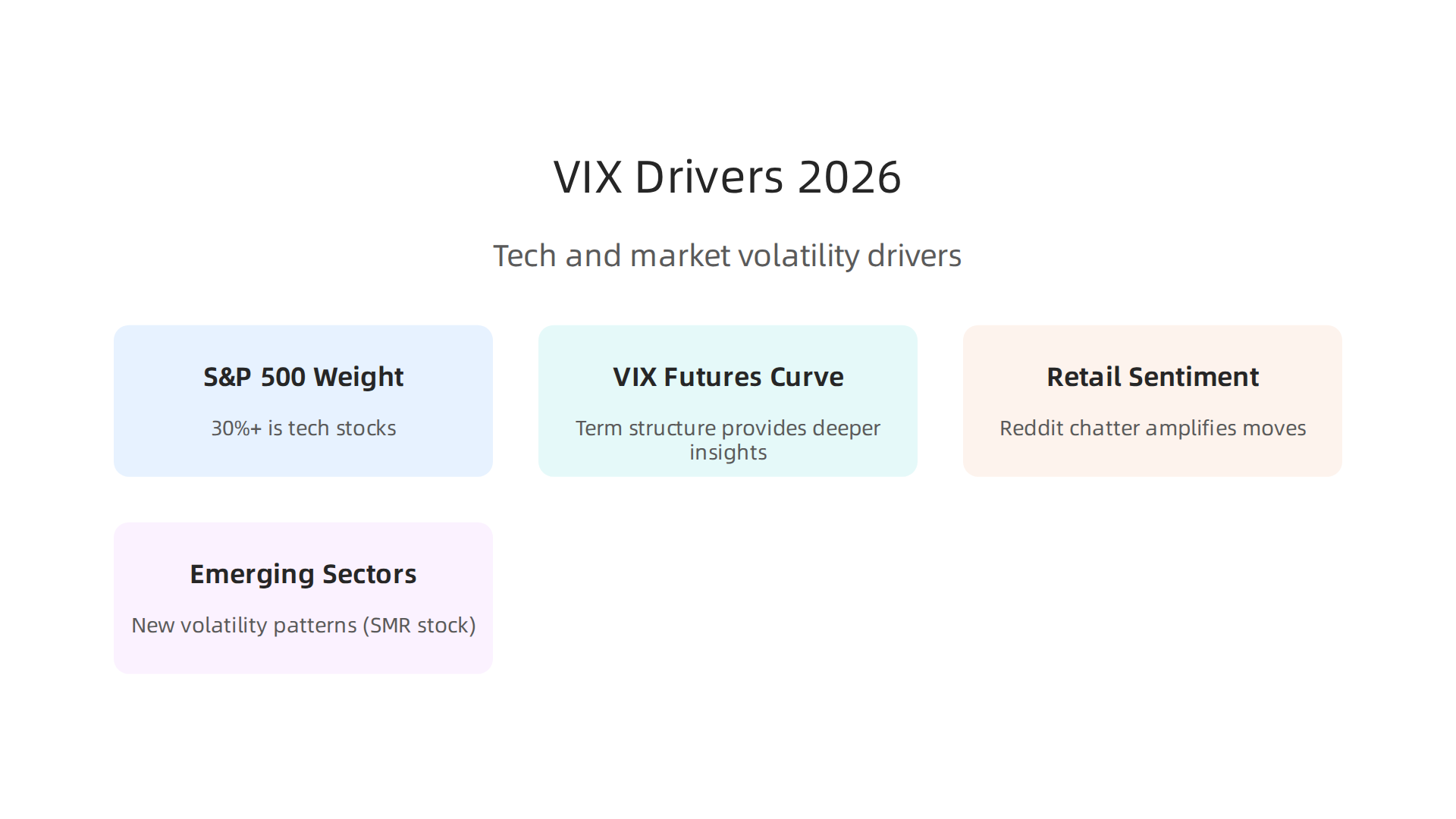
But here is the thing. That neat story about the "fear gauge" hides a much messier reality. In 2026, technology stocks now make up more than 30% of the S&P 500’s total weight. That means the VIX is not just measuring general market fear. It is increasingly a tech volatility index.
So when you see a spike in the vix stock, you need to ask: is the whole market panicking, or is this just tech moving the needle?
A single piece of michael saylor news about MicroStrategy buying another massive bitcoin pile can drive tech stocks down and send the VIX higher. A surprise AI launch or a sudden regulatory crackdown on a mega-cap firm does the same thing. The headline number does not tell you why.
To get the real story, you have to look deeper. The VIX futures curve and term structure give you much more useful information than the spot level alone. When the VIX is high but the futures curve is in steep contango, it often means the spike is short-term and driven by a specific shock (often tech). When backwardation sets in, the market is pricing in sustained fear. Understanding this structure is what separates informed investors from those who just react.
Retail sentiment also plays a bigger role than ever. A sudden wave of reddit stock chatter can amplify intraday moves in tech names, feeding back into VIX calculations in ways the original models never accounted for. At the same time, emerging sectors like smr stock (small modular reactor companies) bring their own volatility patterns that barely existed a few years ago.
The takeaway? Do not let the VIX headline fool you. In 2026, you need to read the full signal, not just the label. Start by watching the futures curve. Then connect the dots to the specific sectors driving the move.
To stay ahead of these shifts, you need daily intelligence that cuts through the noise. The Deep View Newsletter delivers clear, concise AI and tech analysis each day. Get clear daily AI updates from The Deep View Newsletter and start seeing the signals before the crowd reacts.
So who is really driving the VIX in 2026? The answer is not the broad market. It is a handful of platform giants: Apple, Microsoft, Nvidia, Alphabet, and Amazon. These five companies now make up an overwhelming share of the S&P 500’s total market cap. When one of them moves, the whole index flinches. And that move shows up in the vix stock number instantly.
Think about it. Nvidia drops 4% on an earnings miss. That single event pushes the S&P 500 down and sends the VIX climbing. The same happens when Apple faces a supply chain scare or Alphabet gets hit with a new antitrust complaint. The Cboe Implied Correlation index measures exactly how tightly these stocks move together. When correlation rises, a one-stock selloff becomes a market-wide volatility event. That is why tracking individual mega-cap stocks is now essential for understanding the VIX.
Earnings season has become a predictable volatility trigger. Options markets price in bigger swings around reports from Apple, Nvidia, and Amazon. The week before a key earnings release, implied volatility for those single stocks can jump significantly. That feeds directly into the VIX calculation. The same pattern happens during major regulatory news cycles. A new AI policy announcement from Washington or a surprise ruling on a tech merger can spark a VIX spike that lasts for days.
Sophisticated traders watch for these patterns. They know that a tech headline often leads the VIX by a few hours or even a full trading day. Understanding that lag helps with timing entries and exits. You can see the stock move first, then wait for the VIX futures curve to confirm whether it is a short-term blip or something bigger.
To stay ahead of these shifts, you need daily analysis that cuts through the noise. Big Tech News Today helps you focus on the moves that matter. And if you want to see how retail sentiment from communities like Reddit can amplify these moves, check out our guide to WallStreetBets and Reddit sentiment. The VIX is not just a fear gauge anymore. It is a tech stock gauge. Learn to read it that way.
The Earnings Season Amplifier
Here is where the VIX really feels the tech industry’s pulse. Earnings season for the mega-caps is no longer just about beats and misses. It has become a scheduled volatility event. Data from 2025 shows that the VIX tends to climb noticeably during the weeks when Apple, Nvidia, and Amazon report. One reason is the options market. Traders buy protection ahead of these reports, which pushes up implied volatility. This creates a premium that often fades right after the news drops. A review of 2025’s volatility catalysts shows how predictable these spikes have become.
But in 2026, a new flashpoint has appeared. AI spending disclosures. When a company like Microsoft or Alphabet announces a bigger-than-expected capital expenditure on AI data centers, the market reacts instantly. The same thing happens when a firm reveals disappointing model performance or slower adoption. These single data points can send the whole sector into a spin. That is why the vix stock now moves on things like a cloud revenue miss or an AI chip order update.
If you want to see which stocks are causing these swings in real time, check out our list of biggest movers today in big tech stocks. It helps you spot the names that will likely drive the next VIX spike.
Regulatory Rumblings and VIX Spikes
Regulatory news doesn’t just worry tech companies. It hits the vix stock fast. In 2026, a surprise antitrust ruling or a new EU fine can push the VIX up by 5 to 10 points within hours. That is a big move in a short window.
The key factor is surprise. When a breakup order or an export control announcement comes out of nowhere, the spike is much bigger than it would be for a widely expected decision. This non-linear reaction makes regulatory risk especially dangerous for traders. A special analysis on volatility signals from the CFA Institute explains how unexpected policy events can cause outsized market reactions.
Institutional investors now call regulatory risk the number one tail risk for big tech in 2026. That is a big deal. It means the vix stock could stay elevated for longer periods as these cases drag on. And when the VIX gets above 25, history shows there is a 76% chance it will stay elevated or climb further. That is a serious warning for anyone holding tech positions.
For a look at how retail traders on platforms like Reddit react to these jolts, check out our guide on WallStreetBets and Reddit stock sentiment. It helps you understand the chatter that often follows these regulatory shocks.
Historical VIX Spikes: Lessons from Tech Giants’ Downfalls
The Meta crash in February 2022 was a wake-up call. When Facebook’s parent company reported its first ever daily user drop, shares tanked 26% in a single day. The vix stock shot up from around 23 to over 30 in hours. It was a textbook tech specific volatility event.
Then came the OpenAI leadership crisis in November 2023. Sam Altman was fired, then rehired, all in a chaotic week. The VIX didn’t spike to 30 like it did with Meta. It barely touched 25. Here’s the thing: because the shock was contained to one company and its ecosystem, the VIX reverted back to the low 20s much faster. That pattern is crucial for traders to understand.
The Google Gemini backlash in early 2024 was similar. Controversy over AI image generation caused a PR disaster, but the VIX only crept up a few points and dropped just as quickly. Compare that to macro driven shocks like Fed rate hikes or surprise inflation data, where the VIX can stay elevated for weeks.
Why does this matter? Tech specific VIX spikes tend to revert faster than macro driven ones. Take a look at a detailed breakdown of volatility in 2025 from StockCharts. It shows that when fear is tied to a single company or product, the market shakes it off quicker. Macro shocks, like trade wars or regulatory bombs, stick around longer.
Now let’s compare the VIX reaction to two different types of events. When the Fed makes a surprise rate decision, the VIX often jumps and stays high for several days. That’s because interest rates affect the entire economy. But when a tech giant fumbles, the panic is focused. Big money rotates out of that one stock and into others. The overall market quickly finds a new balance.
Look at the Meta crash again. After the initial shock, the VIX stayed above 25 for only about two weeks before sliding back to 20. That’s a textbook mean reversion opportunity. A trader who bought VIX futures at the peak and held for a week could have profited handsomely. But timing matters. A 2026 analysis from TheStreet noted that after a VIX spike above 30, specific sectors tend to outperform in the following months. That’s the kind of data you need to act on.
So what can you do with this? First, identify whether a VIX spike is tech specific or macro driven. If the news is about one big company’s earnings miss, product failure, or leadership drama, the spike will likely reverse fast. If it comes from a policy change, a surprise election result, or a war, expect a longer volatility hangover.

Second, watch the retail chatter. Platforms like Reddit stock forums light up during these events. The panic or hype on those threads can give you a real time pulse. For a deeper look at how these communities impact prices, check out our guide on WallStreetBets and Reddit stock sentiment. It helps you separate noise from genuine signals.
Third, consider the ripple effects. During the Meta crash, some traders rotated into nuclear energy stocks like smr stock, betting on infrastructure spending. Others shifted to Bitcoin, driving a wave of michael saylor news as MicroStrategy doubled down on its crypto holdings. These cross sector moves create their own volatility patterns.
The key takeaway: not all VIX spikes are equal. Tech specific events give you a tactical window. The VIX often spikes and then fades within days. That creates opportunities for nimble traders. Macro spikes, on the other hand, demand patience. They can linger for weeks even after the news fades.
To stay on top of these sector rotations and volatility shifts, keep an eye on the biggest movers today in big tech stocks for 2026. That daily pulse can help you spot the next tech specific VIX move before it happens.
Remember the 76% rule from the prior section: once the VIX crosses 25, there is a high probability it stays elevated or climbs. But in tech specific spikes, that window tends to be shorter. Use that knowledge to plan your trades wisely.
Applying VIX Analysis to Tech Portfolio Risk Management
Now that you know how tech specific VIX spikes behave, how do you actually use the vix stock to protect your tech heavy portfolio? The answer involves three practical steps: hedging with VIX derivatives, adapting to correlation breakdowns, and timing your rebalancing.
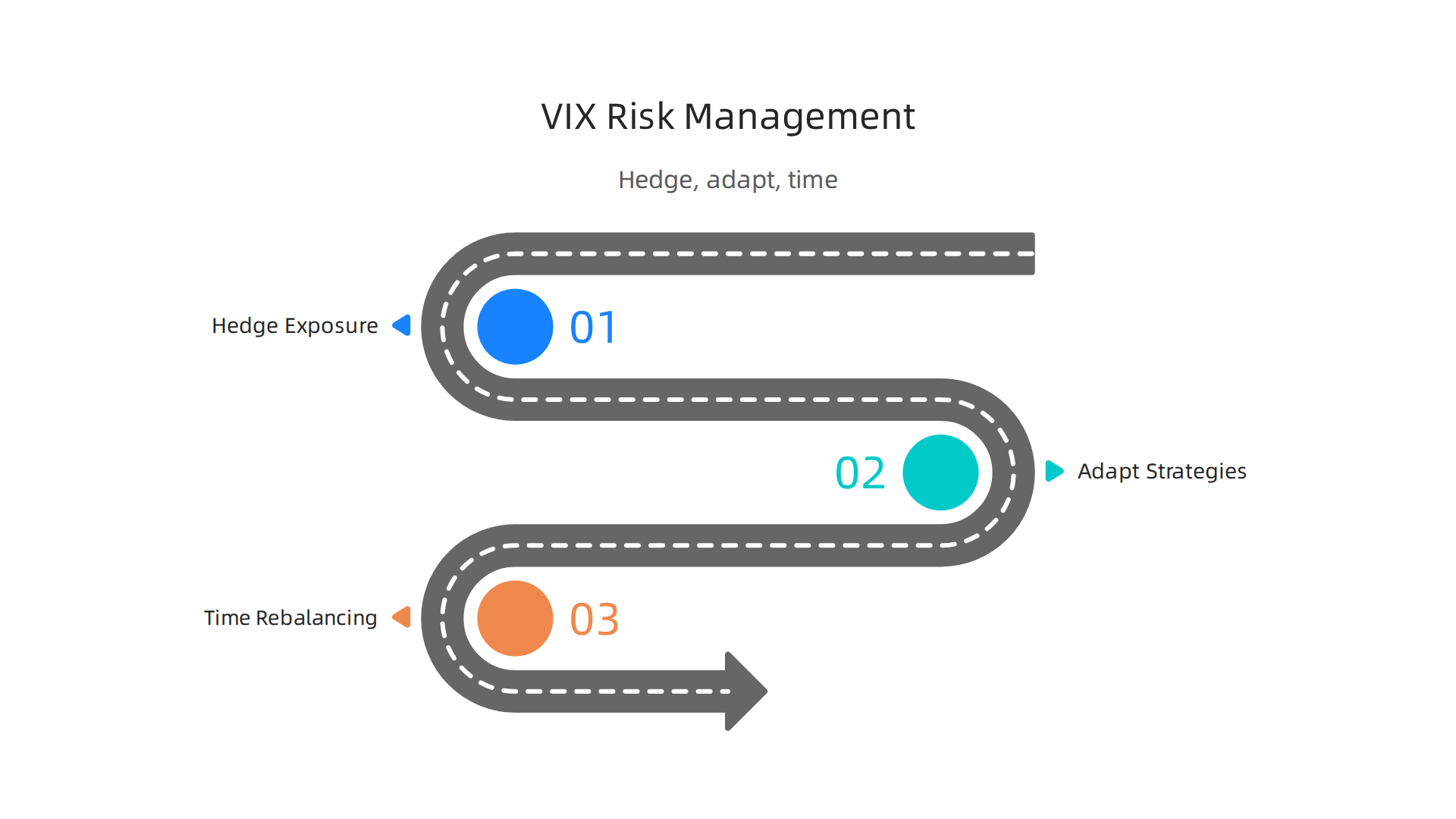
Hedging Concentrated Tech Exposure with VIX Futures and Options
If you hold a lot of big tech stocks, a sudden VIX spike can erase weeks of gains in hours. The simplest hedge is buying VIX futures or VIX call options. Here is how they work.
VIX futures let you bet on the future level of the index. When the VIX is low (say below 20), futures are usually in contango, meaning they cost more than the current VIX. That premium is the cost of insurance. You pay it to protect against a spike. For a detailed breakdown of how these contracts behave, check out this VIX futures guide. It explains contango, backwardation, and how to choose contract months.
A cheaper alternative is using VIX options, especially the vertical bull call spread. You buy an at the money call and sell a higher strike call. This caps your profit but lowers your premium. According to a 2026 guide on exploiting VIX driven options, this is a cost effective way to buy portfolio insurance.
But timing matters. As one hedging strategy article points out, you should enter early, before the crash. Waiting until the VIX is already at 30 makes options very expensive. A good rule of thumb: set a trigger at the VIX hitting 19 or 20. That is the "tripwire" many traders watch. In early 2026, a spike to 19.9 signaled a shift where high-multiple tech stocks became the primary losers, as reported by The Chronicle Journal.
When the VIX-Tech Correlation Breaks Down
Here is the tricky part. During extreme events like a recession or a geopolitical shock, the normal relationship between the VIX and tech stocks can break. For example, when the VIX surged to 27.44 in March 2026 due to geopolitical tensions, even defensive tech names got hit. The Evrim Ağacı report noted that the spike was broad based, not tech specific.
In those cases, a VIX hedge might not be enough. You need adaptive strategies. One approach is dynamic hedging, where you adjust your VIX exposure based on real time signals. For instance, during the February 2026 AI "SaaSpocalypse" rotation, the VIX hit 22.96 and Microsoft shares slid 1.3%. But the rotation also created opportunities in value stocks and nuclear energy plays like smr stock. At the same time, Bitcoin surged as some traders fled growth stocks, driving michael saylor news about MicroStrategy’s continued accumulation.
So when the VIX tech link weakens, diversify your hedges. Use index put options on the QQQ or SPY instead of pure VIX products. A 2026 guide on hedging with index puts recommends this approach. You can also allocate 2 to 5 percent of your portfolio to volatility ETFs like VIXY or UVXY, as suggested by Kavout’s market lens.
Improving Risk-Adjusted Returns with Volatility Timing
The real edge comes when you incorporate VIX timing into your rebalancing rules. Instead of rebalancing on a fixed calendar schedule, do it when the VIX gives you a signal.
Here is a simple rule based on history. When the VIX spikes above 30, it often precedes a rally in growth sectors. An analysis from AInvest shows that after such spikes, overweighting tech can boost returns. So if you are managing a tech portfolio and the VIX hits 30, consider adding to your position rather than cutting it. That is counterintuitive, but it works.
Conversely, when the VIX stays stubbornly low (below 16) for weeks, that is a warning sign. Complacency often precedes a shock. In that environment, start building your hedge. Use the futures curve to time entry. When the curve is steep in contango, waiting for a dip in futures prices can lower your cost.
For daily updates on which big tech stocks are moving and how volatility shifts affect them, follow our biggest movers today in big tech stocks for 2026 tracker. It helps you spot the next VIX trigger before it hits.
The bottom line: the vix stock is not just a fear gauge. It is a tactical tool. Use VIX futures and options as cheap insurance during calm periods. Adapt your hedge when the correlation breaks down. And rebalance based on volatility timing to capture upside after spikes. That is how you turn volatility from a threat into an advantage.
Expert Tactics: Contrarian Signals and Sentiment Timing
You now know how to hedge with VIX derivatives and adapt when correlations break. But here is where the real edge lives. The vix stock itself sends powerful signals when it hits extreme levels. And if you combine those signals with what the crowd is saying on social media or in options flow, you can time your tech portfolio moves with much more confidence.
Extreme VIX Readings as Contrarian Signals
When the VIX spikes above 40, fear is off the charts. Everyone expects a crash. But history shows that these moments often mark a bottom for tech stocks. The market tends to mean revert. In other words, extreme fear is a buy signal for long term investors.
On the flip side, when the VIX drops below 12, that means complacency. Everyone feels safe. That is often a warning sign that a shock is coming. As one guide on what is VIX in 2026 explains, the index measures expected annualized volatility. A reading of 12 means the market expects very little movement. And that expectation is often wrong.
For tech heavy portfolios, these extremes work especially well. When the VIX was low in late 2025, many investors stayed all in on AI stocks. Then the early 2026 shakeouts hit hard. Those who watched the VIX under 12 as a warning could have trimmed positions early.
The key is to act against your gut. Going against the crowd is the core idea behind any contrarian trading approach. You buy when others are terrified and sell when they are comfortable.

A real world example: in early 2026, Morgan Stanley released contrarian investment views that suggested rotating out of crowded tech trades into undervalued sectors. That required staying calm while the VIX was still low.
Combining VIX with Alternative Sentiment Sources
The VIX alone is powerful, but it is not perfect. It only reflects S&P 500 options. To get a clearer picture for tech stocks, add in alternative sentiment signals.
One great source is options flow. When you see heavy put buying on big tech names like Apple or Microsoft, that tells you big money is preparing for a drop. Pair that with a rising VIX, and the signal is even stronger.
Another source is social media chatter. Platforms like Reddit (check out our guide on how WallStreetBets and Reddit move markets) can flash extreme bullishness or panic. When retail sentiment hits a fever pitch, it often aligns with VIX extremes. For example, in March 2026, during the dip, some investors were piling into names like smr stock as a safe haven, while others were buying Bitcoin, leading to fresh michael saylor news about MicroStrategy adding to its holdings. That mix of fear and rotating enthusiasm showed up in the VIX spike to 27.
Research from Morningstar on contrarian ideas shows that combining VIX extremes with sector sentiment can uncover opportunities others miss. When everyone hates a sector but the VIX is screaming fear, that is often the time to look closer.
Watching the VIX Term Structure for Tech Risk Appetite
Professional traders look beyond the current VIX level. They watch the futures curve. When near month futures are higher than later months, that is backwardation. It means immediate demand for protection is high. Traders are scared of the next few weeks.
When near month futures are lower than later months, that is contango. It means calm. People are not paying for immediate insurance.
For tech investors, a shift from contango to backwardation is a red flag. It tells you risk appetite is collapsing. That is the time to reduce exposure to high beta tech names. Conversely, when the curve moves from backwardation back to contango, the panic is easing. You can start buying again.
The official S&P VIX Futures Indices methodology explains how these contracts are calculated. Understanding this structure helps you time your entries and exits better than just watching the VIX number alone.
Putting It All Together
Here is a simple playbook for 2026:
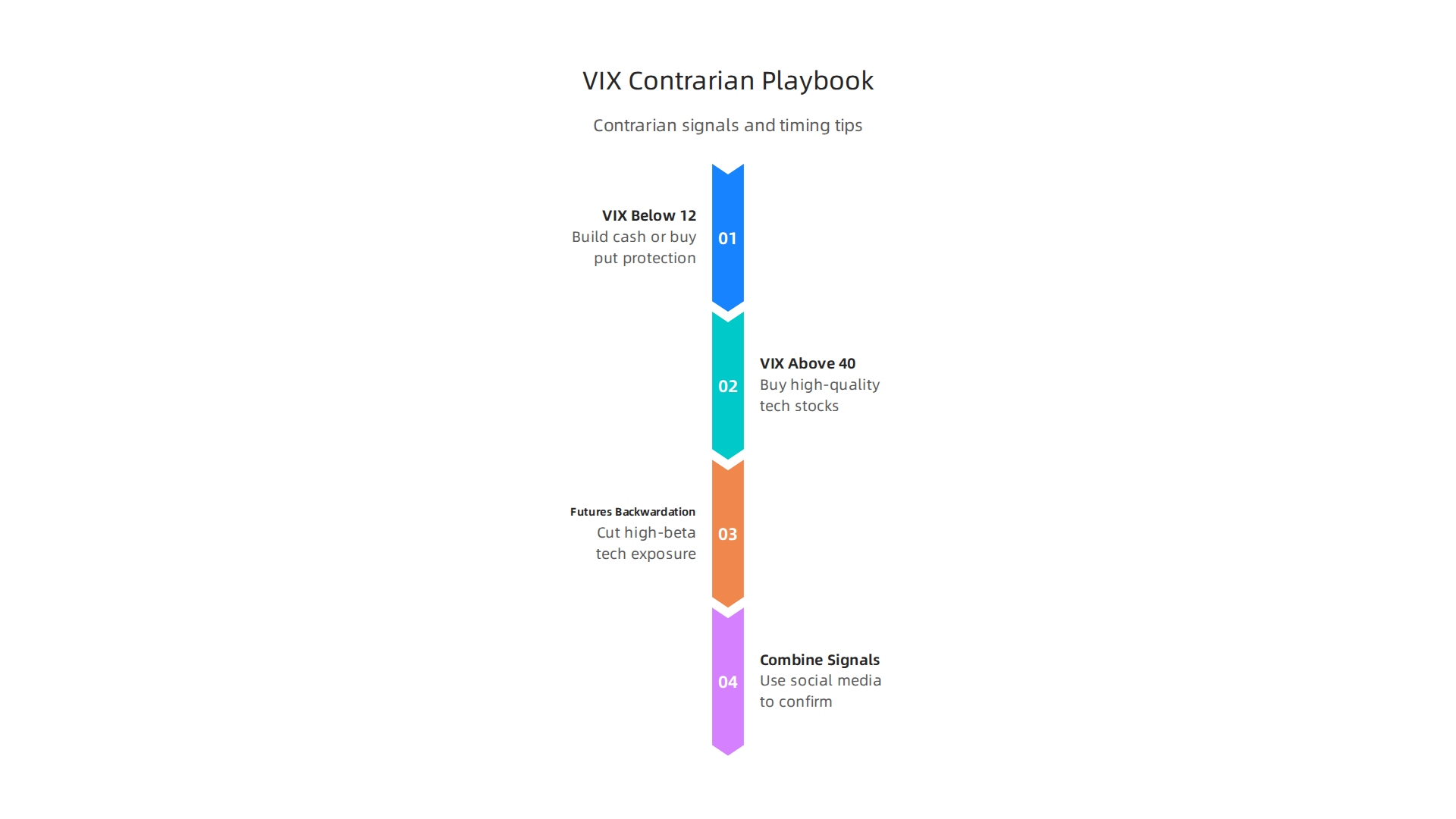
- When the VIX hits below 12 and stays there for weeks, start building cash or buying put protection.
- When the VIX spikes above 40 and options flow shows heavy fear, start buying high quality tech stocks.
- When the futures curve flips to backwardation, cut your tech exposure fast.
- Combine these signals with social media sentiment to confirm.
The vix stock is not just a fear gauge. It is a contrarian compass. Use it with alternative data, and you can navigate the chaos with clarity.
For daily updates on which big tech stocks are moving and how volatility shifts affect them, follow our biggest movers today in big tech stocks for 2026 tracker.
And if you want deeper daily insights on AI and the technology sector, consider subscribing to The Deep View Newsletter. It cuts through the noise and delivers what matters most for your portfolio.
Summary
This article explains why the VIX—the market’s 30‑day expected volatility gauge—now behaves more like a Big Tech volatility index than a pure market fear meter. With mega-cap tech firms dominating the S&P 500, single-company moves, earnings seasons, regulatory shocks, and retail chatter can drive VIX swings that are often temporary and tech‑specific. The piece shows how to read the VIX beyond the headline number by using the futures curve, options flow, and sentiment signals, and it contrasts tech‑driven spikes with broader macro shocks. You’ll learn practical hedging steps (VIX futures, call spreads, index puts), timing rules of thumb (tripwires around 19–20, contrarian signals below 12 or above 40), and how to adapt when correlations break down. The goal is to help you spot true risk versus transitory noise and to turn volatility into an actionable tool for portfolio protection and opportunistic buying.